
Welcome to Modern Agriculture!

Hydroponic farming in the balcony
Who doesn’t desire to produce own veggies or house plants, but is lacking space to do so?
Who doesn’t desire to decorate their balconies with beautiful flowers and scented herbs?
A small hydroponic system in your balcony could be the answer!
So here we are today, after reading this article your new address could be “house with lush green balcony’’.
The skill of soil-less gardening hydroponics has earned fame as a modern gardening technique. It basically includes raising healthy plants exclusive of the use of a traditional soil medium by making use of enriched nutrient mediums like a mineral-rich water solution instead. It is the production of plants in a soilless medium in which all of the required plant nutrients are supplied to the crop that is dissolved in water. It doesn’t mean that you have to build a huge system in the backyard or in-ground exclusively but it can be done anywhere apartment hydroponics is reality. You can have hydroponics at home at any corner be it in a balcony or even in a small mason jar.
Try growing plants similar to much as necessary in their watering and nutritional needs with that you wouldn’t have to worry about giving special attention to the other side of things. You can start with growing following listed plants:
Hydroponics ginger farming can also be considered if you have sufficient space to keep containers in your balcony.
In case if you miss this: Growing Organic Herbs in Greenhouse.
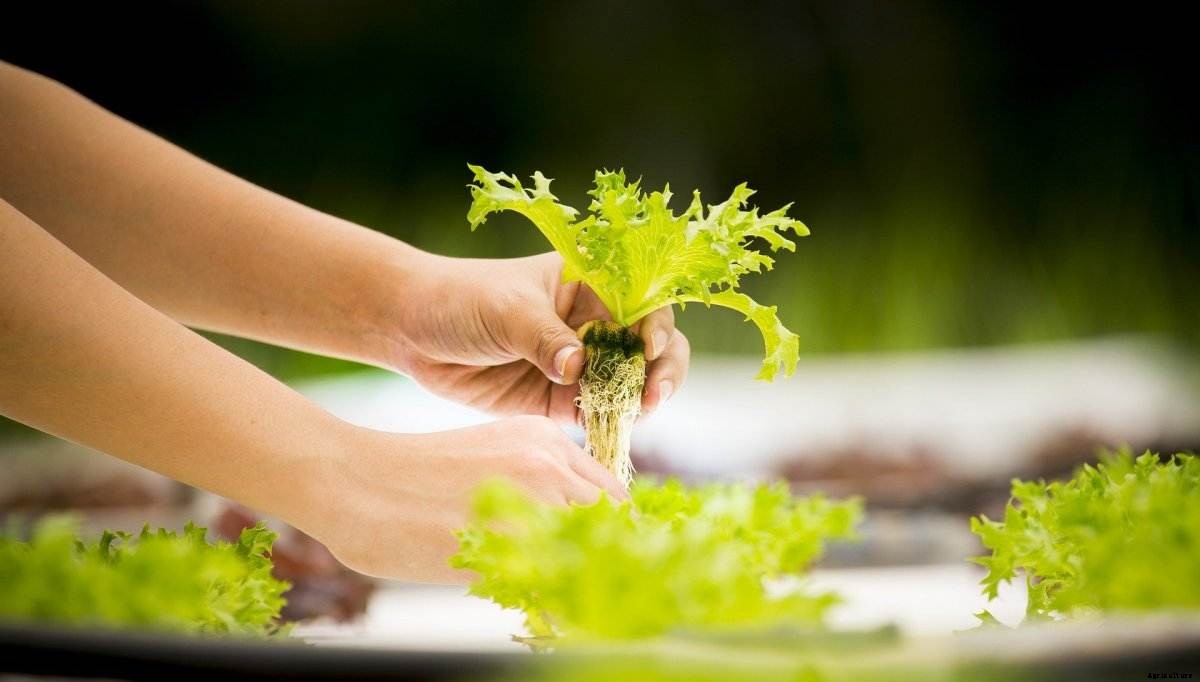
Nowadays there is a variety of hydroponic systems available in the market especially designed and equipped with facilities for balcony gardening you can consider buying hydroponic pipe setup directly from the stores or make your own DIY hydroponics setup.
Basically there are following types of hydroponics system and these systems are modified for the convenience of the grower for example by installing an automated system or any special system as per the demand.
Wick Systems: it is the most basic type of hydro system you can build even on your own. It is also known as passive hydroponics, meaning that you don’t require any air pumps or water pumps to use it. Nutrients and water are provided into a plant’s root zone with the help of a wick, which is usually something as simple as a rope or piece of felt. One key to success with a wicking system is to utilize a growing media that transports water and nutrients very well. Good choices consist of coconut coir, perlite, or vermiculite. Wick systems are recommended for smaller plants that don’t make use of up a lot of water or nutrients. In a balcony hydroponic garden it is not very much used since in smaller place growers wish to vegetables which won’t really thrive in this system so if you don’t want to put in so much effort and have space you can plant some ornamental plants in it and keep it aside.
Deep Water Culture (DWC): Deepwater culture system is hands-down the easiest and most used type of hydro system. In a DWC system, you make use of a reservoir to contain the nutrient solution. The roots of the growing are plants are suspended in that solution so they get a continuous supply of water, oxygen, and nutrients. To oxygenate the water aeration is important, for this you can use an air pump to propel bubbles into the nutrient solution.
The plants are typically placed in net pots that are placed into the top of the container called a reservoir. With some hydroponic growing media added into your net pots, they provide support especially at the very beginning of your root system and plant stems. Though this system is very easy and common, for balcony hydroponics still it is not an ideal system as it will help you grow only a limited number of plants.
Nutrient Film Technique (NFT). The Nutrient Film Technique is a popular commercial hydroponic system and is best for hydroponic plants indoor. Plants are raised in channels made up of PVC pipes that have a nutrient solution pumping through them and continue running along the bottom of the channel. When the solution reaches the end of the channel, it is drawn back into the main reservoir and is sent back to the starting point of the system again. This makes it a perfect re-circulating system, just like a deep water culture. Unlike deep water culture, your plant roots are not entirely submerged in an NFT system numerous plants can be placed in these channels with the help of net pots and growing medium and can be harvested on a one-by-one basis.
Ebb and Flow systems, which are also recognized by the name Flood and Drain, are a less-commonly used system. But they are still quite effective for balcony gardening and can be the best choice depending on the space you can offer to it. Unlike the previous two hydroponic systems that we have discussed, it does not expose the roots of the growing plants to the nutrient solution on a regular basis. Instead, plants are grown in a tray filled with the growing medium. The tray is “flooded” with the nutrient solution a few times per day, depending on factors like:
Flooding is achieved by using a reservoir placed below the tray, a water pump, and a timer to programme the flooding cycle.
Once the tray is flooded, gravity will drain the solution back down into the reservoir, where it is being aerated by an air pump and air stone. It will be there waiting for the next flood cycle, and this is how the process goes on.
Vertical farming is all about growing more by stacking several layers of plant surfaces. It is easy to see why the concept of the hydroponic tower has become highly popular. Because indoor hydroponics enthusiasts frequently suffer from lack of floor space, vertical hydroponics remains the best choice. A tower garden, also known as a window farm is an arrangement of vertical hydroponics, which comprises of an A-Frame hydroponic system, hydroponic wall, and even cascades of bottles. It can be utilized for growing various crops such as strawberry, lettuce, Swiss chard, herbs, spinach, kale, broccoli, and flowering petunia. Vertical hydroponic towers characteristically have a closed nutrient water flow system. There is no runoff as the water keeps on circulating. This prevents wastage of valuable resources and nutrients. The whole process can also be automated in order to reduce maintenance.
You may also check this: Growing Organic Vegetables in Greenhouse.
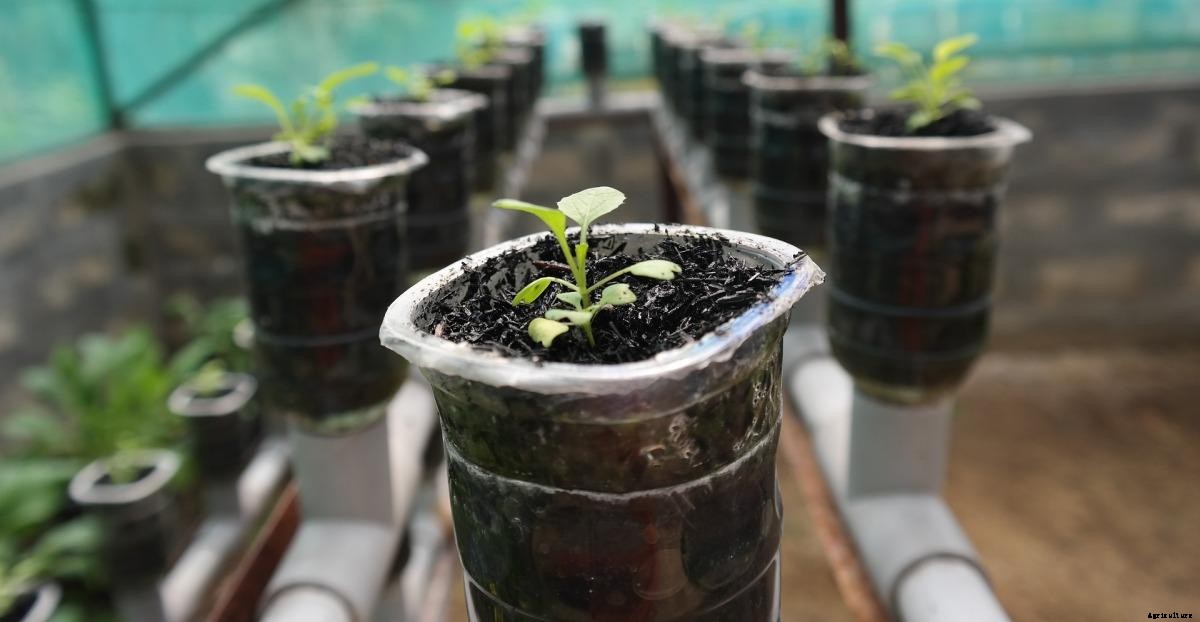
Do-it-yourself hydroponic systems come in different forms based on your interest, creativity, and of course availability of material. You can construct one using different locally-available materials such as recyclable plastic bottles, containers, boxes, and even PVC pipes.
Here we will be discussing basic systems designed using recyclable plastic boxes/containers and PET bottles.
Choose the Kind of system You Want to grow your plants in, you can make this decision based on which type of plant you can to grow and its growth habit
the growth medium to be used since we are going to be soil-less hence Growth medium plays a significant role in the whole process you can consider buying grow media such as Rockwool, clay pellets, cocopeat, coconut fiber/coconut chips, perlite or vermiculite.
The right nutrient mix is a combination of primary nutrients such as nitrogen, potassium, magnesium; secondary nutrients like calcium, sulfur, phosphorus; and micronutrients like iron, copper, manganese, zinc, molybdenum, boron. Since these, all nutrients are to be in precise quantity so it is recommended that you buy the high-grade nutrient solution from the store especially when you are a beginner. You should keep the solution at room temperature and strictly away from light. Shake it well before using it always.
In case if you are interested in How to Make Money from Hydroponic Store Business.


