Vertical Vegetable Garden Ideas, Design and Layout
Introduction: Hello gardeners, Are you planning to grow vegetables vertically? don’t worry we can help you for your Vertical Vegetable Garden set up and design with a complete information. If you have a horizontal garden whose space is limited and you are very much interested to add a new layer of texture and beauty to your garden, we would suggest you take into consideration to build a vertical garden. Most of the plants grow naturally, vines, trees and walls and all these can be trained easily to grow in the upward direction in any structure according to your choice.
Choosing the structure of the vertical garden
Having vertical vegetable garden indoors is also possible if the requirements of the plants are satisfies. Check the below article on how to start your vertical vegetable garden.
Purchase a garden structure from any of the garden stores
As vertical garden are getting more popularity, home and garden stores will consist of many varieties of structures which are suitable for raising a vertical garden. You can select from the below option.
Poles
You can consider purchasing simple poles which you can set into the ground. Metal poles are considered to be better if you are having a clay soil which is dense as these can be driven through easily even in the hard ground. If you find that your ground is loose, you can consider wooden poles. The poles have to be stuck at every few feet along with plant rows. As the growth of plants takes place, you can run a garden twine line down one side, then loop around the pole which is far and then tie off this at the actual end where you have started. You will have to tie this twine to every pole along the way for creating some sort of support to the plants.
Trellis for your Vertical vegetable garden
Trellises are mostly made of wood. These are built in the box shape with a top which is cross-hatched and sides and this will allow the plants and vines to weave themselves through the gaps which are present in the wood.
Using the Vertical features you already have
Vertical vegetable gardening towers will be available if you are interested to spend some money on this. There is no requirement to just go out of your ways for purchasing a structure if you are not interested to spend money. You will have items which you can consider using for the growth of a vertical garden.
A Tree
Yes, you heard right! You can consider training a plant to grow around a tree. The best tree type for this is one which has branches that start at more than 6 feet up the tree.
Bamboo poles
If you have a bamboo stand located close to your home, then it will become a sturdy base for your garden and it is very easy to get it free of cost. If you do not have bamboo, you can consider taking a strong and tall stick.
Your deck
If you are having a deck which will extend many feet or yards above the ground, then you can consider training the plants to grow up the sides.
A fence
Any fence will provide a suitable structure for a vertical garden. The taller the fence, the better the structure would be.
Building vertical trellis on your own
If you are interested to have a vertical garden structure which is fully customized, then you can consider building your own by making use of wood. By building your own vertical structure, it will let you create a vertical garden with perfect dimensions for your yard. Follow the below steps for building a garden structure which is of height 6 foot.
First, you will have to build a 2-foot square by a box of 11 inches from cedar, redwood or pressure-treated 1x6s. Then screw pressure-treated 2x2s of 8-foot at the middle and one of the corners in back and 2x2s of 6-foot at the other end and 18 inches from the back on both the sides.
Now, pre-drill, glue and screw 1x2s for every 6 inches. This should start at the box’s top. Then, you will have to extend the 1x2s to at least one inch beyond each 2×2 to decrease the danger of splitting.
Now, you will have to consider adding the platforms. For this, you will be required to screw on 1x2s of 3-foot and then screw on 1x2s which are laid flat for the creatin of the miniature deck.
Now, you will be required to add another 2×2 which is of length 6-foot in the centre at the front and then consider screwing it to the cross pieces.
Now, consider adding a 1×4 crosspiece on the top of the two 2x2s which are the longest. If you wish, you can also consider attaching a birdhouse to the crosspiece.
Now, the box has to be filled with good soil and then the plantation of climbing plants has to be done. After that, you will have to train the climbing vegetables to grow up the lattice. Now add other types of plants in hanging baskets and pots.
How to start a vertical garden
Preparation of soil
Irrespective of the medium of the plantation, whether it is ground or containers, the quality of soil is very essential for a vertical garden. You will have to make use of soil which is free of weeds and which is also rich in the content of compost. For the encouragement of proper drainage in containers, consider combining the soil with perlite or peat moss.
You should not miss the Backyard Vegetable Garden Ideas.
Choosing the containers
If you have decided to grow vegetables in containers, you can consider using any type of it. Always ensure that the container is sufficiently deep for accommodating the vegetable type you have chosen to grow. Vegetables which are larger and heavier will need the containers which are sturdier and larger. Always consider handing baskets, window boxes, coffee cans, urns, washtubs, wooden crates or clay pots. If the container does not consist of drainage holes, you can consider drilling small holes at the container’s bottom before you fill it with soil.
Growing vegetables vertically in your garden
Always make sure that you are understanding the basics of vertical vegetable gardening. You can grow any type of vegetable vertically as long as you have the containers which are sufficiently deep for the accommodation of the plants and the vertical staking very strong so that it can hold the plant.
Evaluation of the conditions of your garden is very important. Always go with the vegetables which will survive in your garden depending on its light, wind, moisture and heat. If you are using containers for vertical vegetable gardening, make sure that you are watering the containers on a daily basis.
The plantation of varieties of vine plants whenever applicable is important. If you are growing cucumbers, beans or squash, make sure that you are planting the vine variety which will climb in a vertical manner rather than the bush variety.
Choose the right vegetables
Though most of the vegetable grow vertically, many vegetable types are known for their successful grown mainly in vertical gardens. If you are a beginner of vertical vegetable gardening, then you can consider growing the below-listed vegetables
You can consider growing Pole beans vertically. Pole beans will be climbing on to all types of structures along with other plants. Most of the people consider the combination of corn and beans as the corn will provide vertical support for the beans.
You can also consider growing peas in a vertical garden. Similar to pole beans, peas will also climb almost any type of structure and will require some amount of encouragement to twine around the vertical structures. You can also grow peas on bamboo sticks, trellises or even on an arbour.
You can also grow winter squash and gourds in vertical gardens. Gourds and winter squashes will have long vines which will extend up to 10 feet for the squash and up to 25 feet for the gourds. As the vines will grow so long and become heavy, you will have to provide a secure and sturdy vertical support. For providing additional support to winter squash which is heavy, such as butternut, you can consider wrapping cloth twine around every fruit and tie them to the vertical structure. Make sure that you are not using any string as support to the squash as it may get cut into the stems. Few garden centres will sell materials which are made especially for supporting large vegetables like gourds and winter squash.
You can also consider growing pumpkins and melons in a vertical vegetable garden. Similar to winter squash, pumpkins and melons will also have long vines and the fruit will require some extra support when it is growing vertically. You can consider growing melons and pumpkins up as secure and strong vertical structures. You can wrap slings which are made of rags, old streets, fabric scraps or towels surrounding the melons and pumpkins to protect them to the fence or trellis for providing the required support.
You can also consider growing cucumbers in your vertical gardens. Cucumber which is of vine variety and not a bush variety are ideal for any vertical vegetable garden as they climb naturally. They can also be grown up almost like any sort of structure like cage, A-Frame or trellis, but it should be strong enough for supporting the weight of the vines. In the initial stages, cucumbers may require some amount of encouragement for attaching themselves to the vertical structures, but once the tendrils wind around the vertical support, they will start climbing vertically without you assisting them. The cucumbers will hang in a vertical manner from the plant which makes them easy to harvest.
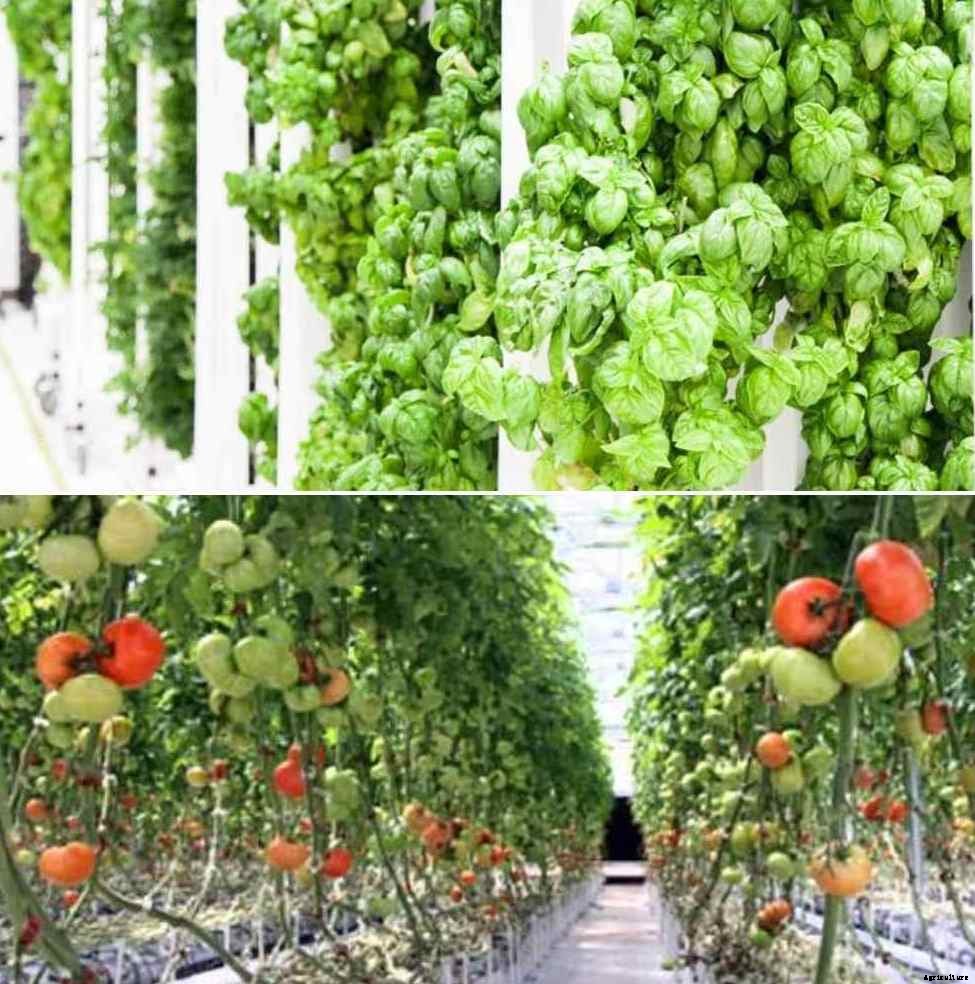
You can consider growing tomatoes in a vertical garden. As tomatoes are plants which will be heavy, they will need a vertical structure which is sturdy. As the growth of the tomato plants takes place, the branches have to be tied to the structure by making use of a soft twine or cotton cloth at regular intervals.
You may also like the Growing Pumpkins from Seed.
If you want a complete natural garden, then you can prefer growing beans, corn and squash which are termed as three sisters. These are the vegetables which coexist very well with each other. They will also make an excellent natural garden. The corn will give a pole for the beans whereas the squash will grow along the ground.
Choosing the right spot for Vertical vegetable garden
A vertical garden will be required to be planted in an area which has great soil drainage and the correct mixture of shade and sunlight. You will have to check what conditions the plants you are going to grow to require for survival, then select a perfect spot in your garden on your patio.
Most of the vertical gardening systems will do very well with plenty of sunlight.
Choose a spot which is nearer to a wall if you are wishing your garden to gradually climb the walls of your house.
Stable structure is a must
If you are making use of a trellis, a pole or a stake, make sure that you are burying it deep into the ground so that it will not wobble or fall over. Always keep in mind that the garden will be heavier when it is growing, and it will require a solid foundation which will be able to stand at the times of wind and rain.
Consider using a post driver for pushing your wooden posts or metal deep into the ground.
Plantation in vertical vegetable garden
Make sure that you are planting around the base of the vertical structure. Considering the individual requirements of the plants which you are using, you can plant seedlings or seeds in holes which are spaced at the trellis’s, pole or any other structure’s base. Always ensure that they are not very close to each other or even the vertical structure as they will have some space to the formation of roots and growth.
Caring the plants
You will need to care for the plants keeping in mind their requirements. Always ensure that they are getting sufficient water. Always fertilize and secure them by making use of mulch also make sure that you are taking all the other measures which they require for growing healthy and strong.
Training the plants in the Vertical vegetable garden
When the seedlings have reached the height of a few inches, then it means that the time has come to train them to wrap around the vertical structure. In a gentle manner, wrap the stems of the plants around the structure’s base by making sure that you are not bending or breaking them. Make use of the ties to catch hold of the stems in place as they are growing.
Make sure that you are not tying the stems too tightly. This will lead to the prevention of proper growth and may even cause damage to the plant.
As the stems start growing and winding around the vertical structure, you can continue making use of ties for training them to grow in the direction in which you want them to grow.
For vines such as hops, you can consider tying a string to the trellis at a few feet above the level of the ground and then stake it to the ground closer to the plant. The plant has to be trained up the string until it will reach the trellis. If you are making use of metal or other materials of slick types, you can run the string to the top so that the vines will have something to hold on to.
Few facts about vertical vegetable garden
Vertical vegetable gardens are not only good looking but also do good for our planet. These gardens will help us in decreasing the content of carbon of a building by filtration of pollutants and carbon dioxide out of the air. This is also advantageous to the people who are living closer due to the improvement in air quality.
When the quality of soil is poor, it will be challenging to grow plants at the best or may need some amount of significant work for making the soil suitable for plantation. Vertical vegetable gardens will not depend on soil in most of the cases. This will also help in the prevention of pests from causing damage to the plants which simplifies the care required further. That’s all folks about setting a vertical vegetable garden, hope you enjoyed reading this infromation and wish you all the best in your gardening activities.
You may be interested in How to Grow Basmati Rice from Seed.