
Welcome to Modern Agriculture!

Today, let us jump into home aquaponic gardening ideas. Aquaponics can be defined as a combination of hydroponics which involves growing plants without soil and aquaculture which involves raising of fish. The waste produced from fish will act as an organic source of food for plants and the plants will filter the water in a natural way for the fish.
Despite fish and plants, the other participants in aquaponics are microbes. These are the bacteria which convert ammonia which comes from the waste of the fish into nitrites and then to nitrates. Nitrates are one form of nitrogen which plants can take and make use of it for their growth. Fish waste which is in the solid form is converted into vermicompost which also acts as a source of food to plants.
By the combination of the hydroponic system and aquaculture systems, aquaponics will take advantage of their benefits and eliminates the drawbacks of both the systems.
To set up an aquaponic garden, you will need to have proper planning, mainly for the beginners so that it would be a success. If you are a beginner, you can also go through aquaponic gardening books in order to get some information about aquaponics. You can also go through aquaponic gardening videos and aquaponic gardening blogs to get the information you need.
Read: Techniques of Vertical Gardening.
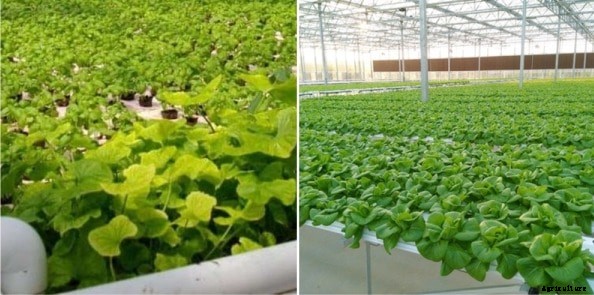
Not all the plants will be suitable for aquaponic growing. Basically, the vegetables which do well in the hydroponics can be grown in the aquaponic systems too. This will include leafy vegetables like lettuce, cucumbers, tomatoes, strawberries, and herbs like mint, basil, chives, etc.
Root vegetables like carrots and turnips can also be grown if the media of planting is sufficiently deep. They are tough to grow in setups which are like floating rafts where they can produce roots which are of strange shapes and are also twisted.
Aquaponic gardeners will not grow fish for consumption. The fishes will give fertilizers to the plants. While you are growing fish for consumption, you need to take into consideration their hardiness, growth rate, requirements of water temperature. The fishes which are grown in aquaponics are:
Tilapia: These are the ones which are at present the most popular ones and can be easily grown as the food for fishes. They will reach the size of harvest very quickly and will also tolerate a wide range of pH and temperature of water levels than most of the fishes. Tilapia are the fishes which are carnivorous and generally will not feed on the small fishes. Trout: These are the favorite food for fish but are very tough to grow. They will need water temperatures which are cold. Water which has a temperature of 55 degrees will have an effect on the vegetable grown. Lettuce and other crops which grow in cool temperatures will grow gradually with water at a cool temperature. Cucumbers, tomatoes and other crops which grow in warm season are not suitable for the systems which are growing trout or other species which grow in cold water. Carp: These are the fish which grow in a wide range of environmental conditions. This will make them a very good option for beginners. The carp which you grow in an environment which is clean and aquaponic water will not have any taste of mud.
Goldfish: These are the popular ones and are also non-harvestable options for home aquaponic systems. These are easy and hardy to get. These will add some sort of decoration to the system.
Other kinds of fishes which are used in aquaponics systems will include bass, perch, bluegills and several types of non-fussy fish which are grown in aquariums such as guppies.
Calculation of density of the fish to the water present in the tanks is very important. Less fish means there is less nourishment to the plants in the aquaponics system.
Read: Aquafeed Formulation.


