
Welcome to Modern Agriculture!

Introduction to Growing Jade Plants in Pots
Jade plant growing indoors is easy and simple. This is a succulent plant with curved, shiny, oval-shaped leaves that grows upward in opposite directions up a thick stem. Jade plants considered to be symbols of good luck. These plants are succulent houseplant, which makes them fairly resilient and easy to grow indoors. Jade plants produce broad, thick evergreen leaves and a thick woody trunk. Jade plant doesn’t need annual pruning to remain healthy, but a spring trim helps manage its size. People grow this plant as a houseplant because of its longevity and ease of care. Jade plant grows slowly and its tree-like appearance makes it a good plant for bonsai. Under some conditions, the plant can become spindly and bare. In this article we also discuss the following contents;
The Jade plant is a succulent plant and a renowned good luck plant to attract wealth. Jade plants are one of the most popular indoor plants for good reasons. They are extremely versatile, great looking and it doesn’t take much to keep them happy.
There are lots of different types of Jade plants available. They are;
Crassula ovata – This is the common plant variety that everyone knows and loves. It has wide, flat leaves, and can grow to become a large shrub with a thick trunk.
Gollum Jade plant – It is also called baby toes. This plant has cool leaves that are long, narrow, and rounded.
Dwarf Jades – Dwarf Jade varieties are simply a smaller version of the regular one. They look the same but stay compact.
Jitters Jade – This is a unique plant variety that has thin, wavy leaves that are lighter green than the others.
Crassula arborescent – It is also called a silver dollar Jade plant. This gorgeous specimen has silver leaves with red tips.
Red Jade plant – This type has reddish-purple leaves.
Copper Jade plant – Copper Jade has green color leaves that are edged in a bronze color. They can grow large but are slow-growing.
Blue Bird – It is also referred to as silver Jade. It has grey-blue leaves with red tips.
Ripple Leaf – Ripple leaf variety is a hybrid that grows well in full sun, but can also handle partial shade. It can grow up to 4 feet tall. It gets its name from its wavy-edged leaves.
A succulent mix is best for Jade plants with an ideal pH level of around 6.0 (slightly acidic). To prevent excessive moisture, make sure the soil can drain well from accumulating which can lead to fungal growth. If using an all-purpose potting mix and add some perlite in a 2:1 ratio to help with drainage.
Plant Jade in cactus soil with added organic matter or mix your own with 1 part soil, 1 part peat moss, and 3 parts coarse sand. Root cuttings from Jade plants in moist sand. Though they will root in a glass or vase of water, Jade cuttings rooted in water do not transplant well. The major soil requirement that the Jade plant has is that the soil must drain rapidly.
A general-purpose mix is adequate for growing these plants, but sometimes regular potting soil can hold too much moisture. The best soil for growing Jade plants is a porous and quick-draining succulent mix. Also, it is best to use a light mix of coarse play sand, potting soil, and perlite. The best pot for growing Jade plant is clay, especially if you tend to overwater. Clay pots will help to wick the water out of the soil, and allowing it to dry out faster.
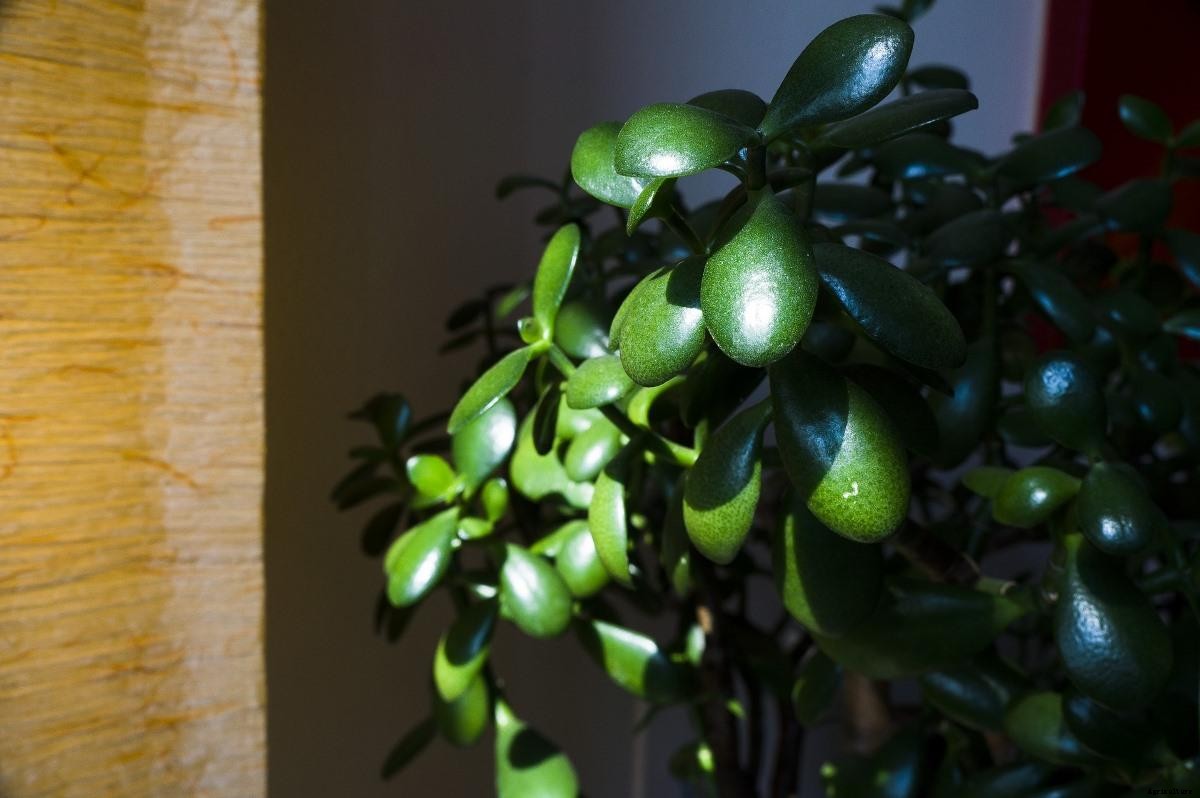
Place Jade plants in a southern window where they receive at least 4 hours of direct sunlight. Move Jade plants away from windows at night during the winter season to avoid injury from the cold. During warmer months, either move the Jade plant away from the direct heat of the window or move it outdoors to a sunny spot.
Sunburned leaves will turn brown color, the damaged area will die, and most likely the leaf will eventually drop off. Severe sunburn can be fatal to Jade plants. If you put yours outside during the summer season, be sure to bring it back inside before any chance of frost in the fall.
Jade plants prefer average summer temperatures of 18 to 21°C. At night and in the winter, Jade plants prefer a cooler environment (down to 12°C).
There are several things to consider when selecting the perfect pot for a Jade plant. For starters, the Jade plant can have thick, woody stems and plump, voluminous leaves. Although it grows slowly, the plant becomes top-heavy after a while, as new shoots and leaves emerge and stems thicken with growth. It is important to provide a pot with proper drainage to prevent this condition, which may lead to root rot.
Given these considerations, the best pot for a Jade plant either a ceramic pot or sturdy plastic pot with great drainage, keeping the soil and roots from becoming too soggy. Assuming you have a free-draining mix, either type of pot will keep the plant healthy. The size of the pot should be slightly larger than the diameter of the plant. So if your new plant were about 4 inches in diameter, a 5 inches pot would be suitable for about a year or two.
You can easily propagate Jade plants either from stem cutting or from a single leaf.
Choose a healthy leaf and snip it with your hands, making sure that the bottom of the leaf doesn’t break. Then, take a mix of half potting soil and half vermiculture in a small planter. Lay the leaf at the top of the soil mix, while covering its cut node with the soil. Then, mist it regularly and keep the soil wet, but do not overwater. The roots will start appearing in 3 to 4 weeks. Once it develops some leaves, you can re-pot it in a 5 to 6 inches pot.
First, choose a healthy branch of a plant, and then snip off 4 to 5 inches long healthy stem using a sanitized shear. Remove some plant leaves from it, ensuring that it consists of some leaf nodes. Let the stem dry for 3 to 5 days. Once dry, dip it in a rooting hormone and plant it in a pot filled with half part of vermiculture and half part of potting soil. Then, mist the water regularly, and don’t let the soil dry completely.
Jade plants are easy to start from leaf cuttings or stem cuttings. Below are the steps for growing Jade plant from a leaf or stem cutting;
Step 1) First, remove a leaf or take a stem cutting from a well-established plant. An ideal stem cutting would be 2 to 3 inches in length and have at least 2 pairs of leaves. Once you have your leaf or cutting and allow it to sit for several days in a warm place.
Step 2) Gather your pot and a well-draining potting mix for growing Jade.
Step 3) Take the leaf and lay it on top of the soil horizontally, covering the cut end with some of the soil. If you have a plant stem cutting, place it upright in the soil.
Step 4) Place the pot in a warm place with bright, indirect light. Do not water.
Step 5) After a week or two weeks, the leaf or cutting will start sending out roots. After a week give the plant a gentle poke to see if it has rooted itself in place. If it hasn’t, wait a bit longer, and testing it every few days.
Step 6) Once the Jade plant seems to be firmly rooted, water it deeply and carefully. Make sure that you don’t just get the surface layer of the soil wet, as you want to encourage the plant roots to grow downward for water, not towards the surface.
Step 7) Let the soil dry out between watering and keep the plant out of intense direct sunlight until it is well established.
Many people underfeed their Jade plants during the growing season. Feed the plant with a controlled-release fertilizer at the beginning of the season or weekly with a weak liquid solution. Use a balanced 20-20-20 fertilizer at one-quarter strength on mature plants, and use a fertilizer with less nitrogen on young plants.
Growing Jade plants in containers do not need much feeding, but for enhanced growth, you can use a water-soluble fertilizer, once in 6 months, or once in 3-weeks during its growing period. As an organic option, you can prefer liquid tea, fish emulsion, or compost of tea leaves, once in 8 to 10 weeks as well.
You may also like How To Grow Plants In Water.
If your Jade plant is outgrowing, you can re-pot it in a bigger pot during the spring and summer seasons. Ensure the soil is completely dry before re-potting and select two sizes bigger pot than the previous one. Also, ensure to remove any dead roots from it while transferring.
The only time you need to prune Jade plants is when you see dead, dying, or shrivelled branches in plants. If that happens, just snip them off. Jade plants are forgiving and just keep growing wherever you cut. Also, you can prune to shape them like bonsai trees if you’d like.
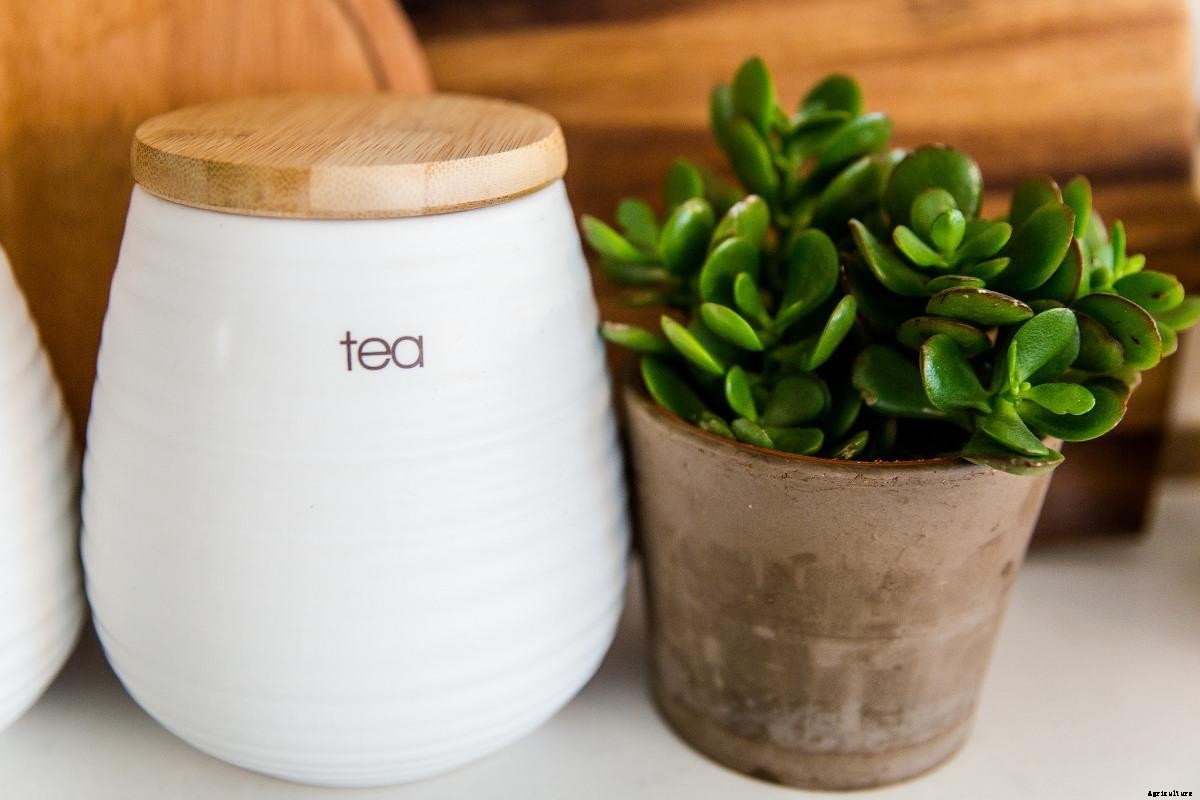
You can grow Jade plants either indoors or outdoors, based on where you live. They aren’t cold hardy and should be brought indoors in freezing weather.
Jade plants require bright light, but should not be exposed to a lot of direct suns. Mature plants can be encouraged to flower in late winter or early spring if given a rest period with reduced watering, and full darkness at night.
Regular pruning and pinching Jade plant encourages branching and will keep them bushy.
A Jade plant can start dropping its leaves for several reasons like incorrect watering (overwatering or underwatering), poor drainage, poor soil quality, insufficient light, pest infestation, temperature fluctuations, and using leaf shine products.
Overwatering is the most common cause for Jade plant leaves turning yellow. Other causes include excessive fertilizer, pests, disease, watering problems, light problems, or temperature stress. Some leaves naturally turn yellow color with age, and some Jade plant cultivars have naturally yellow leaves.
In case if you miss this: Growing Lettuce In Pots.


