
Welcome to Modern Agriculture!

Introduction to making compost from dry leaves and flowers
Compost enriches the nutrient content of garden soil and flower beds and then allows you to re-use food scraps and other organic items that would otherwise go to waste. Composting dry leaves make a dark, rich, earthy, organic matter that can be used as soil. It adds nutrients to the garden soil and the larger particle size helps enhance the tilth and then loosen compacted earth. The composting process retains moisture and repels weeds when used as a top dressing or mulch. In this article we also discuss below topics;
Plant leaves are packed with trace minerals that trees draw up from deep in the soil. When added to the garden, leaves feed earthworms and beneficial microbes. Then, they lighten heavy soils and help sandy soils retain moisture. They make an attractive mulch in the flower garden and they’re a fabulous source of carbon to balance the nitrogen in your compost pile. They insulate tender plants from cold. Leaves take 6 to 12 months to break down into compost on their own because they don’t contain the nitrogen necessary to speed the composting process. You can shorten that time to a few months if you build and tend leaf compost pile properly. Spread the dry plant leaves out in a 1- to 2-inch-thick layer.
Plant leaves high in carbon and trace elements are a great ingredient to add to any composting effort. Then, turning them into leaf mold yields a different valuable amendment, full of the living microbes that keep soils healthy. But care should be taken when composting leaves. Leaves are mostly carbon. To make finished, well-balanced compost of them requires adding green and nitrogen-rich material. Then, that can come from grass clippings, which can be hard to come by this time of year. Or maybe you’ve saved them up through the summer season and they’re already on their way to breaking down. Adding sources of nitrogen, like stable cleanings and other manure-containing waste is a good idea. Or you can just add nitrogen-heavy additives such as alfalfa or blood meal in the spring to boost nitrogen levels and stimulate the composting process.
You don’t have to compost leaves in a pile to keep them from the landfill and run a mower over them a time or three and let them settle into your yard. They’ll help keep soil friable and discourage problems that come from hard and nutrition starved yards. Leaves are well used as winter mulches, especially around acid-loving plants like azaleas and rhododendrons. Spreading a little lime among your leaf mulches will help keep pH levels perfect around other perennials.
Leaves are great sources of minerals and nutrients. Up to 80% of a tree’s minerals and nutrients end up in its leaves. Leaves are referred to as nature’s nutrient recyclers. By composting leaves, you have a perfect method of getting these valuable nutrients and minerals back into your soil.
In case if you miss this: Making Compost from Onions for Home Garden.
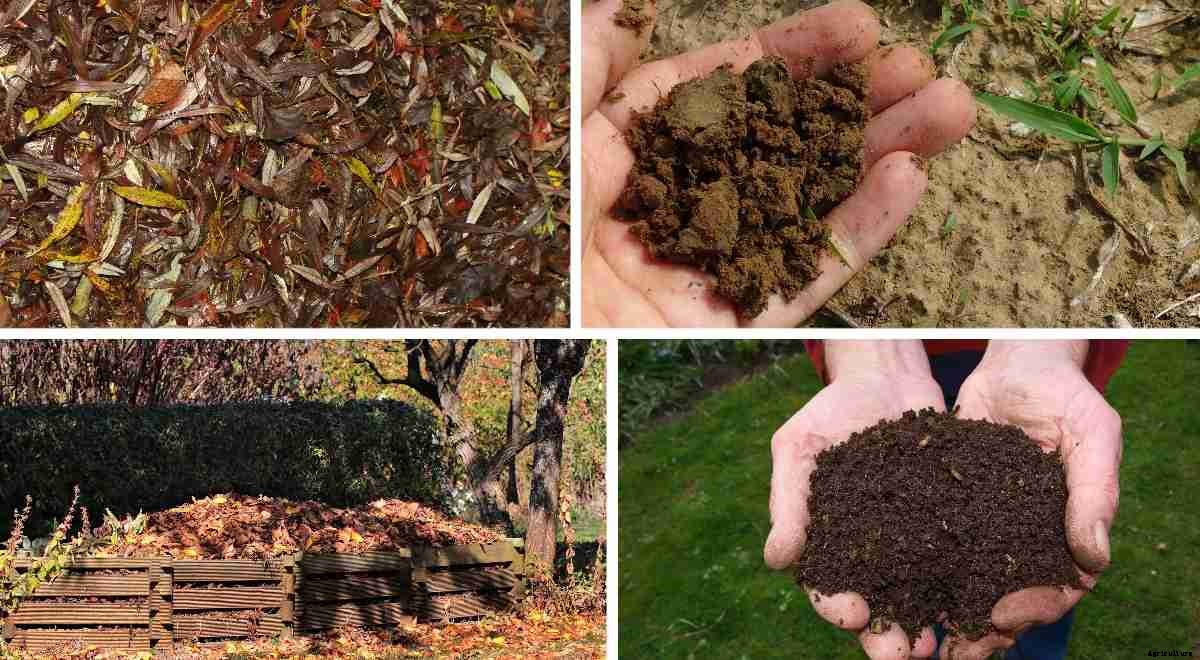
Step 1) Dead, dried leaves are gold for garden soil and the leaves contain a high amount of carbon, a necessary element for proper composting. Plant leaves break down slowly if they aren’t prepared properly beforehand. Broad leaves tend to shed water instead of absorbing it and breaking down. Then, preparing the leaves and mixing them with the right materials in the compost pile speeds the decomposition so you can have rich compost to improve garden beds more quickly.
Step 2) Rake the leaves into a pile about 4 to 6 inches high and as wide as necessary for the amount of leaves. If the plant leaves are soaking wet from dew or rainfall, allow the pile to dry in the sun for a day.
Step 3) Mow over the leaf pile and the lawnmower shreds the leaves into smaller pieces that compost more quickly. Then, use the attached bag on the mower to gather the shredded leaves or rake them into a large pile after mowing.
Step 4) Alternate a 4-inch layer of dried leaves with a 4-inch layer of green clippings until the pile is about 3 feet high and 3 feet wide.
Step 5) Spray the leaf layers with water to moisten them before adding the next green layer and composting occurs only in evenly moist piles.
Step 6) Then, mix the layers together with a pitchfork. Turn and mix the pile once weekly until the leaves and clippings are completely composted, which typically takes between 3 and 6 months.
If you want to create a traditional compost, use these tips to speed up the composting process;
Diseased leaves can be composted but it takes such high temperatures to kill the pathogens that it is not sensible to try in the winter compost pile. The pathogens will likely end up infesting compost and, if you spread it in the garden, it will infect the plants. Adding leaves to the compost pile will be adding browns, or carbon, to the pile. In order to maintain proper balance in the compost pile, you will want to balance out the browns with green materials, such as grass clippings or food scraps. Turning and watering pile regularly will assist in the composting process. Composting leaves that are only heating up in the center of the pile must be turned out and mixed with fresh organic materials.
Yes, flowers can be used as a composting ingredient. Flowers would be considered a green composting material like a source of nitrogen. Dried-up flowers can be considered a brown compost material.
You must avoid using any flowers that died due to some sort of plant disease. You should avoid flowers that have been exposed to chemical pesticides. If the flowers are given as a gift then make sure you separate the ribbons and wires. Those parts shouldn’t be thrown into the compost pile.
Most flowers are good compost ingredients. Compost is an organic soil enrichment that combines greens such as newly cut flowers, other fresh yard waste, and also kitchen scraps rich in nitrogen and browns that are high in carbon, including dried flowers. Both garden flowers and cut flowers, commercial flowers are beneficial in compost. However, there are some kinds of floral waste to avoid, as they are difficult to decompose or include compounds that may add poisonous residues to the soil.
Step 1) Pinch spent blossoms from perennial and summer annual plants, separating the petals and tossing them in an outdoor compost heap contained in a covered bin or pit in the ground.
Step 2) Cut soft, green stems and plant leaves into bits and add them to the compost for nitrogen. For perennials, wait to do this until well after flowering has ended so foliage can feed plant roots for the next growing season.
Step 3) Then, place dried foliage and flower heads in the heap for carbon. Pull up plant roots and add them to the pile if the plant is an annual that won’t survive the winter. Though, for perennials, leave roots in the ground for next year’s growth.
Step 4) Remove cut flowers from vases before they get dry, and you can add them to the heap for nitrogen. Save dry cut flowers for carbon layers. Break up the petals and cut the leaves and stems into bits before adding them to the pile.
Step 5) Organize compost heap in sandwich-like layers. Alternate sections of green materials with layers of brown materials, such as dried leaves and shredded paper. Water between layers, but don’t drench the heap and turn the compost about once a week to aerate it and encourage the growth of heat-loving bacteria that will help decompose the flowers.
Incorporate compost into the garden as you prepare the soil in the spring. Cover the area with 3 to 4 inches of soil and till it into at least the upper 6 inches of soil. Then, add compost to the soil in vegetable gardens, annual flower beds, and around new perennials as they are planted.
You may use compost as mulch around flower beds, vegetable gardens, or around trees or shrubs in landscape beds. Apply a 3-inch layer and be careful not to apply mulch close to the main stem or trunk of the plant.
In case if you are interested in this: Making Compost with Cow Dung.


