
Welcome to Modern Agriculture!

Introduction to growing Jerusalem Artichokes in containers
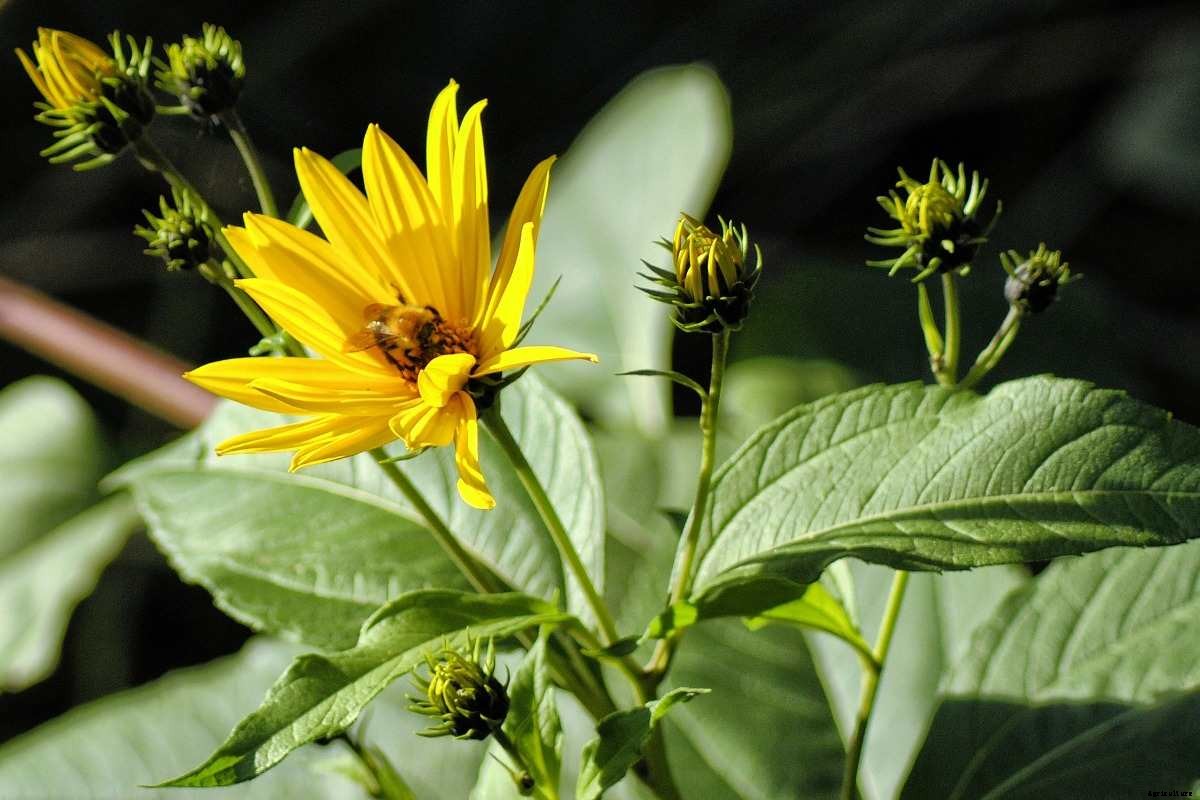
Jerusalem artichoke is also known as Sunchokes, is a type of root vegetable that yields sweet-tasting tubers and large sunflower-like blooms. With proper Jerusalem artichoke plant care, nutritious addition to your vegetable garden that can also enhance the visual appeal. It is a member of the sunflower family and not a relative of the globe artichoke. This perennial plant grows from 6 to 12 feet tall and has a yellow color, daisy-like blossoms. It is an herbaceous perennial plant growing to 1.5 to 3 meters tall with opposite leaves on the lower part of the stem becoming alternate higher up. In this article we also discuss below topics;
The Sunchoke plant leaves have a rough, hairy texture and the larger leaves on the lower stem are broad ovoid-acute and can be up to 30 centimeters long and the higher leaves smaller and narrower. The edible part of the plant is the underground root, called a tuber, similar to potatoes and sweet potatoes. In the Jerusalem artichoke, these tubers are long and lumpy and look like a cross between a potato and a ginger root. They contain no starch after harvest and only begin developing starch as they are kept in extended storage.
A hardy, tall, herbaceous perennial that grows up to 3 meters high with a yellow flower like a sunflower. It will grow in any soil but prefers light and sandy soil of good fertility. It does best in temperate climates, to the point of becoming an ‘edible weed’ in gardens. In warmer, more humid areas it can still be productive but is unlikely to persist in the ground from year to year. It will need to be replanted from stored tubers and tubers store well in the crisper part of the fridge in a plastic bag. The edible tuber portion resembles ginger root and is typically between 3 to 4 inches long.
Here are some of the most prominent, flavorful, colorful, and easy-to-grow Jerusalem artichokes varieties;
Stampede-thick, round, knobby, dark-brown tubers make for the most standard and “original” of all varieties – matures early.
Red Fuseau-long and thin or “top-shaped” reddish-purple tubers that take a little longer to mature, but are easier to clean and prepare than others, due their less “knobby” and “craggy” roots, which can hide hard-to-remove dirt.
White Fuseau-like the red variety, the edible parts are long and thin, in a bright white shade.
Waldspinel– a very long, red variety that is called the “fingerling” of Sunchokes.
Green Globe Artichoke-considered the original improved Artichoke. It reaches harvest early at only 75 days.
Big Heart Artichoke – a painless variety with no thorns and this relatively new variety can handle warm weather and can be grown as an annual from seed. This Artichoke’s name pays homage to its ability to reach up to about 5 ½ inches.
Violetta Artichoke – a heavy producer of side buds and this heirloom variety from Italy has an attractive purple bud known for its tenderness. As a smaller plant, the Violetta Artichoke requires only 3-foot spacing between plants.
The tubers grow in just about any soil and this means that they’re often relegated to a difficult area of the garden. And improving poor soil before planting encourages the growth of larger tubers, which will be easier to cook later on. They prefer alkaline conditions, so add lime to raise the pH level to around 6.5 if your soil is very acidic. Although the plant adapts well to a wide range of soil types and pH levels, Jerusalem artichokes production is favored by slightly alkaline soils.
Tubers sprout about 10 to 17 days after planting, but soil temperatures must be at least 6°C before germination begins. Jerusalem artichokes are propagated vegetatively by the use of sound, disease-free small tubers or pieces of tubers weighing about 2 oz (ounce) and having at least 2 to 3 buds each.
Plant Jerusalem artichokes tubers 2 to 6 inches deep, 12 to 18 inches apart. Space rows about 36 to rows inches apart.
In case if you miss this: Growing Cherry Tomatoes Hydroponically.
Jerusalem artichokes are grown from roots or sections of the root, typically planted in spring or fall while roots are dormant.
For best results, use the following planting tips;
Jerusalem artichokes grow best with an even, regular supply of water but can survive long periods of drought once established. Jerusalem artichokes require no extra feeding; they grow best in soil rich in organic matter.
Diseases and pests are not a major concern in Jerusalem artichokes plants, as they have maintained strong enough wild genetics to easily resist them.
Snails and slugs– Usually a risk to young, developing tubers. Beer traps and copper keep them successfully at bay.
Sclerotina – It is a fungal disease that causes a mushy, rotting stem base, and white mold on the outside. Remove affected plants right away you will have to eradicate the whole patch, while the disease stays in the soil for long periods.
Tubers can be harvested about 4 to 6 weeks after flowering and even though the flowers are pretty, yields will be better if the flower buds are pinched off as they appear. Tubers do not store well out of the ground and take care to store them in slightly damp sawdust or sand in a dark place or store them in a plastic perforated bag in the bottom of the fridge.
You may also check this: Lettuce Seed Germination, Period, Temperature, Process.
Small tubers or pieces of tuber with 2 or 3 buds are planted 2-3 inches deep about 2 feet apart in early spring as soon as the ground can be worked. The planting must be watered well. The tubers will sprout in 2 to 3 weeks.
Jerusalem artichokes are ready for harvest when the leaves die down. If you have the patience you might want to wait for the first frost as the tubers harvested after they got hit by the first frost taste sweeter. Then, the best harvest season is the end of September until March.
Jerusalem artichokes are perennials, the more care in preparing the soil and planting, the better their quality, and the greater the harvest. A well-cared-for Jerusalem artichokes plant will produce as many as 40 or 50 buds.
It’s important to handle Jerusalem artichokes with care as they bruise easily. Raw Sunchokes must be stored in a cool, dry, and well-ventilated area away from light. They also are stored in the vegetable drawer of the refrigerator, wrapped in paper towels to absorb humidity, and sealed in a plastic bag.
In case if you are interested in Organic Turmeric Cultivation in Polyhouse.


