
Welcome to Modern Agriculture!

Growing herbs indoors from seeds
Herbs can easily be grown indoors from seed as long as you make sure to get started off the right way. For most herbs, a germination temperature range of 21°C is optimal. If you keep thermostat lower, you should invest in a heat mat to start your seeds. And, some herb seeds should not be covered with soil because they need light to germinate. If you don’t have a yard or patio, it’s possible to grow herbs indoors as long as you choose the correct location and grow the right herbs. Indoor herb gardens need to be watered regularly. They should never be allowed to dry out, but you should not overwater them. Check indoor herb garden daily and water it when the top of the soil just starts to feel dry though if you stick your finger into the soil, the lower layer will still be damp.
A few herbs require to be chilled before they will germinate. The best success is achieved by sowing the seeds in a moist planting mix, putting the container in a plastic bag, and storing it in the refrigerator at about 4°C for 2 to 3 weeks. If you don’t have space in the refrigerator, you can mix the seeds into moist vermiculite or seed starting mix in a zip-lock bag and set it in the refrigerator. Herbs to grow indoors in low light are Lemongrass, Mint, Parsley, Chives, Garden Cress, Catnip, Lemon Balm, and Chervil.
Herbs like basil, parsley, thyme, and oregano are great additions to indoor plants. Herbs need at least 4 to 6 hours of sunlight a day to be healthy, so make sure you place them in a spot where they’ll receive the best care. If you’re using small seed trays, scatter 2 to 3 seeds in each tray. If you’re using a larger pot, you could want to sprinkle about 5 seeds into the soil, just in case some of them don’t sprout. Herbs like a temperature of about 18 to 21°C indoors, as well as some indirect sunlight. If the temperature outside drops a bit at night, this is okay for most herb plants as long as it warms back up in the morning.
If the herbs aren’t able to obtain 6 hours of natural sunlight a day, purchase clamp-on reflector lights with fluorescent bulbs. You can set these lights 4 to 6 inches above the plants to provide sufficient lighting.
Herbs grow the fastest from seeds – Not only do many herb plants germinate and grow quickly; they add fragrance to the garden and flavor. Consider basil, which sprouts in about 4 days, or chives, cilantro, and dill, which make their appearance 7 to 14 days after planting. Mint plants grow quickly, as well, but you’ll probably want to plant it in containers to keep it from invading other areas.
In case if you miss this: Hydroponic Seed Germination.
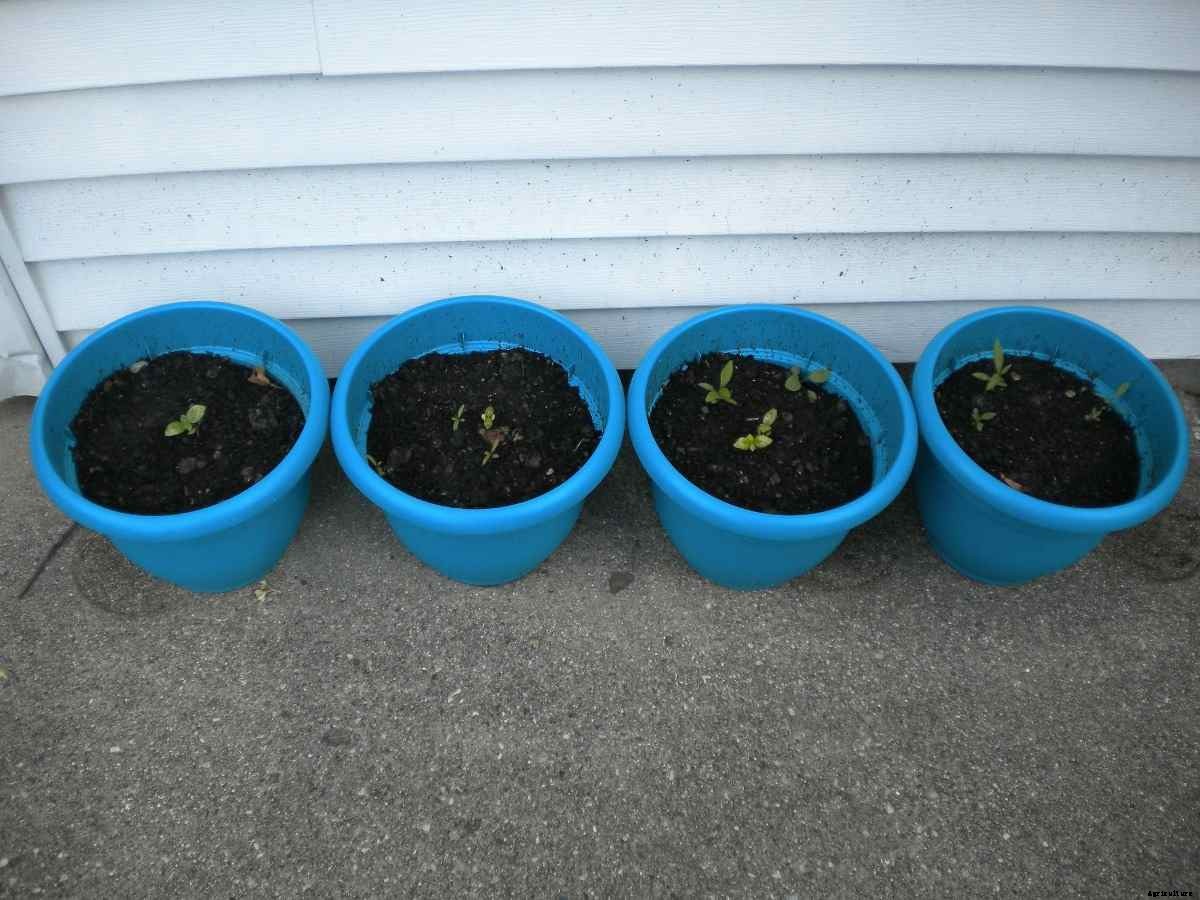
Depending on your space and where you intend to grow, you will find how you plant and grow your herbs.
Be sure that whatever pot or container you can purchase; you have a water catcher to save walls, window sills, and counters or floors from getting wet.
For windowsills, long rectangular boxes are ideal. If you are planning to grow them on the countertop, then small round pots will be suitable. If larger space if available, a larger pot will allow for a few varieties clustered together, like a miniature rambling herb garden.
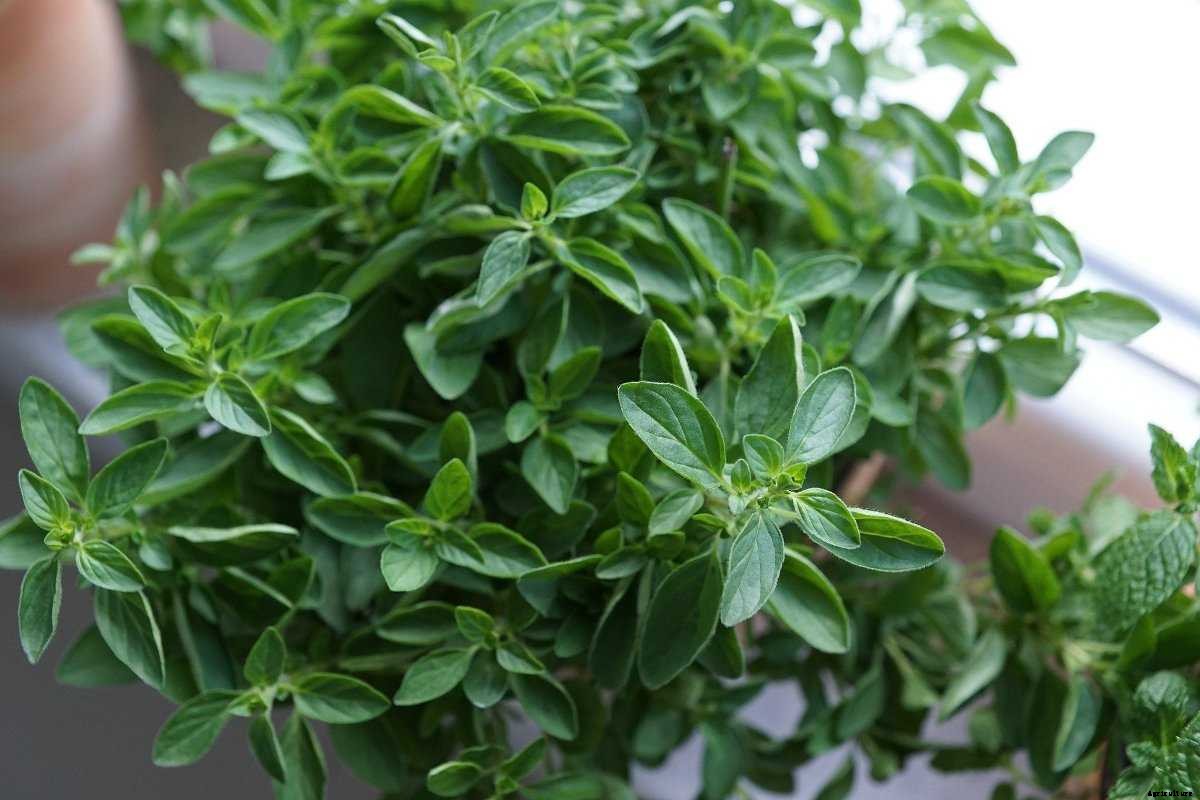
Some herbs need a little light to encourage germination, which means they must be placed on or near the surface. Others prefer darkness, so we recommend placing a thin layer of soil over them a good rule of thumb is that the soil layer must be no deeper than the length of the seed. Herbs that like light to germinate include Thyme and Lemon Balm, Basil, Chives, Cilantro, Cosmos, Dill, Marigold, Mint, Oregano, Parsley and Zinnia prefer a slightly darker germination environment.
The artificial lights in the home don’t emit a balanced spectrum of light, but instead, give off light that is more than one or more of the color rays. For example, your typical household incandescent bulb gives off a light that is heavy on the yellow, orange, and red rays, while standard fluorescent bulbs produce more yellow or green light.
Generally, herbs require at least 6 hours of sunlight per day. If where you’re growing herbs doesn’t have access to natural light, you can substitute that with artificial lights. Use LED or HID lights for best-growing results. This will ensure that herb plants won’t be blasted by some freak snowstorm.
The best lights to grow herbs indoors are high-intensity discharge lights, (HID) which produce twice as much light as incandescent or fluorescent lights, or light-emitting diode (LED) lights, which allows for smaller fixtures, taking up less space. LED lights emit less heat, and use significantly less energy. For the best results, use a grow light set up so your herbs are growing under artificial lights. Then, this will ensure short, stocky plants that are better adapted to outdoor growing. Set the lights on a timer for about 14 hours a day and keep the lights 2 to 4-inches away from the tops of the herbs.
You may also like this: Growing Cumin in Pots.
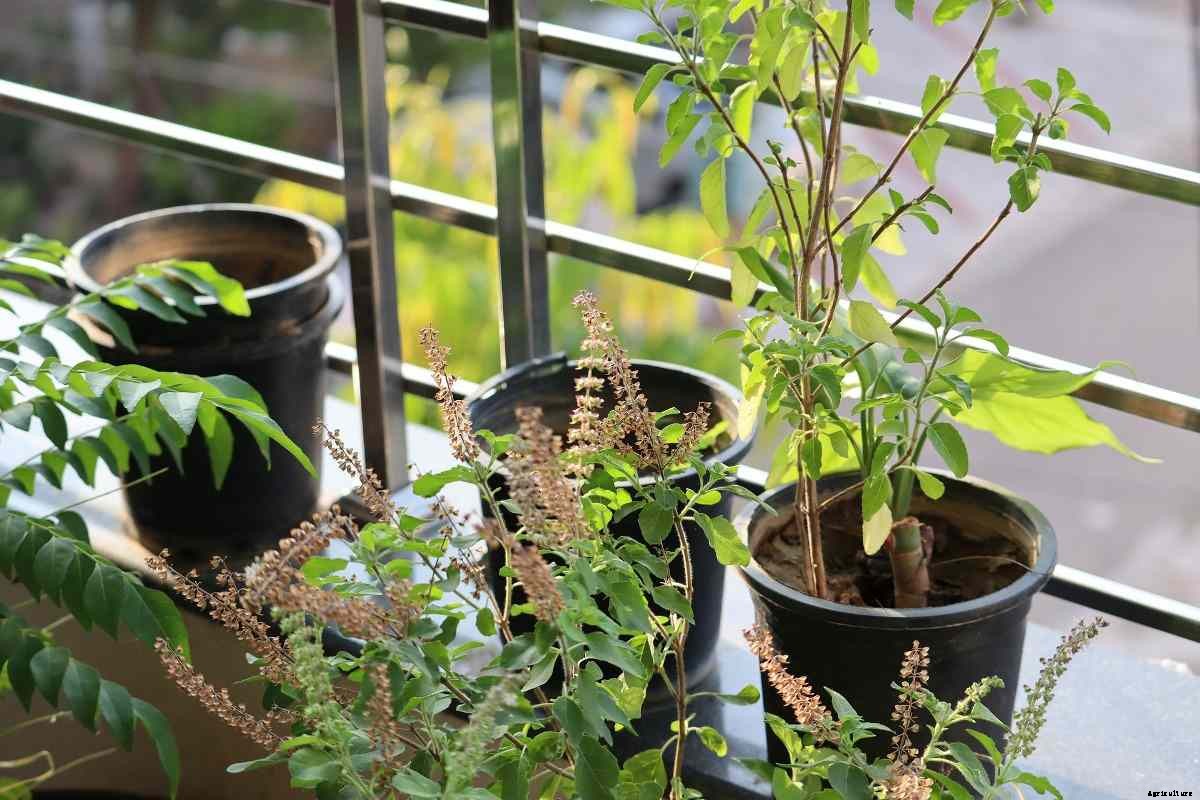
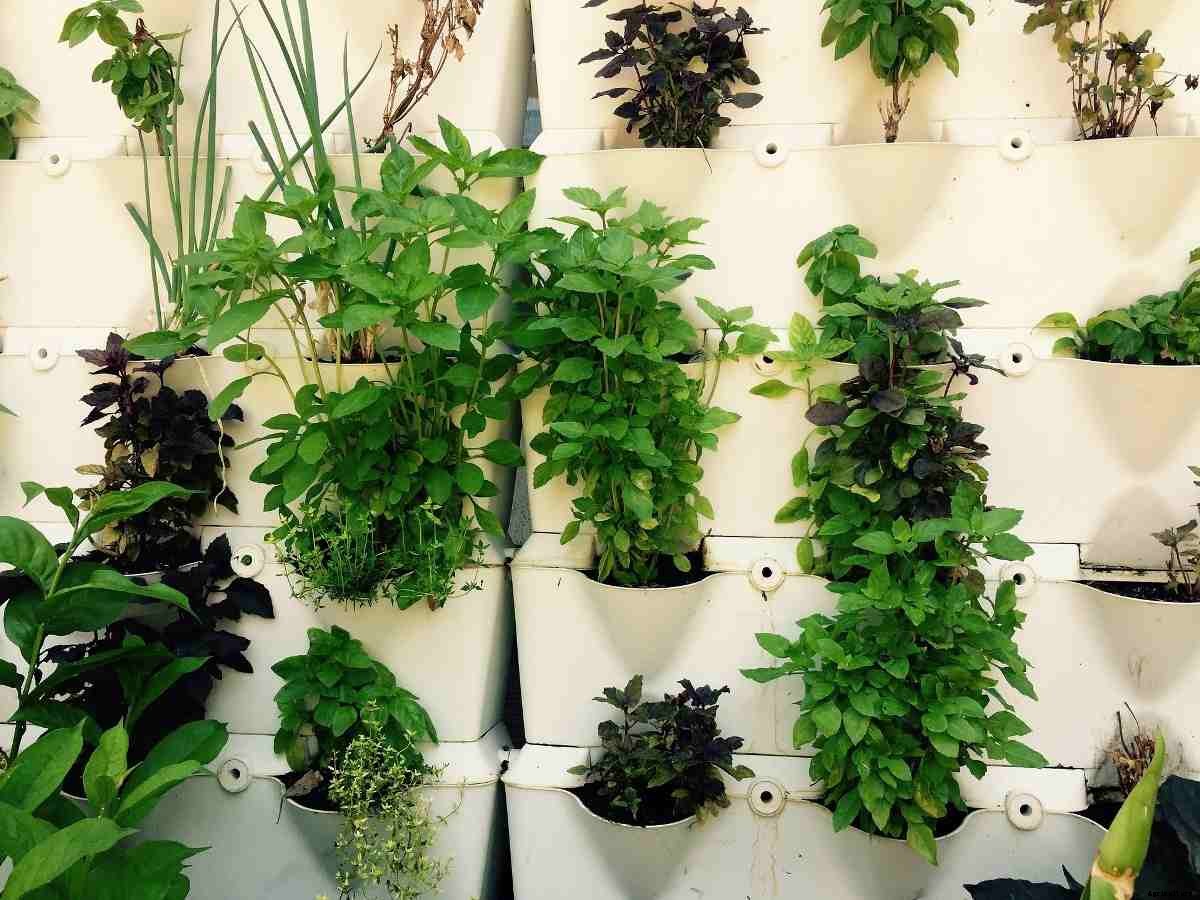
The easiest herbs to grow indoors are;
Thyme, rosemary, basil, sage, chives, and tarragon are good plants for starting indoors. Many of these plants have very fine seeds and need a long germination period.
Parsley, Italian basil, chives, oregano, and rosemary will all plants grow well inside with enough light. Rosemary plant needs to be purchased as a seedling or plant rather than seeds. Also, keep in mind that parsley and basil are annuals, and then they will need to be replanted each year.
Whether you are growing some herbs a good head start will always determine the growth success rate of your seeds. The paper towel method for seed germination is a very easy one.
To use this method;
You should also check this: Growing Chives in Pots, Planting, Care.
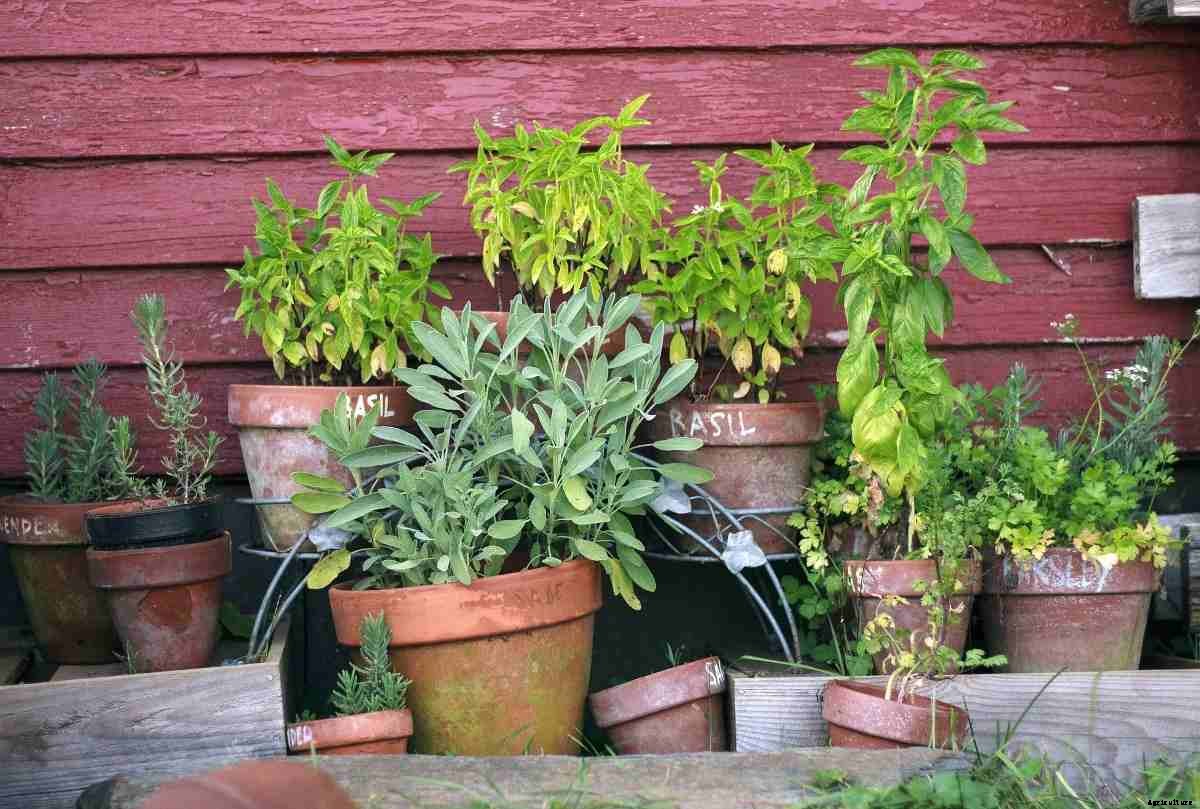
Basil – Start seeds indoors 6 to 8 weeks before the last frost date for your area. Then, cover seeds with 1/4-inch of soil and keep warm and moist.
English Thyme – Start seeds indoors 8 weeks before average last frost date or sow outside about 1 to 2 weeks after average last frost. Thyme plant needs light to germinate so do not cover seeds. Then, keep the surface moist by frequently misting the soil surface. Be patient, thyme takes a long time to sprout.
Greek Oregano – Greek Oregano plant is a hardy perennial that is easy to grow. Start seeds 6 to 8 weeks before average last frost date or sow outside 2 to 4 weeks after average last frost. Then, sprinkle a pinch of the small seeds on the soil surface and mist lightly. Oregano seeds require some light to germinate so does not cover seeds.
Sage – Sage plant is a shrubby perennial herb with woody stems, gray-green leaves, and blue to purplish flowers. Sage is slow to germinate, sometimes taking up to about 21 days. Be patient and maintain the soil evenly moistly. Sage is a shrubby perennial herb with woody stems, gray-green leaves, and blue to purplish flowers. Start seeds 4 to 6 weeks before average last frost date or sow outside 1 to 2 weeks after average last frost. Transplant hardened-off seedlings into the garden after all danger of frost has past and plant 12-18 inches apart.
Chives – Chives are a hardy perennial herb plant that grows in spiky, grass-like clumps. Start seeds indoors about 6 weeks before average last frost date or sow outside as soon as the ground can be worked. Transplant hardened-off seedlings to the home garden after all danger of frost have passed. Chives produce in clumps, so there is no need for thinning.
Dill – Dill is a great herb plant for the beginner to grow from seed. It has big seeds, so it is easy to handle. It grows quickly, germinating within about 1 to 2 weeks of sowing the seeds.
Parsley – Parsley seed is notoriously slow to germinate, sometimes taking up to about 4 weeks. To speed it along, soak the seeds overnight in warm water and sow about 1/4 inch deep in the soil. It doesn’t like to be transplanted, so grow seeds in pots large enough to move outside into the garden. Start seeds indoors 6 to 8 weeks before the last frost date in your area. Parsley takes a long time to sprout. To help speed up seed germination, soak seeds in warm water for up to 24-hours before planting.
Cilantro – Cilantro is also called Coriander. It is a cool-season annual herb that grows and matures quickly.
In case if you like this: Making Chicken Manure Compost for Garden Plants.
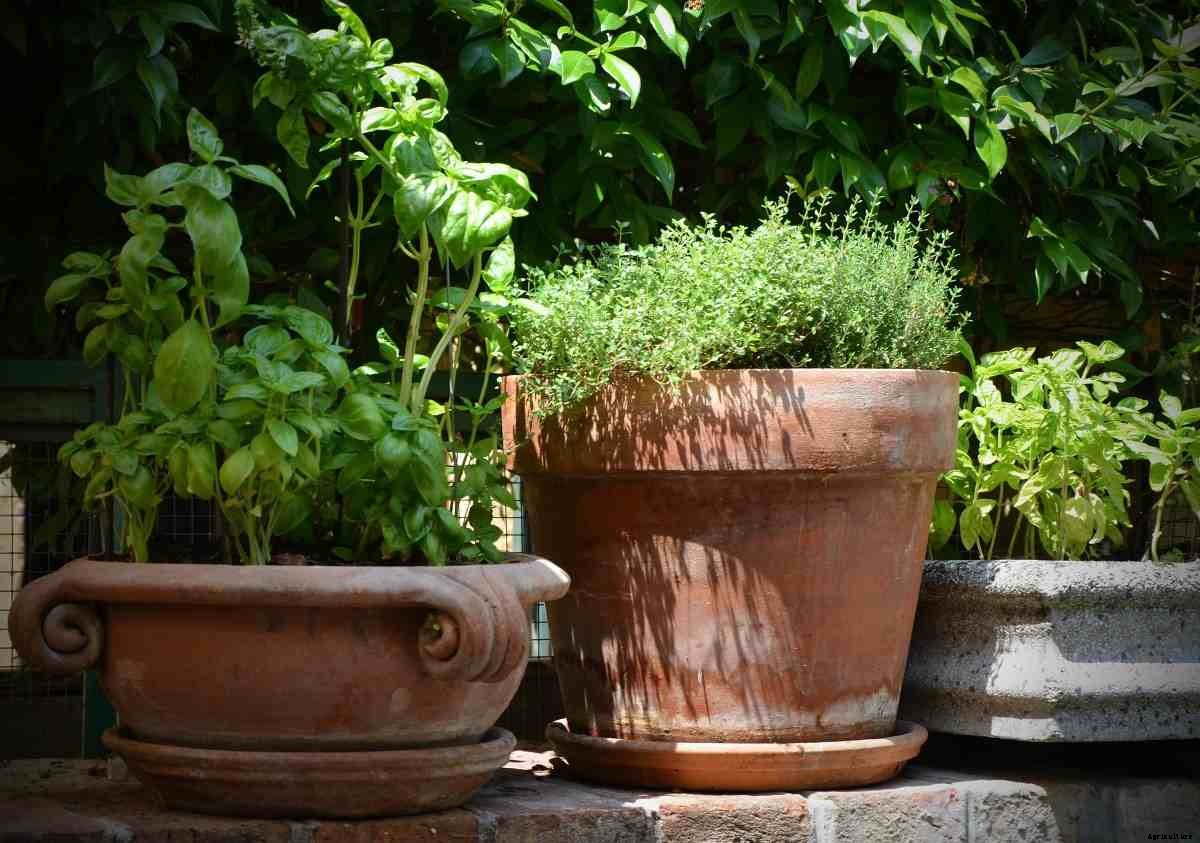
Herbs must be trimmed back to keep them from being all woody stem (which does not grow any leaf). A true pruning, not just a pinch of the plant leaves you are harvesting, is best done in the early spring, as soon as you see new growth starting. And, it is best not to prune too late in the season.
Herbs are among the easiest plants to grow and are very forgiving of neglect, poor soil conditions, and strange weather. You can even see what had looked like dying herbs perk up and unfurl their leaves within a couple of hours. Water can also be a factor in the wilting of indoor herbs.
Patience is essential when growing herbs indoors. It is not unusual for the seed to take 2 to 4 weeks to germinate, although some herbs are much faster.
Too much seed soaking in water and seed will drown. It is recommended that you only soak most seeds for about 12 to 24 hours and no more than 48 hours. The benefit of soaking seeds before planting is that germination time will be reduced, which means you can have happy, growing plants faster.
Growing herbs from seed are not as difficult as some would lead you to believe. You just need sunlight, small containers, a little potting soil, and a few seeds. Herbs can appear to be fragile, but they are quite durable plants. The first thing to do is to choose your herb seeds.
In case if you are interested in Vertical Herb Farming, Advantages, Ideas, and Tips.


