
Welcome to Modern Agriculture!

The onion is also known as the common onion or bulb onion, is a staple in many kitchens. Planting onion at home garden is very simple. The onions can easily be grown in your home garden such as inside the kitchen, in the balcony, on the terrace, in the backyard. If you are restricted by space, you easily plant the onions in pots or containers. Onions can be grown from sets, seeds, and scraps. Onions are one of the most popular growing vegetables in home gardens and are one of the first crops of spring. The onions can be stored over winter thus making a versatile crop. They are used in a huge range of culinary dishes, both raw and cooked and are easy to grow.
Onion varieties are mainly classified into two categories. They are Long-day (better for cool climates) and short-day (better for warm climates).
Varieties of long day type of onion are;
Varieties of short-day type of onion are;
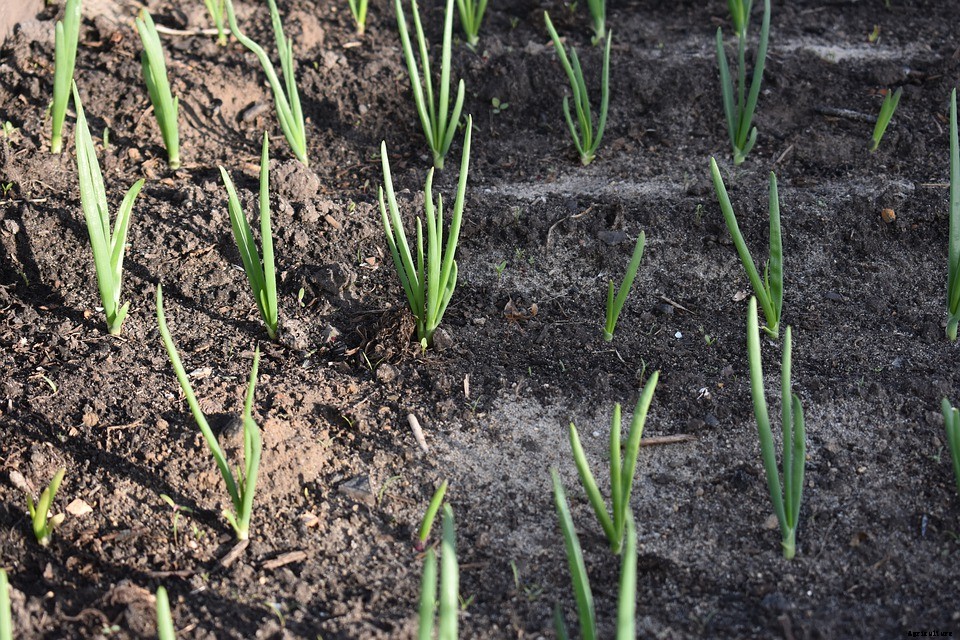
Onion plants can grow from sandy loam to heavy soil in almost any soil. For this, firm soil is very good. If the soil of the garden is heavy, you should use some organic manure, perlite or sand to maintain moisture in the soil. Onions prefer a little acidic soil, for this pH level 5.5-6.5 is an excellent level.
You may also like How to Grow Dill Herb at Home.
Water is important to grow onions in containers or pots in gardens because your container onions will have little access to naturally stored rainfall from surrounding soil like onions developed in the ground do. Onions grown in containers will need at least 2 to 3 inches of water a week, perhaps even more in hot weather. Check onions daily, and if the top of the soil is dry to the touch, give them some water.
This onion plant grows very well in the temperature range of 13-24°C, its growing period and when the bulb is formed, the ideal temperature is 16-21°C. When the bulb is mature and the time of onion harvest 30-35°C is favorable. In the case of cold, heat and excessive rainfall, excellent performance can be affected.
Onions are generally propagated by seeds, but can also be propagated with bulbs as well. The bulb should be planted in the soil so that the stem is in the soil, and after a while, you will find multiple bulbs in place of the single one. However, in this process, as many bulbs will be competing for the same nutrients, the overall yield and quality do not match that of seed production.
Let us discuss different planting methods of onions;
Onions planting can be grown from seeds, sets (young, small dormant bulbs grown the previous year), or transplants. Growing onions from seed can take as much as 5 months. Sets are easier to plant than seeds or transplants. Sets mature in as little as 2 months and are less susceptible to disease. However, cultivar selection is limited for sets. (Avoid onion sets with bulbs larger than a dime and they are likely to bolt.) Transplants are small seedlings that look like scallions. Transplants require about two months reaching maturity.
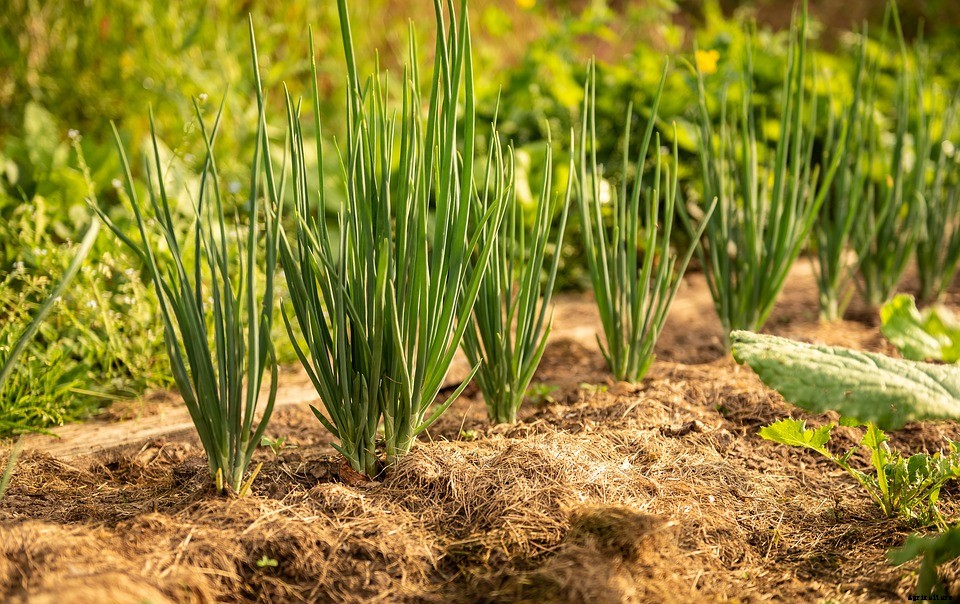
Create a shallow furrow in a prepared bed and plant onion sets tips up, 4 to 6 inches apart or about two inches apart for green onions. Gently firm the soil around them, leaving the tips protruding above the surface. Allow 12 inches to 16 inches between rows.
Place the whole onion in a prepared bed in a hole that’s about the same diameter and depth as the sprouted onion bulb. Cover it with the soil till only the very top where the leaves originate sticks out above the soil. For green onions, plant the bulbs two inches apart in rows that are about 12 to 16 inches apart. If you want to experiment with growing more bulb onions, allow 4 inches to 6 inches between planted onions.
You may also check Techniques of Vertical Gardening.
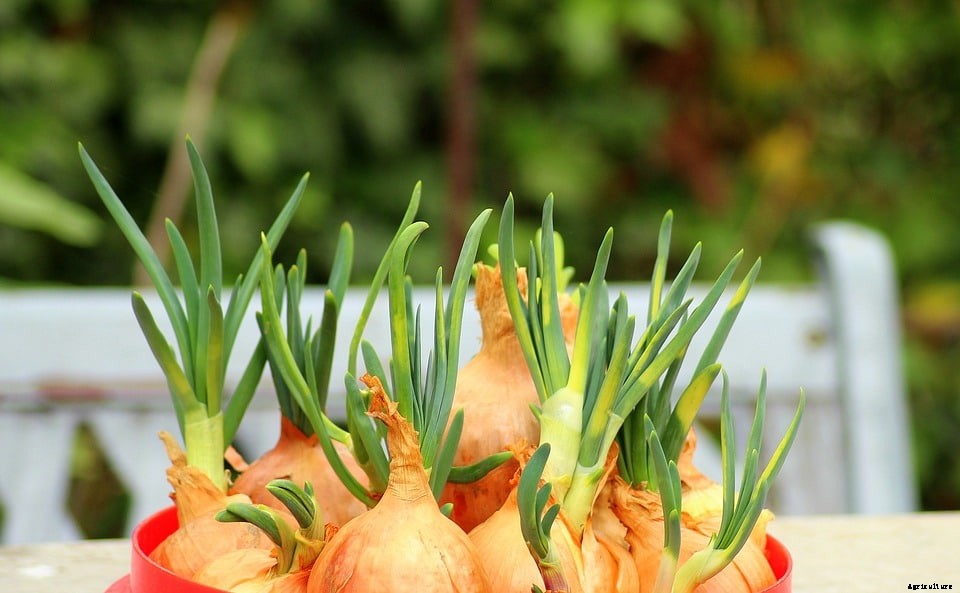
Here we discuss the process of planting onion using sets;
Here we discuss the process of planting onion using seeds;
Generally, growing onions in containers allow you to be growing onions indoors or in a small space in your backyard or in your terrace.
There is no special trick or method to grow onions in the home garden. Onions grown in the garden, you just have to make sure that you provide enough sunshine, water, and fertilizer support to the plants and they will thrive in most conditions. Here, we discuss how to grow onions at home in pots;
Small pots are not useful since you would generally want to grow more onions in a single pot. It is, therefore, ideal to select a larger container that is 10 to 12 inches in height. The mouth or opening of the container must be bigger to be able to adequately accommodate the growing onion plants. Remember that one onion needs a space of about three inches for proper growth. You can even use plastic buckets or tubs for planting as it will be economical. Just make sure that make drainage holes at the bottom of the container.
Sunlight is an essential element for growth, and you must keep the pot in full sunlight whenever possible and ideally for about 6-8 hours a day. Some types of onion plants could need partial shade. One more important point to remember is that onions require cooler temperature during the seed germination process. When the plant starts to grow, it needs a higher temperature for good formation and growth of the bulbs.
You may be interested in Growing Cilantro in the Home Garden.
An onion is a cool-season crop and it must be planted at the beginning of the cool season, depending on your climate.
The seeds must be started indoors about 6 weeks before moving them outdoors. Once the shift takes place, plant them about 2cm deep and space them 8 to 10cm from each other.
Onion can be developed by sowing seeds or planting transplants in the container soil. Seeds must be planted ½ inch deep and about 3 inches apart in the soil. When grown from the seeds it takes about 4 months to mature. Since onions seeds are short-lived, it is very important to sow fresh seeds each season.
While growing onions from transplants make sure that you bury the stem up to the start of the bottom plant leaves. Keep a distance of three inches between them.
Let us discuss how to care for onions;
Rot: In damp soils, you can encounter neck or stem rot or bulb rot. Avoid soil drainage and air circulation.
Splitting: Bulbs will split or double if the soil is allowed to remain dry through the bulbs are forming.
Thrips: To control thrips tiny insects about as far as a sewing needle and take a dark piece of paper into the garden and knock the onion tops against it; if thrips are present, you will mark their tan-colored bodies on the paper. A couple of treatments with insecticidal soap kill them. Follow the given package directions. Spray the plants twice, three days apart, and the thrips must disappear.
Onion Maggots: Cover your emerging onion crop with fine mesh netting. Close it by mounding soil around the edges. The onion maggot likes to lay its eggs at the base of plants, so the netting must prevent that. You should keep mulch away because the insects like decaying organic matter, and make sure you completely harvest onions as the season progresses. Onion maggots are generally a problem in very rainy periods, so these precautions may be unnecessary if you have a dry season.
Onion must be pulled out by hand or with the help of Khurapas and immediately shifted to shade for curing. Harvested bulbs must never be left in the main field as scorching may affect the crop. There is a steady increase in volatile sulfur until the plants get to the maturity stage. The peak is making just before the tops begin to fall. In Kharif, after harvesting crop must be left in the field for few days for drying of leaves.
In addition to good planting, you require to know when to harvest onions for the best flavor. Harvest tops for green onions as soon as they reach six inches in height.
Onion crop harvesting is ready in five months for dry onion. However, for marketing green onion, the crop becomes ready in 3 months after transplanting. The onion crop which is raised from dry sets is not fit for the production of dry bulbs as it starts bolting and then is fit for marketing as given onion two and a half months. Actually, onion harvest time must be early in the morning when temperatures are not too hot.
When the onion bulbs are as large as they will develop, the tops become weak and fall over. When one half or more of the tops have fallen over, onions are prepared for harvest. Pull or dig the onions with the tops attached, hang in bunches or spread them out in a warm, airy location out of the direct sun, for two to four weeks, until the tops and necks are dry. And you can use an electric fan to speed drying. Nothing improves the keeping quality of onions more than thorough drying or curing process.
You may also like Community Gardening Ideas and Tips.
You may be interested in Pumpkin Farming, Planting, Care, Harvesting.


