
Welcome to Modern Agriculture!

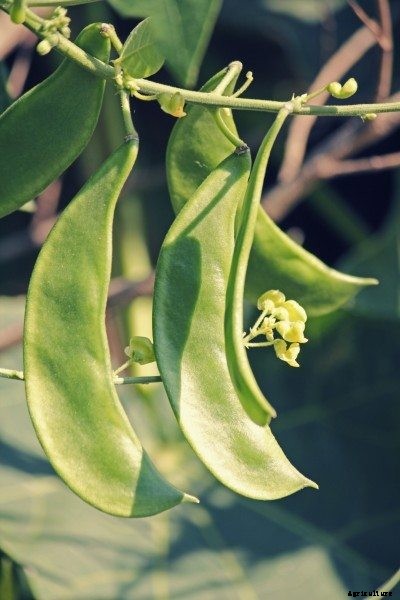
Butter, chad or lima beans are big tasty legumes that are delicious fresh, canned or frozen, and pack a nutritional punch. If you wonder how to grow lima beans, it is similar to growing string beans. All you need is some well-prepared soil, sunshine, heat and a few months from seed to harvest.
As a Central American native, growing lima beans requires nice warm, sunny conditions. The pods will take 60 to 90 days to mature in preferred temperatures of around 70 degrees Fahrenheit (21 C.). While not difficult to grow, the time for planting lima beans is important, as these are frost tender annuals. Also, know when to harvest lima beans to avoid woody, bitter pods and capture the nice, tender, green beans at their peak.
If you want transplants, sow seeds indoors three weeks before the last expected frost. In order to direct sow, plant seeds in prepared beds outdoors three weeks after the last frost and when temperatures are at least 65 degrees Fahrenheit (18 C.) consistently for at least a week.
Lima beans set their crop all at once, so plant successively every 2 to 3 weeks for a consistent harvest throughout the end of the season. There are both vine and bush lima beans. Bush beans will mature earlier so you can plant both and have a later maturing crop from the vines.
Growing lima beans is done best at temperatures between 70 and 80 F. (21-28 C.). When planting lima beans, try to time the crop so pods will set before the hottest part of the summer.
Choose a site in the garden that gets sunshine all day long when growing lima beans. Incorporate some well-rotted compost or manure and loosen soil deeply.
The perfect soil pH is between 6.0 and 6.8. The soil should be well draining or seeds may fail to germinate and plant roots can rot. Plant seeds at least one inch (2.5 cm.) deep.
Once plants have sprouted, thin the seedlings to 4 inches (10 cm.) apart. If you are planting a vine variety, set poles or stakes once plants have several pairs of true leaves. For bush beans, use tomato cages to support the heavy bearing stems.
Lima beans do not need extra nitrogen and should just be side dressed with straw, leaf mold or even newspapers to keep weeds at bay. Provide at least one inch (2.5 cm.) of water per week.
With good care, lima beans can begin flowering in just a few months and set pods shortly after. The pods should be bright green and firm when ready for harvesting. The best flavor and texture come from younger pods. Old pods will lose some of the green color and become lumpy, filled with tough seeds.
Bush beans will start to be ready in 60 days or so, while vine varieties will take closer to 90 days. Store all those beautiful beans, unshelled, in refrigeration for 10 to 14 days. Alternatively, remove the shell and freeze or can the beans.


