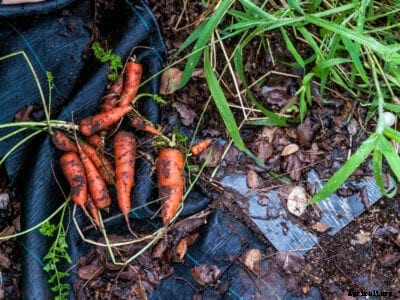
They’re adorable, cute, and pretty pricey. We’re talking about the ever increasing trend for miniature vegetables. The practice of utilizing these miniature vegetable started in Europe, expanded to North America in the 1980’s and continues to be a popular niche market. Often found in four-star cuisine, the miniature vegetable craze has extended into the farmer’s market, local produce department, and on to the home gardener.
What are Baby Veggies?
Miniature vegetables stem from basically two sources: those that are harvested as immature vegetables or fruit from standard size varieties, and miniature vegetables that are dwarf varieties, wherein the mature fruit is truly smaller in size. An example of the former would be the tiny ears of corn often found canned and used in Asian cuisine or pickled in German style salads. Delicate and sweet tasting, these 2 inch (5 cm.) babies are harvested before the silk begins to dry.
There are about 45 to 50 varieties of miniature vegetables marketed for consumption in the United States. Their delicate consistency renders them with a relatively short shelf life and more labor intensive harvesting practices. They reflect those liabilities with a higher price tag than their full sized counterparts. Due to these high costs, home gardeners will do well to grow their own as seeds are now readily available either through seed catalogues (online) or at one’s local garden center.
Growing baby vegetables is much the same as growing their larger counterparts, so the care of these baby vegetable plants will mimic the same conditions as these.
Baby Vegetables List
There is an ever increasing number of baby vegetable plants available to grow in the home garden. Some examples are included in this baby vegetables list as follows:
- Baby artichokes – Available March through May, these have no choke; peel the exterior leaves and eat the entire choke.
- Baby avocado – Produced in California and also known as cocktail avocados, they contain no seed and are about an inch (2.5 cm.) wide by 3 inches (8 cm.) long.
- Baby beets – Produced year-round in gold, red, and long red varieties. Gold beets are the size of a quarter with a milder, sweeter flavor than reds, which are heartier in flavor with darker tops.
- Baby carrots – Produced year-round, baby carrots are very sweet and can be served with some of their greens and are available as French, round, and white. Baby French carrots are 4 inches (10 cm.) long and 3/4 inch (2 cm.) wide with a tender, sweet flavor. Use as a snack with a partial top or cook with other baby vegetables. Baby round carrots have a strong carrot flavor while baby white carrots are 5 inches (13 cm.) long and an inch (2.5 cm.) wide with long tops.
- Baby cauliflower – Available year-round, it has a flavor similar to mature cauliflower. Baby snowball cauliflower is 2 inches (5 cm.) in diameter.
- Baby celery – A fall and winter crop, baby celery is around 7 inches (18 cm.) long with a strong celery flavor.
- Baby corn – This is a year-round product often imported from Mexico and is available in white and yellow varieties.
- Baby eggplant – Grown May through October. Round and elongated shapes are produced. Some varieties, particularly purple and white, can be bitter and contain many seeds.
- Baby French green beans – February through November via southern California. Commonly called haricot verts, this flavorful strain of green beans was developed and popularized in France and has more recently gained appeal in the United States.
- Baby green onion – Flavor akin to a chive and available all year.
- Baby lettuce – Several baby lettuce varieties such as Red Royal oak leaf, romaine, green leaf, and iceberg are produced all year in California.
- Baby scallopini – Available May through October, this is a hybrid of scallop and zucchini and tastes like its larger relatives. Dark green and yellow varieties can be purchased.


