
Welcome to Modern Agriculture!

Traditionally, various types of soils were considered as a growing medium for growing of crops of potted plants. But as the time has progressed, the definition of growing medium has been modified a little. Instead of soil, other growing media or substrates are being used because of their many benefits.
Substrates or growing media is defined as solid materials other than soil, which can be in the form of mixtures or alone. These media should guarantee better-rooting conditions and provide anchorage for the root system, supply water and nutrients to plants and a suitable aeration environment to roots.Gruda et al. 2013, 2006
“material other than soil in situ, in which plants are grown”. The European Commission for Standardization (CEN,1999)
There is a wide assortment of growing media or substrate (such as Calcined Clays, Expanded Polystyrene, Rice Hulls, Sawdust etc) available and the choice of using a particular substrate depends on various factors such as geographical location, farmers technical skills and financial capabilities.
A wide selection of growing media is available and the choice depends on the grower’s financial and technical implications. Gruda et al. 2013
The coconut coir, a fibrous material containing thick mesocarp derived from coconut husk, has become one of the primary choices for a growing medium in tropical and subtropical zone.
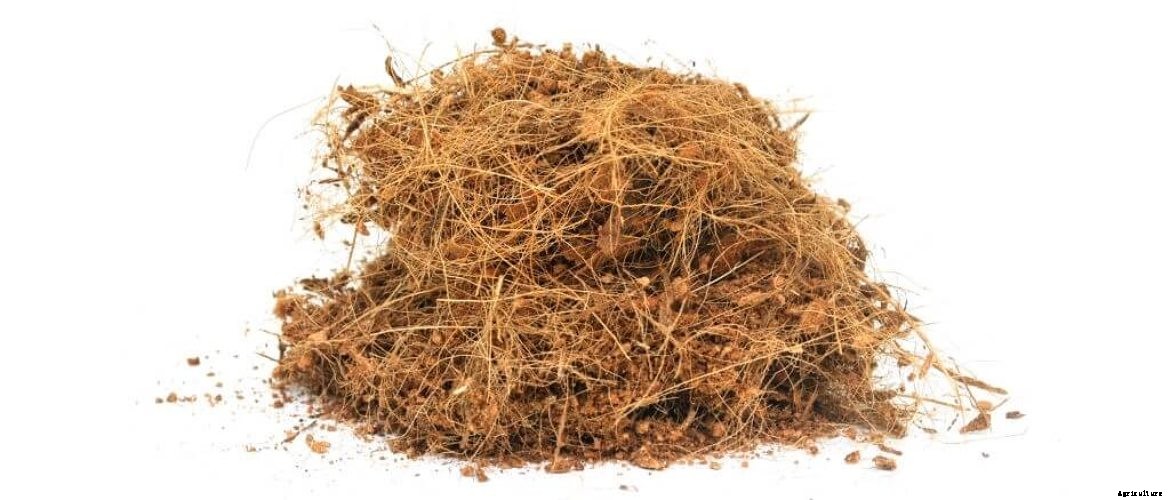
During the extraction process of long coir fibers from coconut husk, short coir fibers and dust is left behind. Short fibers of coir are made up of brown, irregular pieces known as coir dust. As coir dust’s many characteristics resemble those of horticultural peat, it was suggested that it be renamed as cocopeat.
Earlier, cocopeat, which is the byproduct of coconut coir manufacturing, was either burnt or unutilized. But due to environmental concerns and increasing unavailability of peat soils for horticulture, cocopeat became an affordable and renewable peat substitute for horticulture.
As a growing medium for ornamental potted plants as well as other horticultural species, cocopeat, or coconut coir dust, is widely used. Copoeat is a suitable growing medium with acceptable chemical and physical characteristics such as pH and electrical conductivity.
| Property | Partially decomposed cocopeat |
|---|---|
| Lignin (%) | 28.5 |
| Cellulose (%) | 25.8 |
| Organic carbon (%) | 29 |
| Nitrogen (%) | 0.26 |
| Phosphorus (%) | 0.01 |
| Potassium (%) | 0.76 |
| C:N ratio | 30:1 |
| Calcium (%) | 0.47 |
| Magnesium (%) | 0.41 |
| Copper (ppm) | 4.2 |
| Iron (ppm) | 0.08 |
| Manganese (ppm) | 17 |
| Zinc (ppm) | 9.8 |
| pH | 5.6 – 6.0 |
| EC (millimhos/cm) | 0.3 – 0.6 |
| CEC (meq/100 g) | 40 - 100 |
| Sources: Alexander and Bragg 2014, Awang et al. 2009, Cahyo et al. 2019, Carlile et al. 2015, Coir Board 2016, Gruda 2019, Holman et al. 2005, Kalaivani and Jawaharlal 2019, Londra et al. 2018, Noguera et al. 2000, Paramanandham et al. 2013, Prasad 1997, Robbins and Evans 2011, Sengupta and Basu 2016. | |
There are basically two ways of making, preparing and acquiring cocopeat. We will discuss both the ways in this section.
This method is used when you are making the cocopeat from scratch i.e. from the coconut husk.
Step 1. Gather coconut husk. Make sure that the cocunut husk you have acquired is soft i.e. it can be bent. The inside portion of a coconut husk is soft. Try and accumulate such kind of coconut husk.
Step 2. After accumulating the husks, now it is time to cut the husk in small pieces. No the size of these pieces depend on ho powerful your blender / mixer is . Just try and blend few pieces in the blender and you will figure out the appropriate size of the husk suited for you equipment. Make sure not to include the hard outer portion of the husk as this hard portion ill ruin the mix.

Step 3. Now its time to blend these pieces in a mixer grinder. Remember not to try and grind the husk in fine powder. You want the grind to be coarse. (And also, grinding the husk to a fine powder is very difficult).
Step 4. Now with the help of a sieve, separate the finer particles from the large particles. The fine particles collected after this process is your cocopeat.
Step 5. Soak this substrate in water for sometime. When the substrate i.e. cocopeat is completely soaked, remove it from water and squeeze out all the water from it. After this store it in a dry place.
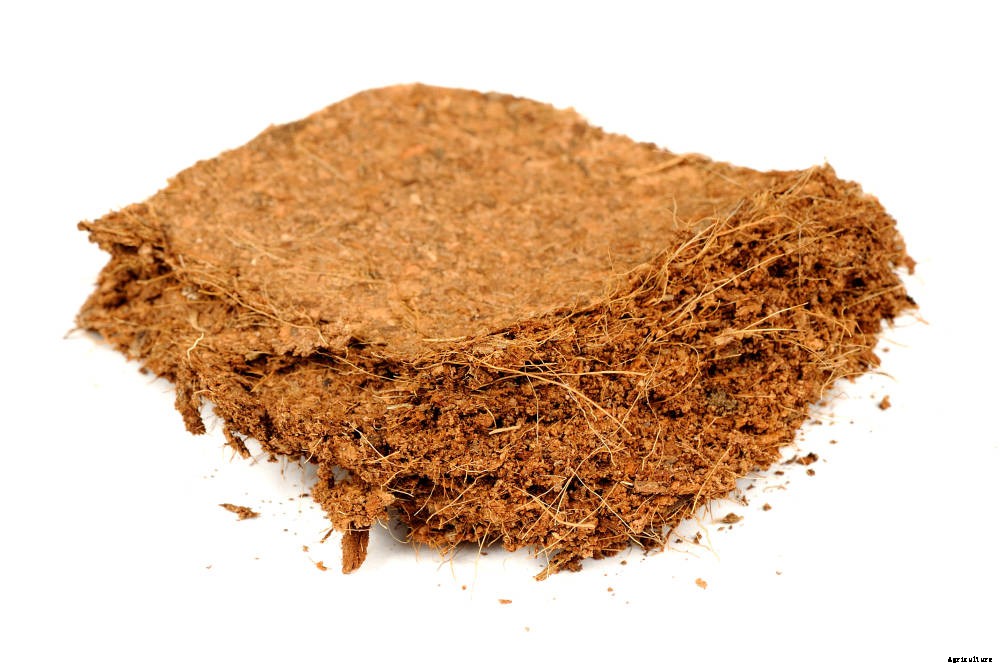
Step 6. Now the cocopeat is ready to be used as and when required to be used in a substrate mixture for garden or potted plants.
This is a method in case you have bought the cocopeat from online store and want to prepare it for gardening. Usually when you buy cocopeat online, it comes in the form of a dry cocopeat brick.
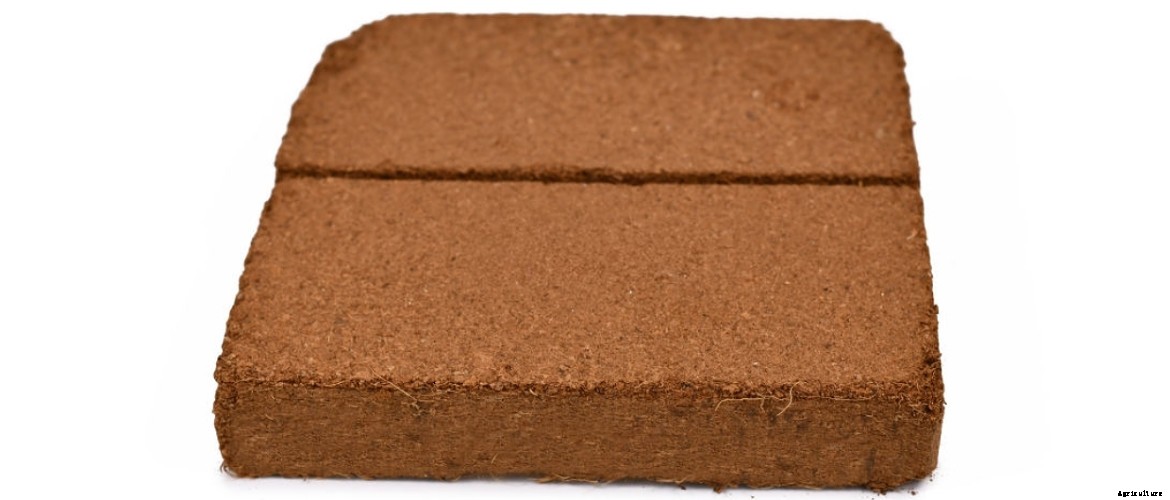
Step 1. Take the cocopeat brick and soak it in water for few hours ( till you see the brick completely soaked).
Step 2. The soaking of cocopeat brick will generally take about 4 hours. After the soaking is done, the brick will become 2-3 times its size. At this point remove the cocopeat and try to squeeze out the excess water from it.
Step 3. Store this cocopeat in a dry and area and use it whenever required for gardening or work.
Tip 1. Though cocopeat has a very good water retention capacity but sometimes this water retention quality leads to low aeration of the growing medium. This affects the oxygen diffusion of the roots. Mixing the cocopeat with coarser materials such as burnt rice hull may help in preventing this affect.
A study conducted and published in American Journal of Agricultural and Biological Sciences 4 (1): 63-71, 2009 concluded that a mix of 70% cocopeat and 30% burnt rice hull not only increased the aeration but also positive effects on nutrient availability, bulk density and wettability.
Tip 2. Though cocopeat has many benefits, but it is also known to have phytotoxic elements which prevent the optimum growth of plants. Therefore, it is recommended to use cocopeat while being mixed with organic or inert materials. (Yau, P.Y. and Murphy, R.j – 2000)
In the study it was also recommended to prefer 3 months old bio-degraded (supplemented with 0.75% N and inoculated with wood rotting microfungi) cocopeat instead of fresh cocopeat. The tomato plants grown in 3 months old biodegraded cocopeat had 22% higher root dry weight, 43% more fruit numbers and 64% more yield.


