
Welcome to Modern Agriculture!

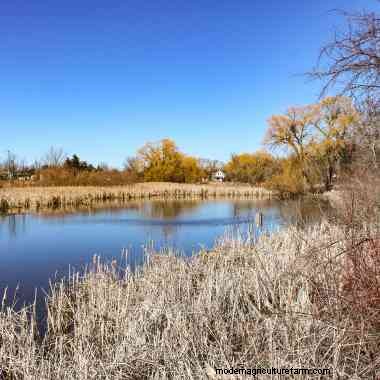
Our ponds here in North East Texas are a lot like our pastures. We need to apply agricultural limestone in order to raise the pH and alkalinity. Our soils here are naturally acidic because how they were derived. Same goes for our ponds. In order to raise the pH and alkalinity, we need to apply agricultural limestone to our ponds just as we do in the pastures. Anytime is ok to apply the agricultural limestone. Ideally, the winter months are the best time to adjust the water pH and increase the total alkalinity of the water. It takes time for the agricultural limestone to work. It can range from a couple of days to more than a month depending on the type and amount used, weather conditions, and on the degree of acidity of the water.
Water pH and alkalinity must be in correct order for a pond fertility program to work properly. Nutrients are added to the pond water to encourage a phytoplankton bloom. These are microscopic plants that feed microscopic animals called zooplankton. The forage fish like bluegill and minnows feed on the zooplankton. Game fish, like largemouth bass feed on the forage fish. This results in better fishing due to a properly managed pond water quality. Nutrients are pH dependent, especially phosphorus. Proper pH balance can improve phosphorus availability and enhance the health of the pond.
Applying agricultural limestone can make a difference in the health of the fish even though the land owner does not have a fertility program. Since our soils are naturally acidic, our ponds are acidic and a fish kill can occur if the total alkalinity gets too low.
Total alkalinity of the pond water needs to be 20.3 ppm or greater. If the total alkalinity gets below 20.3 ppm in the pond water, pH fluctuations occur. These fluctuations cause the fish to stress. If it gets below a 5 on the pH scale, “acid death point” occurs for many fish species.
