
Welcome to Modern Agriculture!

Introduction to Chicory Cultivation in India
Chicory (Cichorium intybus) is a blue-flowered perennial plant and belongs to the Asteraceae family. Growing Chicory is easy, and the plants don’t require much care. You should plan for growing Chicory during the cold weather conditions because it is a cool-season crop. It is a great winter vegetable and you can grow it almost everywhere. Chicory is available throughout the world and it can be found growing wild in many areas of the United States. Chicory is also known by some other names like wild endive, wild bachelor’s buttons, succory, ragged sailors, horseweed, blue weed, bunk, blue dandelion, blue daisy, and blue sailors. In this article we also discuss the below topics about Chicory cultivation;
Chicory is a hardy perennial plant with a long, rosette of leaves, and a branched flower stalk topped with pale blue color flowers. It is grown mainly for its leaves. And the leaves are usually eaten raw as salad leaves. Also, some people prefer the roots and tender shoots. The Chicory crop is cultivated in few States, mainly Uttar Pradesh, and Gujarat. These two states account for 97% of the total production of Chicory in India. Generally, the Chicory plant thrives in well-drained soil in full sun to partial shade. What are we waiting for? Let us get into the details of Chicory cultivation in India.
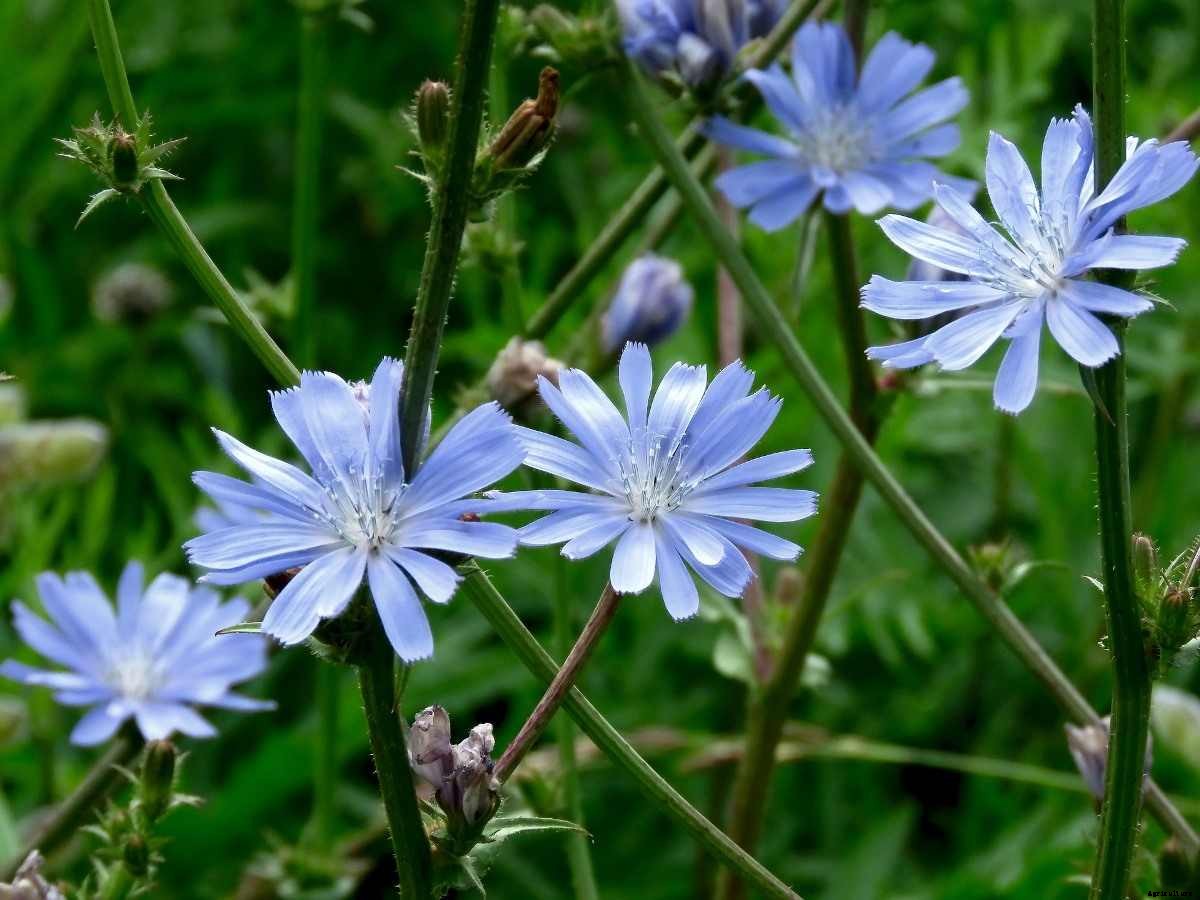
Good companion plants to grow next to Chicory are carrots, onions, fennel, and tomatoes they all like the same growing conditions.
Some of the best companion plants for the Chicory family include other greens, like;
Worst Companions – Avoid growing Chicory next to;
The two main forms of Chicory are;
Chicory greens – These are varieties grown for their leaves and used for salads.
Root Chicory – They are grown for their roots that are used for the production of Chicory coffee and also as a medicinal plant.
There are two types of Chicory plant. Witloof is grown for the large root and is used to make a coffee supplement. Also, it can be forced to use the tender white leaves called Belgian endive. Chicory is grown for the leaves, which can be in a tight head or a loosely packed bunch. It is best harvested very young before it turns bitter.
Witloof Chicory plants to grow are;
Varieties for planting Chicory for leaves only include:
Planting Depth – ¼ inches
Germination Temperature – 12°- 23°C
Days to Germinate – 5-10
Growing Soil Temp – 12°- 21°C
Spacing – 8 inches
Planting Location – Full sun fall, partial shade summer.
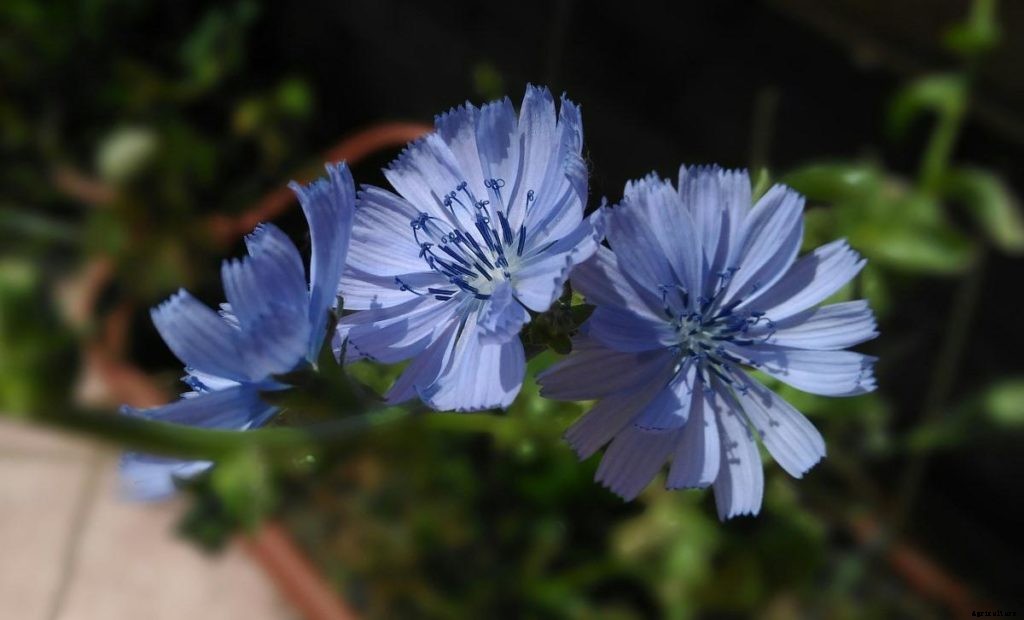
Step 1) Chicory can grow within a well-drained location where is fertile with nutrients. Though, the Chicory plant will grow inside other soils when they are improved with organic fertilizers and a lot of compost manure.
Step 2) Spread the seeds for 9 inches to 1.5 feet apart with 1.5 inches deep. Seeds grow in early spring until summer for one month following the final frost.
Step 3) Expect the seeds to sprout and separate seedlings to have them grown up over 8 inches apart. The sprouting time for Chicory growth is about 2 to 4 weeks.
Step 4) Remove the wild weeds from your sprouts and then spray water onto them well. If you would love to harvest plants or roots, you can do it after 3 months and a half.
Step 5) This phase is the time when seed Chicory starts to germinate. The soil should be fine for them like sand kept in a shed with cool temperature levels.
Step 6) Trim their roots on a straight line, 1 to 3 inches above its crown. Watch for germination starting in 7 days, but don’t be discouraged if it takes up to 3 weeks for the seeds to sprout. Thin the seedlings to one every 6 inches, or leave them closely spaced if growing them for the leaves. Then, spread a 2-inch-thick layer of mulch between the rows to discourage weed growth and to help maintain soil moisture.
Step 7) Grow the cut roots to stimulate the crown to be 1 or 3 inches on top of the ground. Water once a week to a 1-inch depth. Allow the soil to dry out slightly between watering to keep the roots from rotting or growing too rapidly, which will result in a fibrous and bitter crop. Once the plants grow to about 4 inches in height and then side-dress the rows with a 2-inch-thick layer of well-composted manure. Add more manure in mid-to-late summer to encourage the production of large and healthy roots.
Step 8) Prune off the flower heads as they emerge during the summer season.
Step 9) The tender and small leaves are harvested after around 7 weeks. Harvest the Chicory leaves before the middle rib thickens and becomes hairy if consuming them raw. Harvest the mature leaves for cooking. Dig up the roots for consumption in the mid-to-late autumn season since cool weather increases the size and quality of the roots.
In case if you miss this: Organic Moringa Farming.
Generally, pests and diseases are less in Chicory plants. Slugs and snails are some common pests for these plants. Beer traps, sawdust, eggshell barriers, copper tape, and biocontrols are some good methods for controlling slugs and snails.
Leaf rotting is also a common problem for Chicory plants. The Chicory plant leaves rot in damp conditions or when the plants are grown undercover. Removing the damaged plant leaves and improving the ventilation system undercover will help to prevent this problem.
Excess water and rainfall contribute to plant rot, which is why you should cover plants in rainy weather. That said, they can suffer stress if they get too dry, which can lead to other pests and diseases.
Slugs and Snails – You’ll see the tell-tale slime trail on the soil around your crop, as well as on the leaves. There are several ways to control slugs and snails like beer traps, sawdust, or eggshell barriers.
Downy Mildew – This disease attacks brassicas, melons, peas, and Chicory. It’s common in humid areas because the fungal spores need water to grow and spread. It shows up as white, yellow, or brown color spots on the upper sides of leaves and as gray mold on the underside.
Avoid this fungus by keeping plants well-spaced. Water plants at the base, not overhead, and water in the morning time. Be sure to rotate crops and remove any infected plants.
Fusarium Wilt – This fungus shows up as water-soaked lesions on growing Chicory plant leaves, which will eventually turn yellow. It’s spread by high-temperature levels and water. Sterilize your tools between use to avoid spreading the disease, and control insects, which can spread the disease.
Anthracnose – This fungus causes grayish dry spots on plant leaves, which can become necrotic. Be sure to rotate crops, keep weeds at bay, water at the base of plants, and remove infected plant leaves.
Bacterial Soft Rot – It causes water-soaked lesions that can sometimes ooze a slimy liquid. Rotate crops and avoid damaging plants while weeding or harvesting, and the only plant in well-drained beds.
White Mold – If the exterior of Chicory starts to wilt, spreading to the center until the entire plant starts to collapse; you might have a white mold. Look for white, thread-like fungus on the plant leaves. To control this disease by using some tips like rotate crops, control weeds, and give plants plenty of space. Also, you can use an organic fungicide if you catch it early enough.
Damping Off – Damping off causes seedlings to die or wilt. It is caused by a fungus and is common in waterlogged soils. Use organic sprays to prevent and control damping off.
Aphids – Aphids attack just about every plant out there. You’ll spot the tiny pests on the undersides of plant leaves. They suck the life out of plants, attract fungi, and spread disease, so don’t ignore them. You can prune off infected plant leaves if you have a small infestation. If you have a larger infestation, spray the pests off of plants with a blast of water and treat them with neem oil or insecticidal soap.
Flea Beetles – Flea beetles are tiny little pests that hop from leaf to leaf. Use row covers and trap crops to protect young plants. Also, you can sprinkle diatomaceous earth around plants and spray them with neem oil.
Cabbage Loopers – Cabbage loopers eat holes in plant leaves. Hand-pick the pests and encourage natural predators.
Thrips – Thrips can distort leaves and transmit viruses. Use an organic insecticide to control them.
Generally, you can harvest Chicory for its leaves, roots, or seeds. Chicory roots can be harvested from fall through the early spring season. Also, you can harvest Chicory leaves at any time during the growing season. Summertime is ideal for collecting Chicory seeds.
Harvest the Leaves – Chicory leaves are ready to harvest when the plant is 12 to 18 inches tall. You can either use a sharp knife or cut the plant off at soil level, leaving the root or you can just pull up the entire plant and cut off the root afterwards. The plant leaves can be stored in a plastic bag in the refrigerator for a week.
Harvest the Roots – Harvest time for the Chicory roots in late summer. If you want to harvest the Chicory roots for use a coffee substitute, it is best to use a shovel, rather than pulling up the plant by hand.


