
Welcome to Modern Agriculture!

 A thick, lush bed of dark green grass boosts the curb appeal of any home. Sun, water, and fertilizer are the keys to a healthy lawn. But is it possible to have too much of a good thing when it comes to lawn care? Can you over-fertilize a lawn? We researched this to help you have the beautiful yard of your dreams!
Yes, you can over-fertilize a lawn. If you notice yellow or brown grass the day after application, you have overdone it on the fertilizer. This is often referred to as ‘fertilizer burn’ and results in dead or damaged grass caused by excessive levels of salt and nitrogen in the soil.
Now that you know it’s possible to over-fertilize your lawn let’s take a closer look at this in more detail below. We’ll discuss the signs of over-fertilizing as well as why too much fertilizer will not only damage but ultimately kill your grass. We’ll also explore ways to regrow burnt-out grass and regain a healthy lawn.
So, if you’re ready to learn more about fertilizer and proper lawn care, then let’s get started!
There are five signs that you have over fertilized your lawn. These include the following:
Over-fertilizing your lawn is often the result of the following:
When you damage or destroy your lawn with too much fertilizer, you must find ways to leach out the excess product from the ground before reseeding it. The best way to do this includes the following five steps:
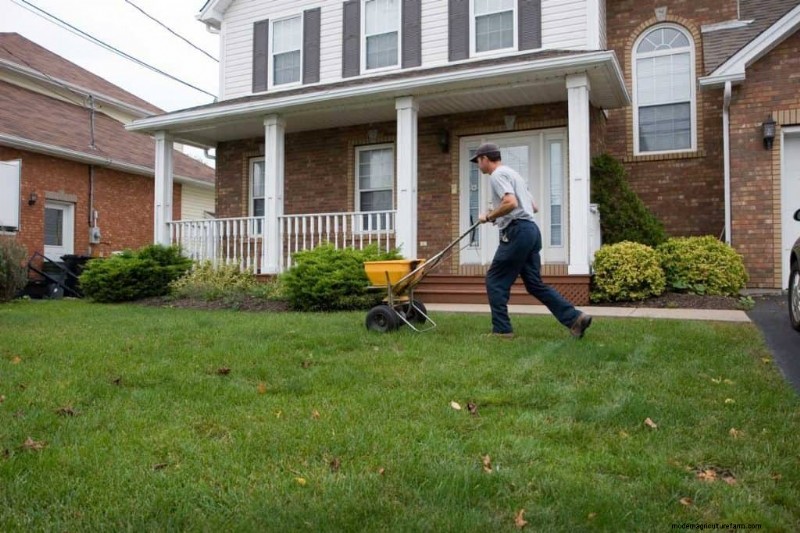
As already mentioned above, over-fertilizing can indeed kill your lawn. Increased nitrogen and salt levels in the soil will result in damaged or dead grass. When this happens, it’s often referred to as ‘fertilizer burn’ whereby sections of lawn appear yellow or brown and grow very slowly, if at all.
The best way to ensure that you don’t over-fertilize your lawn is to follow the five steps listed below:
Excessive weed growth is often an indication that your lawn is lacking in nitrogen. A reduced number of grass clippings than usual after mowing can also be a sign of nitrogen depletion. The most common symptoms, however, are yellow or yellow-green grass blades, little to no regrowth, and a low grass density. Although seasonal changes may sometimes be the culprit, more likely than not, it’s a nitrogen deficiency, and therefore fertilizer is required.
There is the possibility that you could put too much nitrogen on your lawn when fertilizing. If you accidentally spill fertilizer on your lawn or spread too much in one specific area, you run the risk of burning out your grass due to too much nitrogen in the soil. If you notice yellow or brown patches of grass that grow slowly or not at all after fertilizing, then you’ve likely (albeit unwittingly) overdone it!
Slow-release fertilizers help reduce the risk of nitrogen burn out. They provide for better growth overall with a more uniform appearance. They also remain in the soil for six to eight weeks (sometimes longer), so you don’t need to use them as often as quick release fertilizers - which can not only burn out your lawn if over-applied but also destroy surrounding plants.
There is still hope for a lawn that has been damaged or destroyed due to over-fertilizing.
Start by physically removing any fertilizer that has built up on top of the soil! Next, water your lawn until it’s thoroughly drenched. This will help flush out the excess salt and nitrogen deposits, assisting the roots to recover faster.
Continue to water your lawn every day for a week, preferably in the morning, to prevent fungus from developing. This will also get any lingering fertilizer out of the soil so your grass can start to grow healthy once again. If you choose to reapply fertilizer at a later date, always follow the instructions provided by the manufacturers to a ‘T’ for best results.
To summarize, you can indeed over-fertilize your lawn. Yellow or brown grass the day after the application is usually a sign of fertilizer burn out. Dead or damaged grass caused by increased levels of nitrogen and salt is often the result. There are ways, however, to regain a healthy lawn, so don’t despair. Check out our post on how to aerate your lawn here. That lush, bed of thick, green grass can once again be yours if you read the information carefully and follow the suggestions presented in this article.


