
Welcome to Modern Agriculture!

Red is a popular color, especially in trees and shrubs. If you're looking for ways to add some red to your garden or yard, we researched plants with gorgeous red flowers for to help you decide. Here is the list.
If you want to add a bold pop of red to your landscape, choose one or more of these 11 red flowering trees and shrubs:
Flowering trees and shrubs have different needs. Thus, we have a detailed discussion on the cultivation conditions of these lovely plants. We will also explore other related topics, such as pruning and edible flowers. So, keep on reading to learn more.
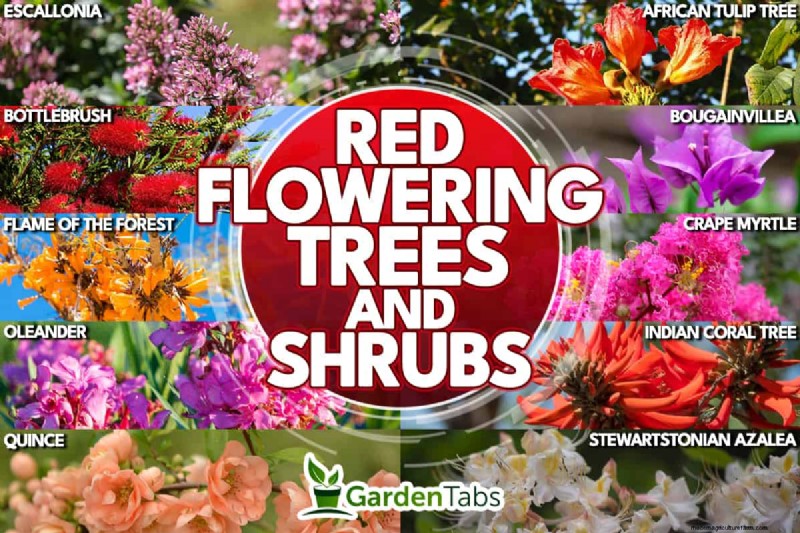
This section will give you the characteristics and primary care guide where each greenery will thrive.
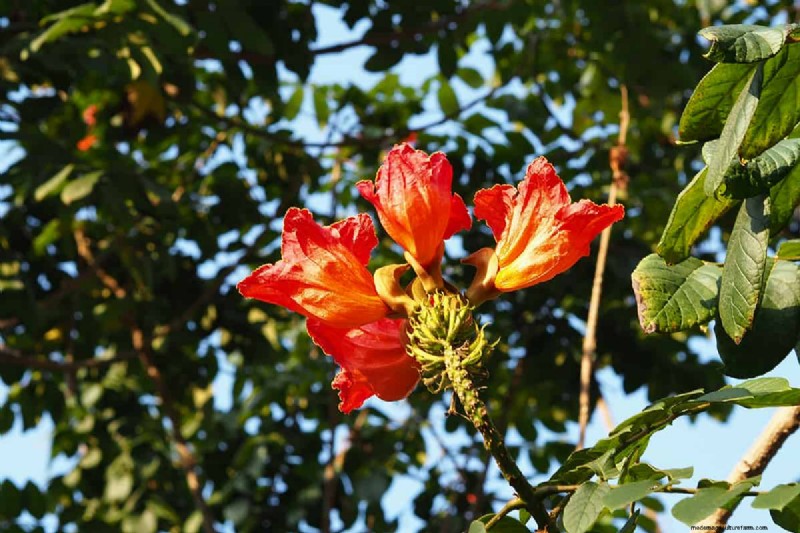
Although the African tulip or scarlet bell tree is native to tropical and sub-tropical countries, it has become popular in other places, such as Southern California.
Similarly, this tree has dark green leaves and reddish-orange bell-shaped flowers with around five petals each. Their buds can hold water and leave yellow stains when pressed, making them an ideal bird sanctuary.
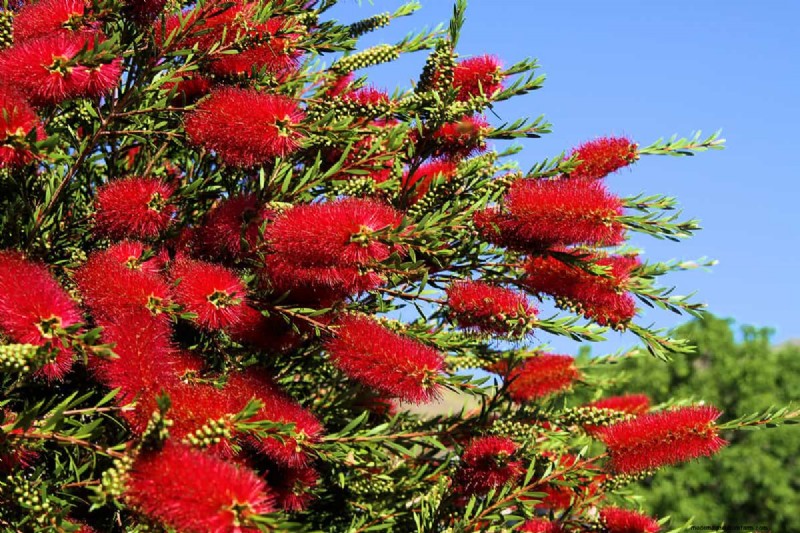
The crimson bottlebrush has red spike-shaped flowering similar to a washer—hence the name. Whether weeping or vertical, this Australian-native tree flourishes in containers, borders, or free-standing. The blooming time is between summer and fall.
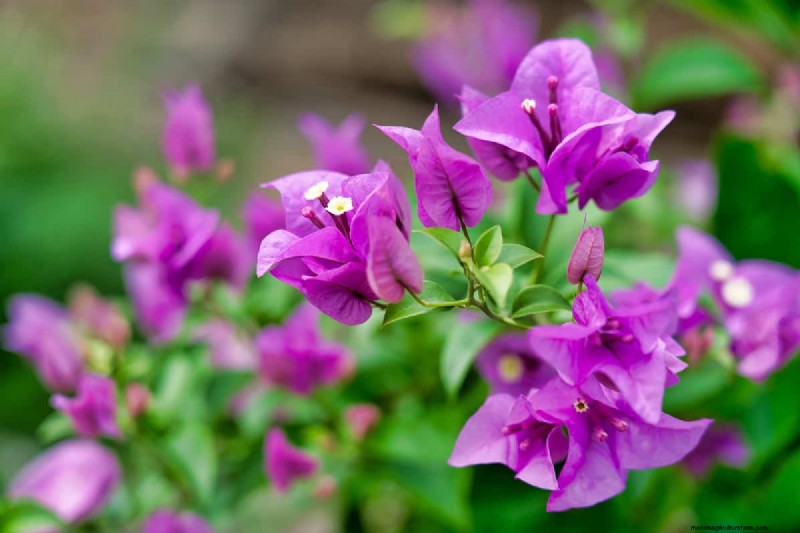
Bougainvillea has bracts or false flowers in crimson or other colors. The bracts protect the tiny white flowers. Similarly, you can feature this plant as a wall coating or hedge because it is a vine. You should make sure they will not grow aggressively.
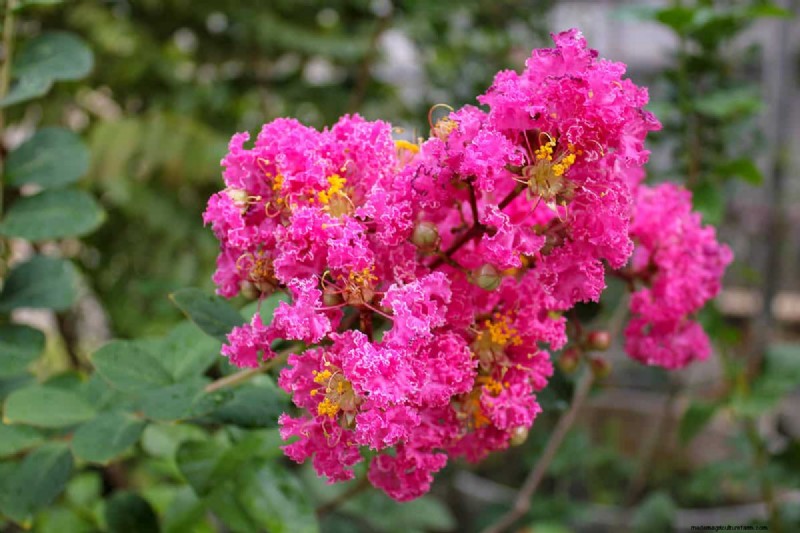
Whether along the street or in a home landscape, crape myrtle grows fast and needs minimum care. This shrub blooms during summer.
The blushing pink flowers are comparable to crepe paper. When the autumn months start, the pigments of the leaves change into yellow, orange, and red.
Despite its appealing look, it has invasive seed growth, so you should place it far from your house's foundation.
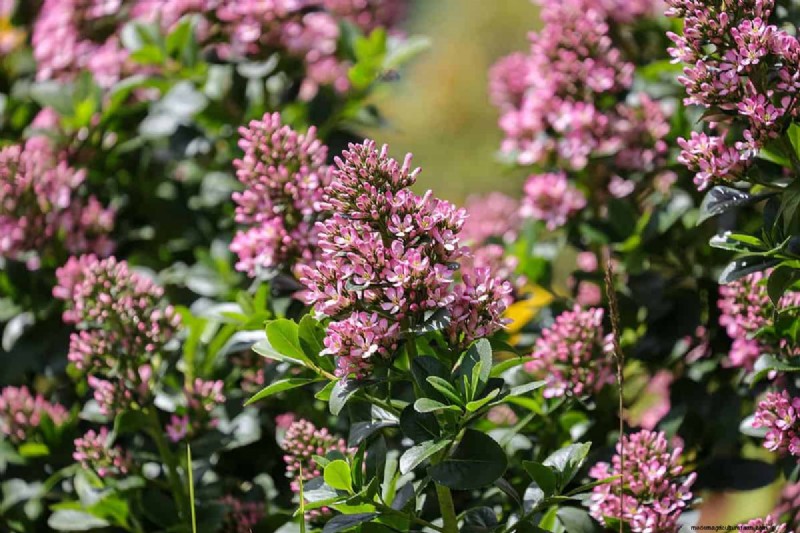
Widely grown in South America, this shrub is low maintenance with wide alternating leaves. However, its clustered rosy budding is delicate during spring and mid-summer. Plant enthusiasts also call it the Pride of Donard.
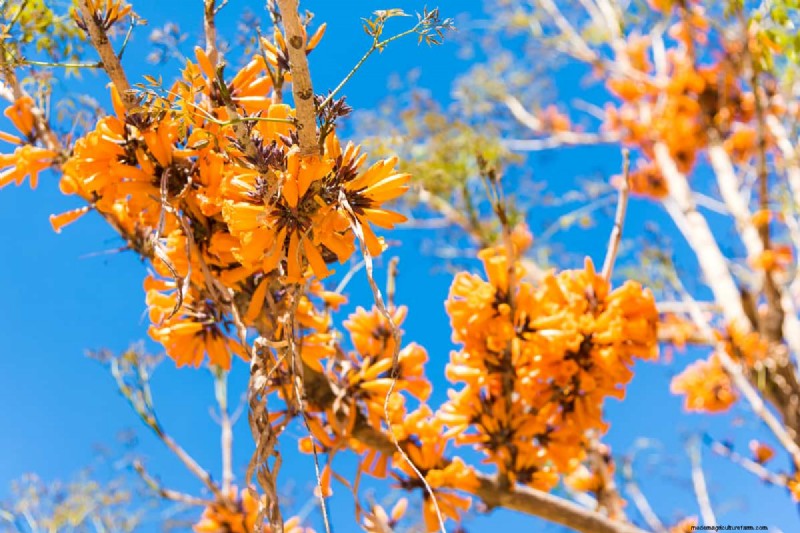
Another native to tropical and sub-tropical places is the flame of forest or sacred tree. It has leathery leaflets with a pale bronze green tint.
When winter ends in the US, its clusters of orange-red flowers blossom. The petals are handy for creating yellow dye for silk.
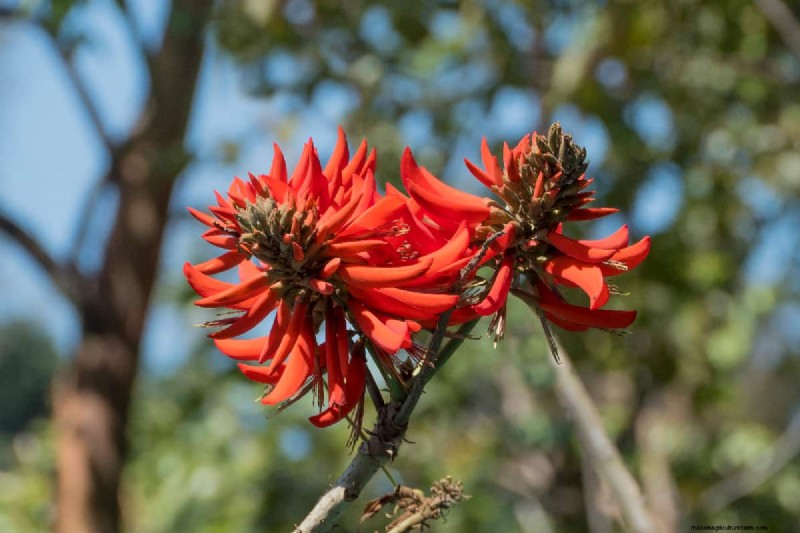
The coral tree is also known as the tiger's claw. While it barely needs maintenance, it matures rapidly along with its heart-green-shaped leaves with yellow stripes. The clusters of scarlet-red flowers with thorns unfold from February to March.
However, you must take its seedpods with care because they are dangerous.
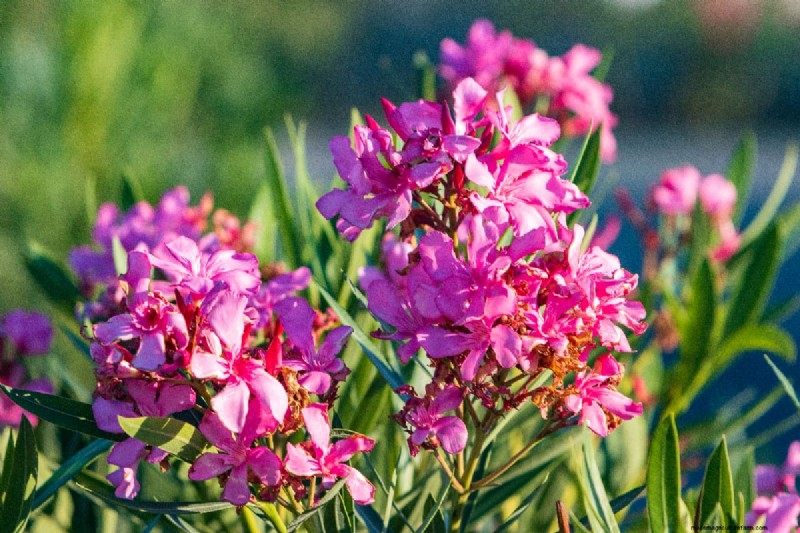
Usually cultivated in coastal areas, this Mediterranean shrub is highly toxic when you ingest its parts. The hardy red oleander blooms from spring to summer. Similarly, it is drought-tolerant but not frost-resistant.
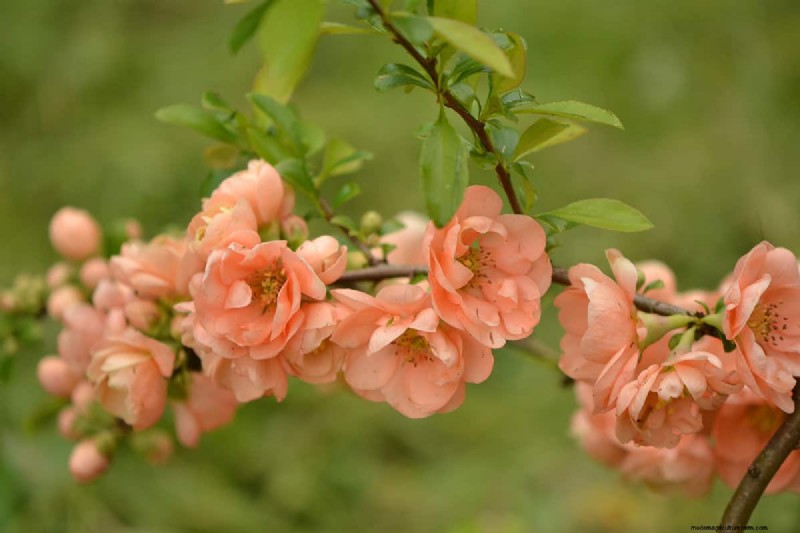
The beautiful spring flowers of quince are like roses with thorny stems. Thus, they are optimal to use as barriers.
The quince bears tangy yellow fruits in September and October. It is suitable for jams and stew. The shrub is prone to fire blight and yellowing leaves.
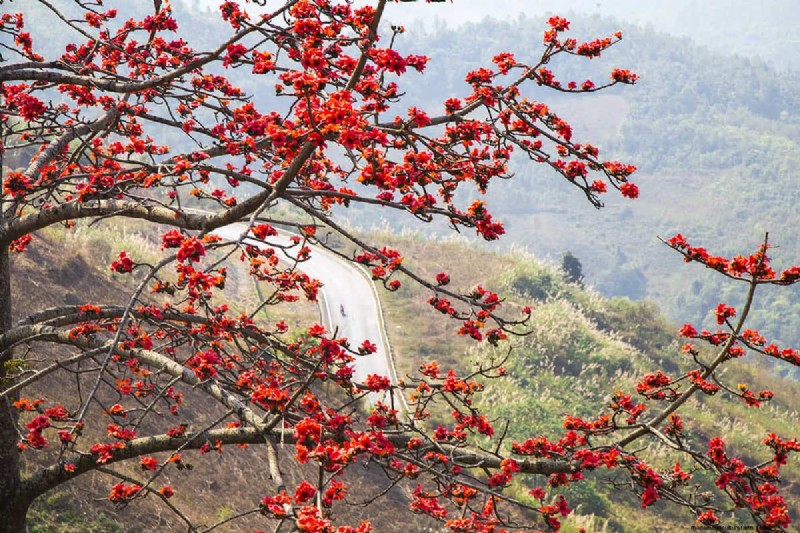
One of the low-maintenance trees in this list is the cotton tree or kapok tree. This woody tree is prevalent in Central America. It has elliptic green leaves, but they drop during blossom time.
In winter or spring, it displays stunning red flowers with four to five petals. It can be used as animal food, and you can consume the fallen flowers in teas or soups.
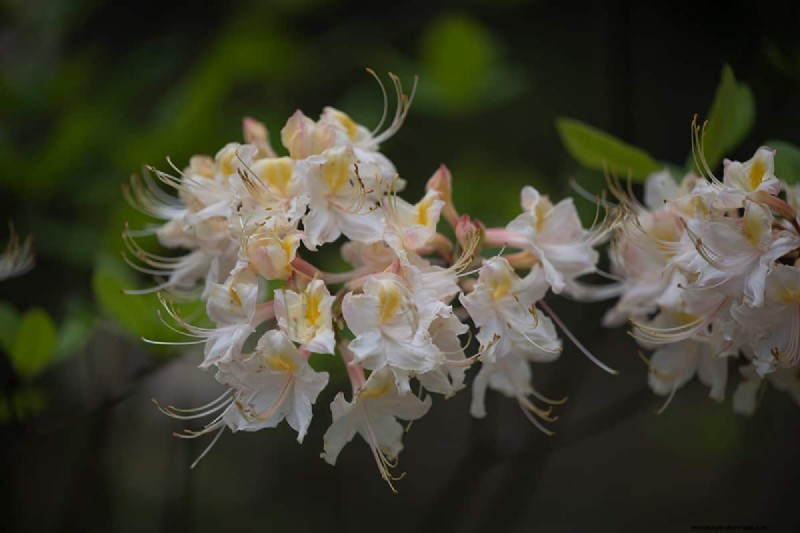
Widely prevalent in North America, the Stewartstonian azalea is a versatile shrub regardless of the season. It calls for moderate support.
Whether as a stand-alone or hedge, this includes maintaining the acidity, growing it over raised beds, and protecting it from insect problems.
In addition, its blooming time is in April, whereas its green leaves turn red during fall. In this picture, you can see its showy red-orange blossoms attracting butterflies.
In this section, we list several trees you can readily propagate. It will depend on their flowering season.
Below are trees that are vibrant between late December and March.
After the cold season, several plants will transform and show off their blossoms starting from March until May. Here are the popular greeneries.
Although you anticipate many plants to flourish during spring, the summer-blooming trees offer beauty to your surroundings.
Starting from September to late December, the vivid colors and pleasant scents of these shrubs will mesmerize you.
Aside from the crape myrtles and dogwood, we collected a brief selection of dwarf flowering shrubs.
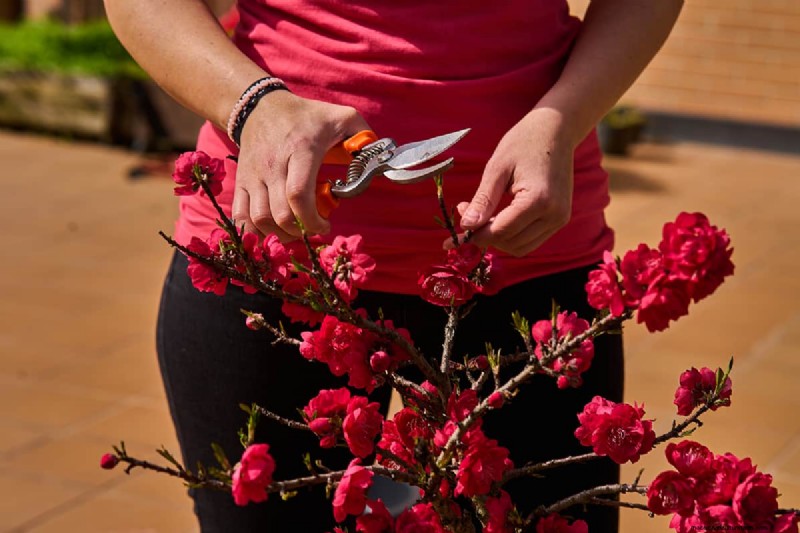
Pruning is vital in keeping your landscape aesthetic, promoting growth and preventing injuries. Before pruning, you may consult a certified arborist. Remember, you must prune while the trees or shrubs are growing to keep their form.
You will use different tools based on your purpose. This process is straightforward because it has three simple methods.
It involves cutting the stem tip with the bare hand or hand pruner depending on the brittleness. Hand pruners or clippers come in a variety: scissors, blades, and anvil. With one of these tools, you should be able to remove the leaning stems with ease.
Otherwise, your greenery will be taller yet narrower than the pinched ones.
Thinning is chopping a portion of the branches to prevent the spread of infection, regardless of the season. With lopping shears, shorten the branches with 1/2 or 2 inches leeway from the trunk.
Avoid trimming too near to the branch collar. Similarly, lightweight shears can remove branches of 1.5 inches in diameter or less.
To head back, reduce 1/4 inch of the active lateral branch without leaving a stub. This will boost re-branching.
Unlike chainsaws, pruning saws are suitable for snipping branches with over 1.5 inches of thickness. The serrated teeth avoid gumming.
If you cannot reach other branches, connect the saw handle to a telescoping pole or use an extendable pruning stick. This will omit the need for a ladder.
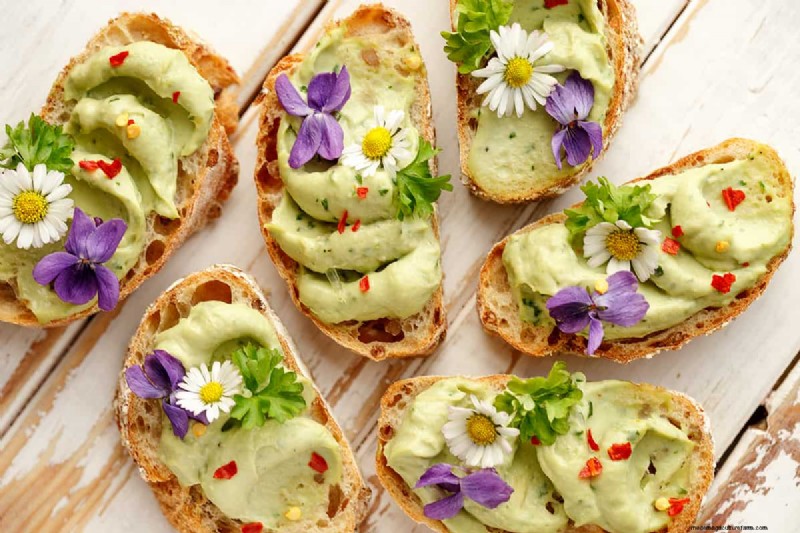
If you are fond of cooking and trying a variety of ingredients, plant edible flowers in the garden and mix them, whether in salads, spreads, desserts, or drinks. You can either incorporate the whole head or the petals alone.
This technique will not only save you some money, but the freshness of the buds will also enhance the flavor. Here are a few edible flowers to make your food sweeter or pungent.
Choosing from the wide selection of red flowering trees and shrubs can be overwhelming decision. Regardless of your choice, you must know where, when, and how the plants will thrive, which is essential aside from their appearance.
Thanks for reading! If you enjoyed this post, explore these articles:
15 Red Perennials That Bloom All Summer
31 Flowers That Need Little Water


