
Welcome to Modern Agriculture!

Stepping stones are ideal for connecting different garden areas while also being stylish. Learning how to install stepping stones may help make a tiny garden appear more prominent by being less expensive than a paved garden walk. We've searched how far your stones need to be and have the answer below!
You should position concrete stepping stones to fit the average human stride. For most individuals, 24 inches on the center is approximately correct. However, 24-29 inches is the recommended spacing for stepping stones.
Now that you know how far apart garden stepping stones should be keep reading this article as we will go into more detail about the garden stepping stones. Also, don't miss out on other more essential information about stepping stones. Let's dive in!
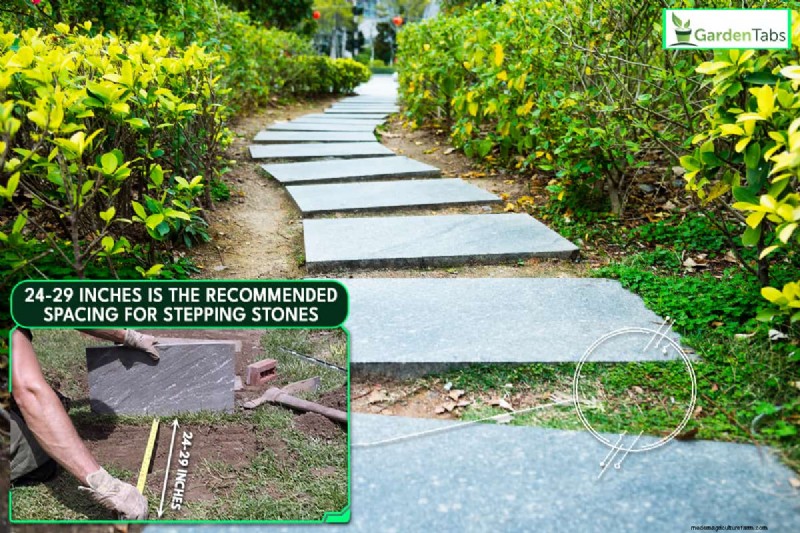
We suggest a 24-29 inches distance from one stepping stone to another. An average human step is 75cm or 29 inches, but the recommended space is 24 inches.
Of course, determining the distance most convenient for you and your family will still be up to your discretion.
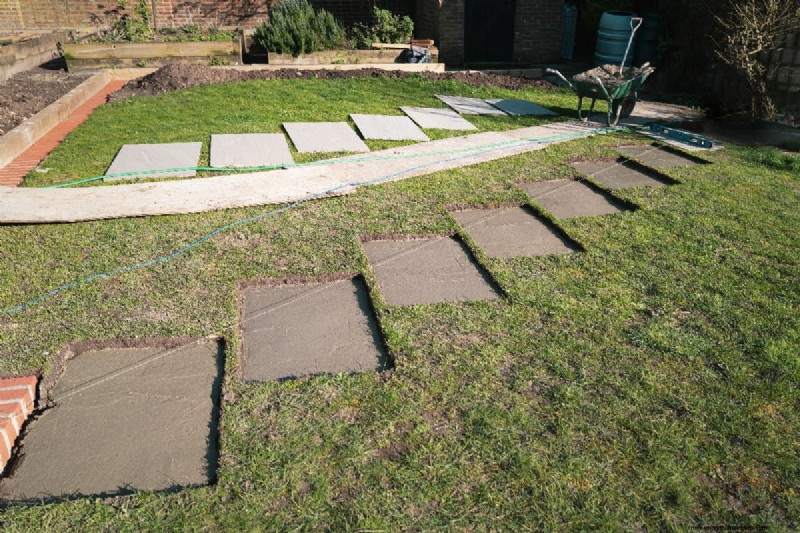
Begin by estimating the space, then start dry laying or placing the stones on the ground and walking over them. You may easily modify the distance.
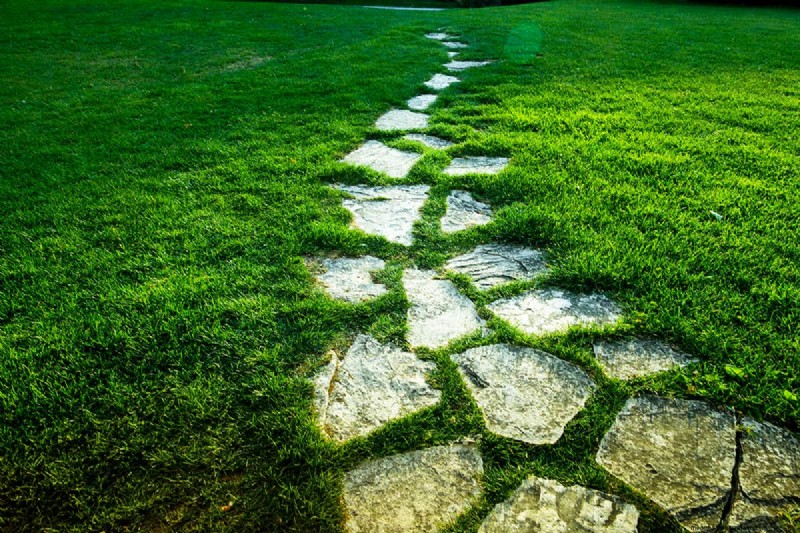
If you have active youngsters, a "worn path" may already ruin the beauty of your grass. So select the way with the least resistance and build a solid stepping-stone path.
The question of path placement has already been solved for you where such paths exist. Otherwise, you'll have to select which site is the most convenient.
The first consideration is whether the stones are put high or low. If they are too low, the grass will grow over the top, and you must carefully clip it back by hand.
You can't mow over them if they're installed too high. Strive to place them towards the top of the soil, so the grass blades are visible above the paver.
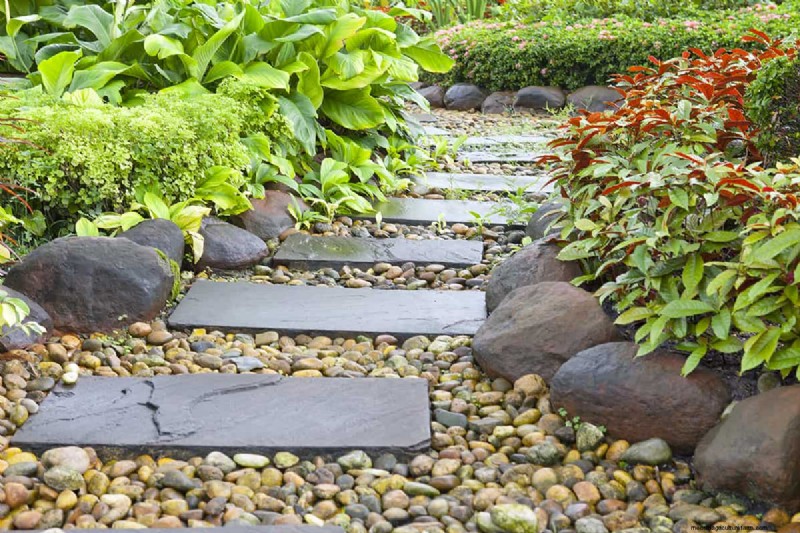
Stepping stones can be laid with sharp sand, although most landscapers favor a more stable cement fixing. Here are some tips to keep in mind in leveling the rock:
Backfill with dirt, rake, and compress it to produce a more level installation area.
Install compact material such as crushed rock for more enormous stepping stone walkways that require a more level, solid surface.
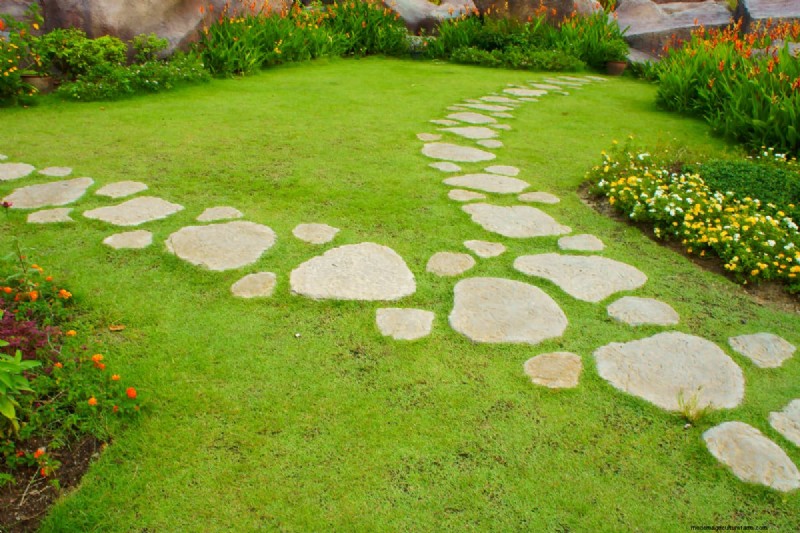
If you use separate stones for each step, you may fill the gap between the stepping stones with decomposed granite, rock, or even groundcover plants or sod.
You can put in the smaller rocks or fine material between the stones of your pathway to create a pattern. Use a broom or polymeric sand between the joints or avoid moving in tight-rock paths such as paver or travertine.
Do you like an informal or formal design for the concrete stepping stone path? Your response to this question may depend on whether you want a casual or formal landscape design.
There are essentially two techniques for building such trails on lawns.
The informal option is to dig only the areas where the concrete stepping stones would be placed, leaving the grass to grow between them. The alternative, more formal method entails exploring the entire trail.
As a walkway building material, stepping stones offer various advantages:
Garden stepping stones have functional purposes around the yard in addition to their decorative potential. Some of their benefits include:
Do you want to acquire some stepping stones for your garden but aren't sure how to arrange them? Here's a quick guide on placing unique stepping stones.
There are stages of laying a stepping stone path on a variety of surfaces, including:
Laying stepping stones in mulch is very straightforward. Just place the rocks on the ground where you want them, fill the surrounding area with mulch, and you're done.
If you want to, you can add things like edging to keep much in a neat line or use a string line to ensure they're perfectly level or anything else you'd like.
The procedure for laying stepping stones on the property is significantly simpler. Set the rocks where you want and cut the grass around the edges using a serrated knife.
Dig a hole to those proportions, allowing a few millimeters at the bottom for drainage, then pull out the grass. Then, just set the stepping stones on the grass.
Now, if you're interested in organizing your stepping stones, here are the steps:
You may construct your stepping stone patterns out of concrete, wood, mosaic, and stone. Some home improvement and craft supplier companies sell mosaic stepping stone kits for roughly $15.
The expense of these kits might rapidly mount up if you require over one stone.
Installing stone stairs varies from around $1,000 on the lowest to $12,000 on the upper end, with an average cost of $2,200 for complete projects.
What you spend will vary depending on the stone you choose, where you place it in your home, and whether you do it yourself or hire a professional.
Labor accounts for the majority of stone step installation expenses, so executing this job yourself can save you significant money.
Labor expenses generally range from $400 to $8,000, not including material prices.
When you do it yourself, you need to budget for the cost of the materials and tools. That means you may DIY stone step installation for as low as half the cost of hiring a professional.
To summarize, decide if you want a simple stepping-stone route or a more elaborate promenade. The recommended distance is around 24 inches, but other people have longer strides, so it's ideal to have a spacing of 24-29 inches.
If you found this article helpful, here are other related posts:
When To Cut Back African Daisies [And How To Do That]
What Is Eating My Bleeding Heart Plant [And How To Prevent It]?
When To Apply Brush Killer [And How To]?


