
Welcome to Modern Agriculture!

You'll probably immediately know if you are facing a sycamore tree. One distinct characteristic of this tree is its bark which has a camouflage-like pattern. This post will also provide well-researched information about whether a sycamore tree has fruits, flowers, or nuts.
Straightforwardly, a sycamore tree consists of flowers and fruits but has no nuts.
Knowing the appearance of a sycamore's flowers, fruits, and especially the entire tree itself would be best if you plan to have one in your yard. You should also discover more about its different characteristics and how to grow and take care of it properly. Please keep reading to delve into the details!
Below are the most important and widely known features of a sycamore tree:
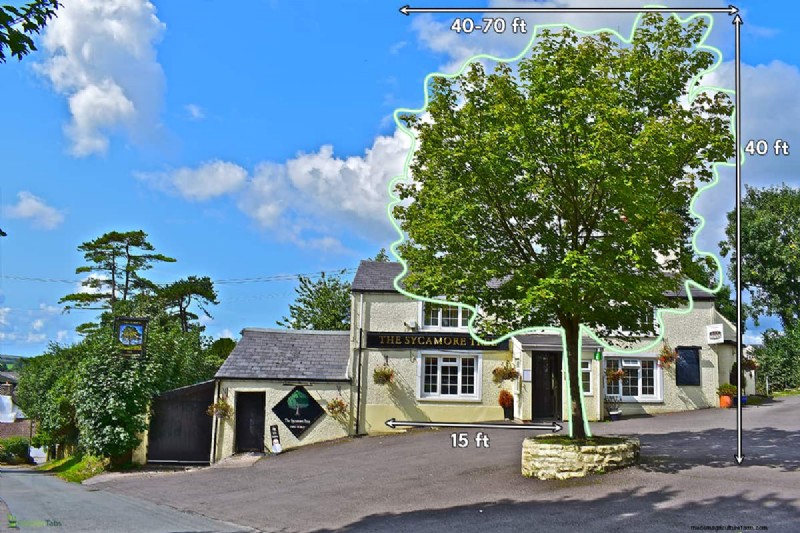
As already mentioned, a sycamore doesn't have nuts, only fruits, and flowers. Please refer to the following details to know how to identify them separately.
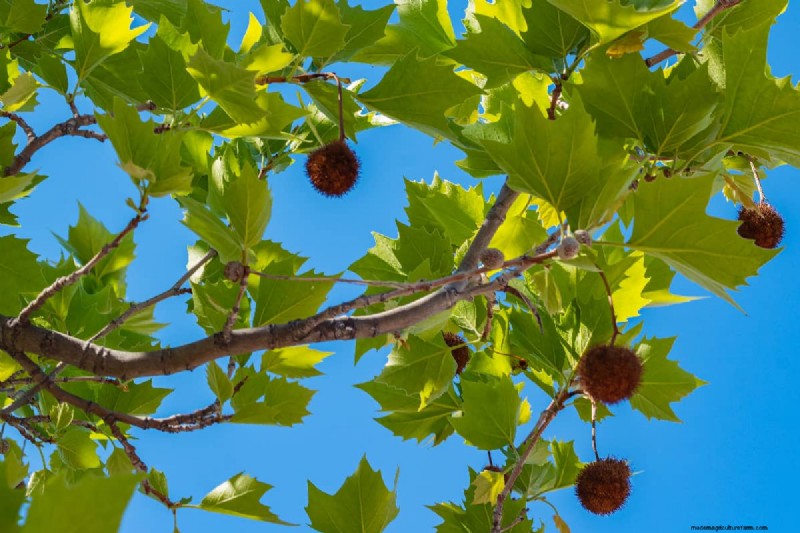
Once you see a sycamore tree, you can try to look for its fruits. They look like miniature balls in brown color, typically around a half to one inch in size, and are called achenes, which contain a group of seeds. And the covering of the fruit can either be hard or dry. People also call the fruit seed pods or balls.
In addition, you will also notice some hair-like forms fastened to the fruit. And if you put it in water, it will float since it weighs lightly, making the fruits easily fall in high winds.
Unfortunately, there are two disadvantages to sycamore fruits. First, it can be a litter concern when they fall from the tree. Second, the hairy-like structures can trigger allergies.
Spotting a sycamore flower is easy, and you should do it in spring when they bloom. It is red and not flashy; instead, it bears its flowers in tight clusters above its spherical crown.
Additionally, they can be both female and male. However, female flowers are only those that turn into fruits.
The only edible thing that a sycamore tree can provide is its sap. This sap tastes sweet, so people use it to create sugar or syrup.
In addition, people acquire and use the inner bark of the sycamore tree for medicinal uses. The tree's roots can also help as a foot treatment if mixed and boiled with the inner bark.

If you plan to plant sycamore trees on your property, it would be best to know their requirements and how to grow them to achieve their best condition properly.
As already mentioned, planting one in an area with a vast stretch is highly advisable. Such a factor will allow the sycamore to freely grow as it develops, especially since it is a large tree.
The most important reason why you should give it a lot of space is to prevent its roots from invading driveways and sidewalks when it grows. In other words, if you don't provide adequate space for your sycamore tree to grow into, it will force its roots to grow upwards, damaging every pathway and building close to it.
Lastly, a sycamore tree can surely give you a headache as it grows since you will have to clean your yard frequently. It is primarily because of the fallen fruits, leaves, and bark.
Sycamore trees are versatile trees. You can plant them in any soil. However, they would flourish best when planted in wet soil. Additionally, they will adjust quickly to any soil pH level.
If you wish your sycamore tree to grow fast and sturdy, allowing the soil to be consistently moist would be great.
If you wish your sycamore tree to grow lively and healthy, it would be best to provide them with at least six hours of direct sunlight or full sun, as gardeners call it. However, this tree can still handle growing in some shade.
You can use well-draining loam soil if you don't know where to plant your sycamore tree.
Sycamore trees don't require much fertilizer. If you will feed them, it is highly advisable to use a complete fertilizer, and it would be best to do it in early spring.
Before feeding the tree, please read the instructions carefully about how much fertilizer you should put in your sycamore tree size.
Be aware that you should feed it with the correct amount because if you fail to do so, you will destroy the tree.
One good thing about a sycamore tree is that aside from being versatile with soil type and pH, it is also highly adaptable regarding humidity and temperature.
Any temperature and humidity won't affect a sycamore tree, so gardeners and homeowners can grow it in USDA hardiness zones 4-9.
There are two ways how you can propagate sycamore trees, and they are the following:
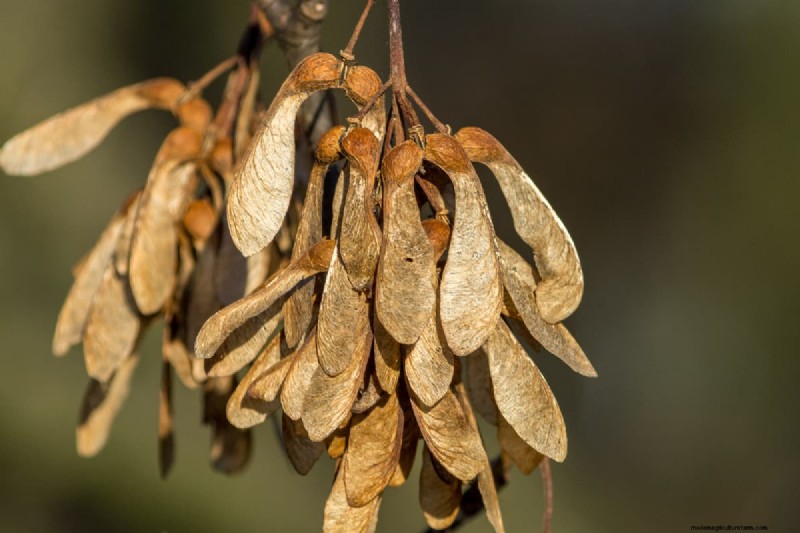
There is a key to remember when thinking of seed-propagating sycamore trees. And that is, you can only propagate by seed if your sycamore is not a cultivar.
One excellent thing about a sycamore tree is that it doesn't require overwintering. In fact, it is spectacular in the winter. A white color bark and geometrical branches characterize the upper canopy, which is often hidden until the leaf fall.
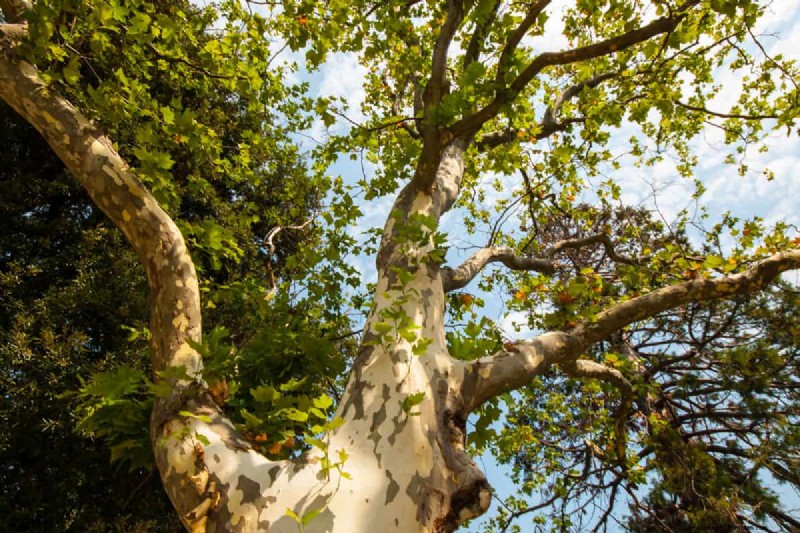
A sycamore tree doesn't require much pruning, significantly if it grows healthy. You only need to prune it once you notice damaged and dead branches.
Plus, it will only require remedial pruning if you see some branches grow upright at a narrow crotch angle with the tree trunk. It is highly advisable to prune such an improperly developed branch because it will cause instability. However, hiring garden or tree professionals to perform such pruning would be best.
Fortunately, this problem is nearly impossible for an American sycamore tree because its branches always grow perfectly horizontal.
A sycamore's flowers and fruits may not be striking, but the tree itself is excellent to plant if you wish to have a wide shade on your property. Just follow the tips we have discussed to grow one correctly. And always remember to provide it over 15 feet free area to grow.
We hope this post answers all your concerns about sycamore trees. If there are still additional questions you wish to be answered, please reach us in the comments, and we'll get back to you! To keep reading, you can check these posts out:
Are Sycamore Trees Drought, Deer, & Wind Resistant?
Can You Keep A Sycamore Tree Small? [And Can You Keep Them From Growing?]
Sycamore Tree Dying – What To Do?


