
Welcome to Modern Agriculture!

Batteries are responsible for powering up your electric riding lawnmowers. And if you are wondering how to charge your equipment, we researched the answer for you! Here is what we found.
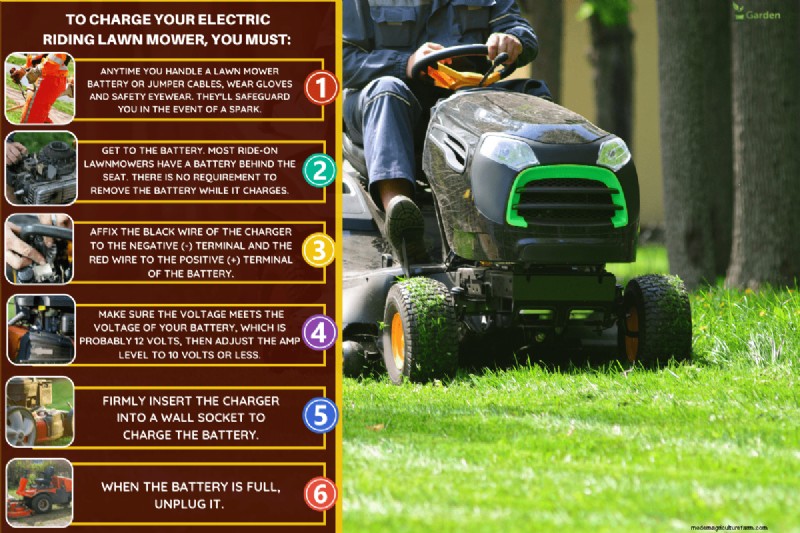
To charge your electric riding lawn mower, you must:
Read ahead as we discuss how long the charging duration of a ride-on lawnmower is, when to charge it, and how often you should charge your equipment. Additionally, we'll explain how the voltage and amperage affect the charging time. We'll also share some tips on the dos and don'ts of handling and charging electric lawnmower batteries.
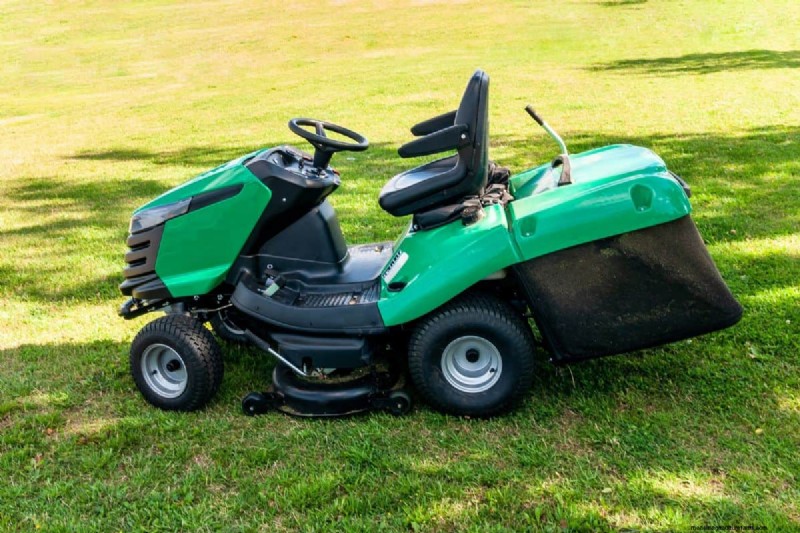
The majority of manufacturers advise charging your lawn mower battery at least once per week in the winter and once per month during the summer.
The most frequent instances you need to connect your battery to a charger are when:
Before using the lawn mower, charge the battery. Your machine will get off to a good start if you do this. Also, check the battery in your lawnmower if it doesn't seem to be operating. Usually, all you have to do to fix your lawnmower is charge the battery.
Lastly, after cutting the grass, unplug the lawnmower to allow the battery time to recharge. If your lawn mower has an integrated alternator, the power flowing through the lawn mower will keep your battery charged.
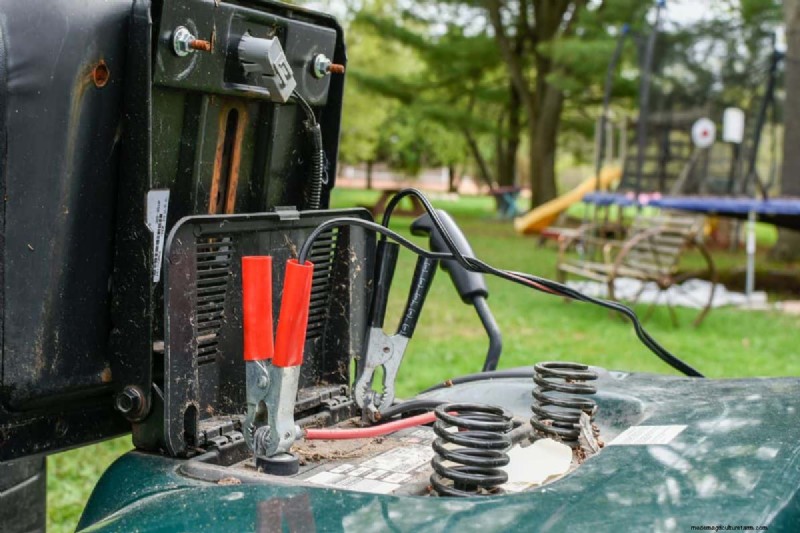
As long as you are routinely mowing, you shouldn't need to use a battery charger because riding lawnmowers have alternators.
However, you need to keep in mind these key points when you store your equipment during winter:
There isn't a single, universally applicable charging time for all batteries, but you may use some general rules to gauge how long it will take to charge a lawn mower battery.
This information greatly affects how long it takes to charge:
You can estimate the charging time using this formula:
For example, if you have a 12V, 35 Ah battery charging at 10 amps, then:
The amount of time it takes to charge a battery depends on the voltage, and for all voltages, charging a battery slowly is necessary to make it efficient and safe. Avoiding overcharging and overheating your battery will help it last longer.
This is why you should trickle charge your battery, which increases battery longevity while lowering the risk of overcharging and overheating.
A 6-volt battery can take up to 6 hours to fully charge, but a 12-volt battery can take up to 12 hours, depending on how much it was used in between charges.
The rule of thumb is that your battery charger shouldn't have more than 20% of your battery's amp-hour (Ah) rating.
It can be beneficial for your battery's health to use a slower battery charger. However, a charger that is too powerful could potentially damage your battery, therefore, you should avoid using one.
Yes, you can! Trickle chargers, often referred to as battery tenders, typically have an amp rating of 2 or less.
These chargers don't run the risk of overcharging because they are designed to charge batteries very slowly. Your mower battery may need over 24 hours to fully recharge in some circumstances when using a trickle charger.
However, if you have the time, it's worthwhile to wait because gradually charging batteries increases their lifespan. Simply check that the trickle charger you are using has a preset at the same voltage as your battery.
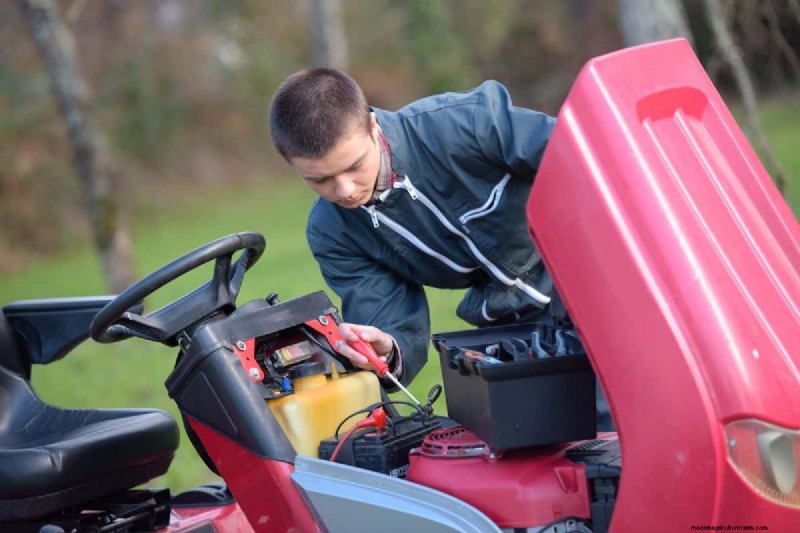
a mechanic working on mower
Here are some problems you might encounter with your lawnmower batteries:
When utilized, lead acid batteries commonly release hydrogen gas and sulfuric acid. Corrosion can result from these gas reactions with the metal and heat in the mower's engine.
By reducing the amount of power that can flow from the battery to the engine and from the charging system back into the battery, corrosion reduces the performance of your battery. Additionally, batteries frequently start to corrode as they age or after being overcharged.
While the engine is operating, the alternator recharges the battery and assists in keeping the electrical system functional. If the alternator malfunctions, the battery will have to pick up the slack and won't receive enough charge to keep it in excellent condition.
There are a few reasons why this happens. This includes the following:
Here are things that you should and shouldn't do in maintaining the batteries of your electric ride-on lawnmowers:
What To Do |
What Not To Do |
|
|
Charging an electric riding lawnmower is quite straightforward. Just make sure that your batteries are in good condition and make sure that you practice safety in handling any electrical-related tasks.
To help maintain the life of your battery, charge it during winter (once a week) and summer (once a month). Additionally, follow the above-mentioned tips to properly maintain the batteries in your lawnmower.
Before you go, you can check out our other articles here:
How Long Should A John Deere Riding Mower Last?
Cub Cadet Lawn Mower Not Charging - Why And What To Do?


