
Welcome to Modern Agriculture!

The following article is about How to Grow Hydroponic Strawberries.
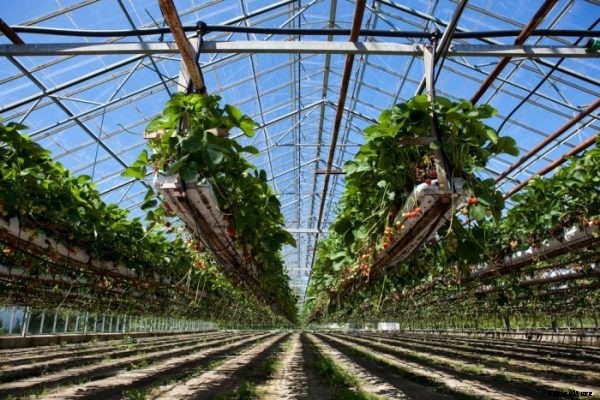
This crop is grown in an NFT (Nutrient Film Technique) System. The propagated plant is planted out into gullies. Gullies should not exceed 20 meters in length and should have a fall of at least 1 in 45 down the 20 meters. Gullies should be rigid PVC in 120 mm X 60 mm or 155 mm X 80 mm dimensions. The preferred system uses the rigid PVC 155 mm X 80 mm type for best results.
Regular nutrient analysis and leaf analysis may be required to assist in producing top yield, especially in the first crop, or crops. With NFT systems, it’s often advantageous to flush out the nutrient tank regularly to avoid a build-up of toxic materials or to remove a nutritional imbalance. Also if the nutrient gets dirty and you don’t fancy drinking it, then flush it out.
Plants respond to clean nutrient and there will be far fewer problems from diseases if the nutrient is regularly changed. Only the nutrient analysis will show how long a specific system can run for until it’s out of balance; however, 4 weeks is usually the maximum time between flushing. Remember, don’t put cold water into the tank and circulate immediately, raise the temperature to that required in the root zone before turning on the pump. Don’t chill off the roots on a hot day or freeze them in winter. Pre-heat the water to be applied.
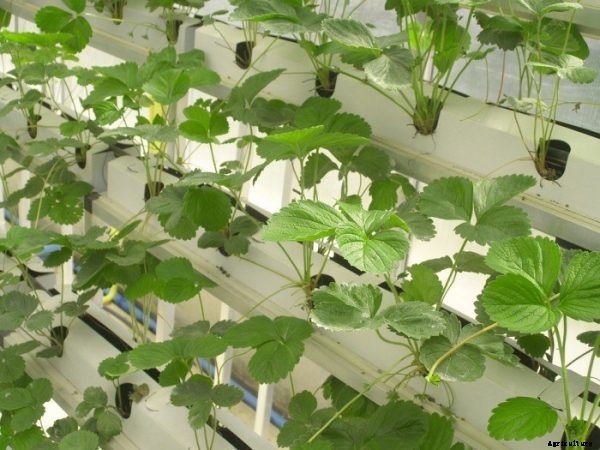
The main types of plants used by commercial growers are from runners. Runners are the daughter’s plants produced by the mother plant; they are produced in the warm, long days of summer and early autumn. Runner production is a relatively inexpensive way to produce new plants. Supplies of virus and disease free runners are available in many countries when purchasing runner plants, only buy those that are certified from clean stock plants.
The method of production of new plants the by the division of the crowns of older plants can have some drawbacks, disease from the last crop, and division damages the crown and new diseases can get into the plant.
Some Cultivars are Ofra, Camarosa, Chandler, Fair Fox, Black More, Sweet Charlie, Elista, and Seascape. Many varieties available; the main consideration is to determine what varieties will perform in your area, under your climatic conditions. There are short day varieties, that fruit in short daylight conditions, less than 12 hours light; they have a typical cycle of, flower, fruit, and runner. Daylight neutrals are not affected by daylight length, and will continue to produce flowers under all daylight conditions, providing temperatures are not too high, or too low. These plants have a different cycle; they flower, fruit and produce runners simultaneously. The third type is ‘Ever Bearing’ varieties, these have a cycle of, flower, then fruit, then flower and fruit, with very few runners being produced.
Strawberry plants like many temperate berry crops have a need for chilling the plant in order to start the cycle. If the chilling is done correctly, by normal autumn, winter and spring conditions, then the plants grow up and leaf up vigorously, then flower in a definite peak, fruit and move into runner production. If chilling is not done correctly, then the plants are not as vigorous, and even, resulting in erratic flowering. Each variety has a certain chilling requirement and will perform best in areas where this is satisfied. Cultivars with little chilling requirement, perform best in the warmer coastal areas. Those with the highest chilling requirement perform poorly in coastal warm areas but produce well in cooler climates.
Insects and air movement all assist in pollination, some varieties can be pollinated by hand pollination. Minimum air temperatures are required to set the good fruit.
In addition to chilling, there is a requirement for both air and root temperature to be within the correct range. Air temperature can influence flowering response to daylight length. When warm and hot conditions occur, a temperature of 25°C or over, flowering is inhibited, regardless of daylight length. Air temperature also influences the timing of fruit production by its influence on plant growth. After flower buds have formed, some plant growth is needed to produce visible flowers and fruit, in cold areas plants can become dormant even after flower buds have formed if the air temperature drops too low, the flowers will not develop until the plant is exposed to an increase in temperature. A minimum air temperature in daylight hours of 18 0C is usual for most varieties (check with the supplier) and 16 0C at night, with root temperature never below 18 0C. Ideal nutrient temperature ranges from 16 0C to 24ºC.
The soil-borne diseases are virtually eliminated in hydroponics. Certain common pests and diseases, however, can affect these plants. Vigilance and early identification are important in controlling such problems. Keep the environment of the hydroponics plants clean and adopt correct cultural practices such as the supply of well-balanced nutrients to maintain the plants healthy. Pests and diseases less affect healthy plants. Start the cultivation with healthy seedlings/planting materials.
Disease Verticillium Wilt. Older leaves turn brown, shriveled and plants will die. Applying the chemical With formalin or chloropicrin. Red stele Fungus enters the root and plant show dull, bluish green which soon wilts and die. Proper drainage, crop rotation is important to reduce the incidence. Ridomil and treating runners with copper oxychloride(0.1%) for 15minutes. Leaf spot complex Spot of various shape appears on the leaves during the rainy season, that dry and defoliate. Give2-3sprays of Belyton(2ml/L) or 5sprays of carbendazim(0.5grams/L) at 21days intervals. Grey mould Blossom blight and fruit rot. Apply black polythene/straw mulch before flowering. Viral diseases Stunting of plants, marginal yellowing and upwards curling of leaves. Use of virus-free runners, isolation of infected plants and control of aphid vectors with systematic insecticides.Pests Symptoms Control White grubs and cutworms Cut the root and stem of young plants. Apply chlorpyriphos @ 2ml/L water. Hairy caterpillar Defoliate leaves during June-July. Spraying of endosulphon 0.05% or malathion 0.05%, Harvestberries7-10days after malathion spray. Root weevil Feed on the rootlets, make a deep tunnel in the crown, finally, the plants collapse. Apply Carbofuran and Parathion(0.017%) around the plants. Red spider mite Sucking sap causing rusty brown of leaves. Plants stunted, reduced yields. Aldicarb(10G) or Chlorpyriphos and Carbamates are effective.
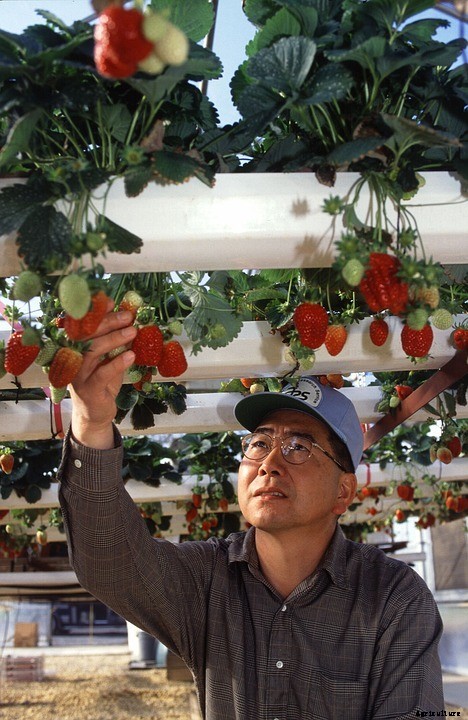
Harvesting Maturity index is when half to three-quarters of the skin develops color For distant market-when berries are green/white and still hard Picking on alternate days Pick the berries by nipping off stalk holding the fruit Pick berries with the caps (or calyx) or stem one to two inches from the calyx. Average yield is about 18 to 25 tons/ha.
Packaging packed in plastic punnets. Placed in the corrugated fibre trays or ventilated cardboard boxes. Refrigerate at all times at 50C or below. For more than one day, reduce the temperature to 00C. Ideally, it is preferred to pre-cool and followed by lower cooling for longer shelf life.
It’s wonderful fruit to grow as it has excellent demand throughout the world. Hydroponic Strawberry Cultivation is the future for most the areas in the world.


