Welcome to Modern Agriculture!

Let’s be real: gardening trends come and go faster than you can say “perennial border.” But here’s the good news, you don’t have to keep throwing money at every garden fad that pops up on Instagram or Pinterest. Some trends are officially on their way out, and honestly? Good riddance to a few of them.
As we head into 2026, the gardening world is shifting in some pretty significant ways. We’re seeing a move away from high-maintenance, resource-intensive landscaping toward gardens that work with nature instead of against it. Think less watering, less mowing, and way less stress. Sounds pretty good, right?
This guide will save you time, money, and a whole lot of headaches. Let’s discuss what’s officially out for 2026.
The era of the golf-course-perfect lawn is officially over. The magic surrounding the perfectly manicured, geometrically precise lawn has faded.
These lawns need continuous watering, regular trimming, and lots of chemicals to ensure they remain perfect, contributing to excessive water use and chemical runoff.
Here’s the thing: perfectly manicured lawns use approximately 30 gallons of water per day on outdoor use, with 50% of that water ending up as runoff, spreading pesticides and fertilizer into waterways. Plus, Americans use 800 million gallons of gas in lawnmowers each year just to maintain these lawns.
Landscapes that require a lot of maintenance are becoming less popular, with gardens that are allowed to grow naturally and have more broken edges taking their place. This approach, sometimes called “wabi sabi” yards, embraces imperfection and natural growth patterns.
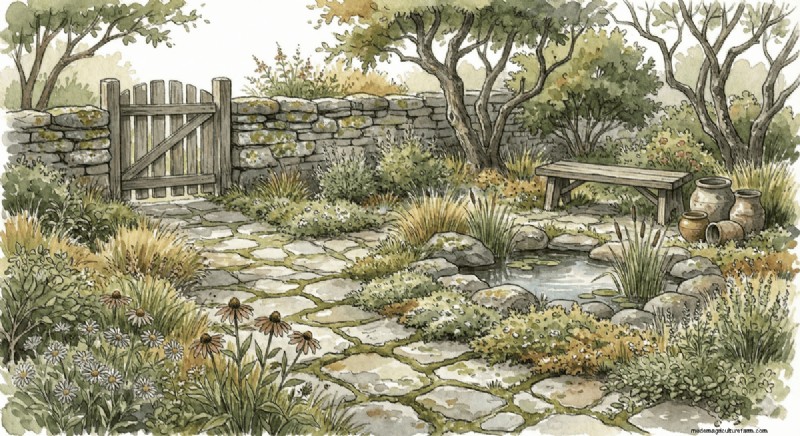
What to do instead: Consider replacing some of your lawn with native groundcovers, clover (which stays green with minimal watering and actually feeds your soil), or even a wildflower meadow. Keep a small patch of grass for play areas if you need it, but ditch the idea that every square inch needs to be pristine turf.
If you thought fake grass was the solution to your lawn maintenance woes, think again. While a switch from grass to artificial turf may seem like a good move, homeowners have found it’s not the solution they’re looking for.
The problems are numerous. Fake grass can’t support the life cycles of fauna and flora, or absorb CO2 and other pollutants from the air. It doesn’t cool the garden in summer or nurture the soil beneath it, which is essential for feeding soil organisms like worms that keep soil healthy.
Plus, there are growing concerns about the potentially toxic nature of artificial grass, which can contain materials like PFAS. A growing number of U.S. states and municipalities have introduced legislation to address these health and environmental concerns.
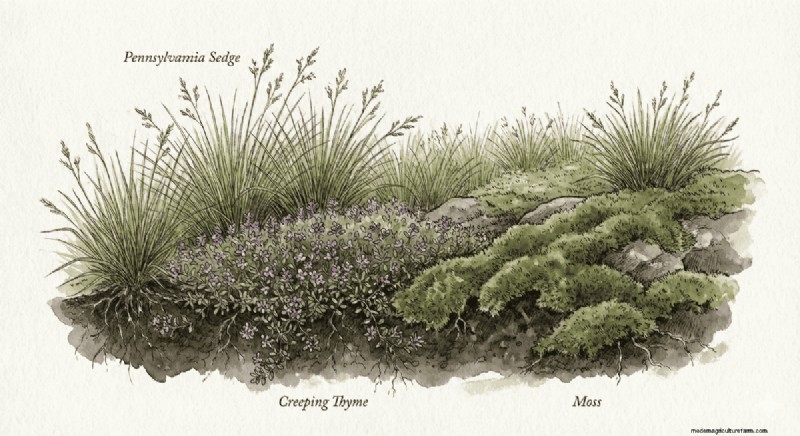
What to do instead: If you hate mowing, try low-growing native groundcovers like sedge, creeping thyme, or moss. These options look beautiful, support local wildlife, and don’t require gas-powered equipment to maintain.
We'll email it to you so you can read it later!
By saving, you agree to receive occasional emails. Unsubscribe anytime.
Red mulch used to feel like a fresh addition to a yard, but what once felt modern now reads as entirely too harsh and outdated. The main problem? It feels entirely artificial in just about every setting.
Most native and eco-friendly mulch options blend into the natural landscape of your yard with muted brown shades that feel right at home. Red mulch, on the other hand, draws attention to itself and can even compete with your flowering plants for attention.
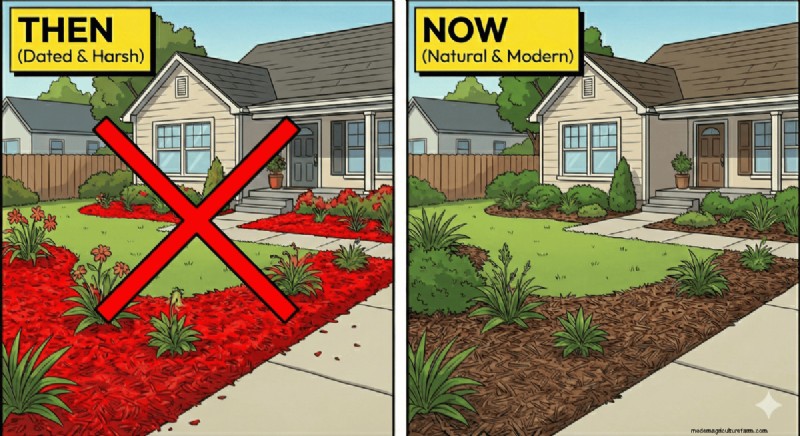
There’s also the practical issue: dyed mulches are not beneficial for the soil and break down much slower than natural mulches. When wood breaks down, it requires nitrogen to do so, and colored mulch can actually rob plants of the nitrogen they need to survive.
What to do instead: Choose natural, undyed mulch in brown or tan tones. Cedar mulch, shredded hardwood, or pine bark are all great options that will actually improve your soil as they decompose. If you want something darker, natural black mulch (often called “black gold”) works beautifully without the artificial look.
The trend of massive expanses of lawns originated from 18th-century Europe as a symbol of wealth, and it still persists today, but this is outdated, uncreative, and monotonous. It’s a huge missed opportunity for what each garden has to offer.
Think about it: what are you actually using all that grass for? If you’re not playing croquet every weekend or hosting outdoor soccer matches, you probably don’t need acres of turf.
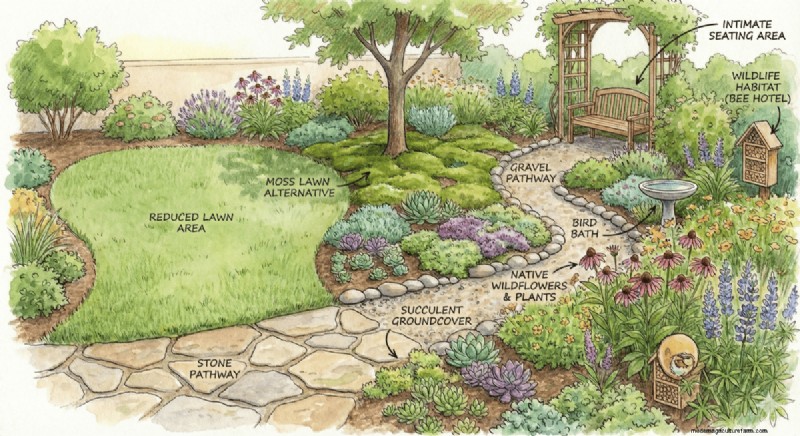
What to do instead: Minimize lawn space in favor of climate-appropriate lawn alternatives like succulent groundcovers, moss lawns, or native plant gardens. Create intimate spaces within your garden with diverse plantings, garden beds, and pathways that invite exploration and provide habitat for wildlife.
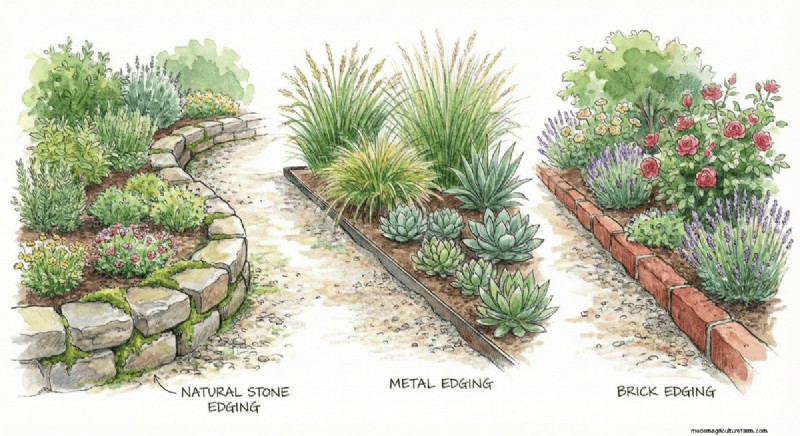
Although plastic edging has been a mainstay for quite some time, in the spirit of bringing an organic feel to a garden, plastic is being tossed by the wayside. Designers prefer to use stone or metal instead, and even no edging at all is preferable to plastic.
Plastic edging looks cheap, breaks down in the sun, becomes brittle over time, and doesn’t add anything positive to your garden aesthetic. It’s one of those things that screams “I bought this at a big box store in 2010” rather than “I care about thoughtful garden design.”
What to do instead: If you need edging, invest in natural stone, metal edging, or even brick. These materials age beautifully and actually add to your garden’s character. Or, try a living edge using low-growing plants to define the border between lawn and garden bed.
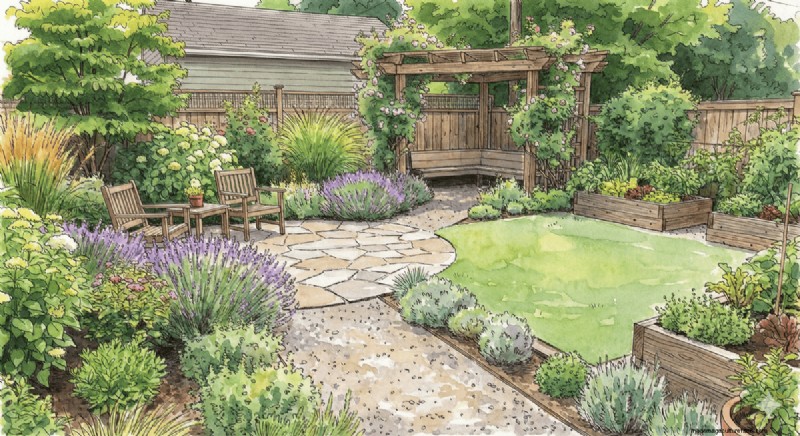
Gardens, like architecture, can become homogenized spaces that lack character when using a design style like “English cottage garden” or “Japanese garden” which limits creativity and can often feel out of place.
These template styles might be a good starting point, but designers now strive to look toward the context of the site and foster a vernacular that speaks to the locale, creating a more localized garden design style through regionally native plants grown from local nurseries.
What to do instead: Take inspiration from various garden styles, but adapt them to your specific location, climate, and personal preferences. Focus on what works in your region rather than trying to recreate a garden that belongs in a completely different climate or continent.
One of the landscape trends that belongs to the past is the overuse of hardscape in the garden. While thoughtfully placed paving can create functional areas for gathering and circulation, large expanses of paved areas can degrade the joy of being outdoors.
We’ve all seen those yards that are 90% concrete, pavers, and stone with a few token plants squeezed in as an afterthought. It’s hot, it’s sterile, and it does absolutely nothing for local wildlife or your mental well-being.
What to do instead: Balance is key. Include enough hardscaping for practical purposes (patios, paths, seating areas), but bring in more plants, textures, and “softscape” to create a space that actually feels like a garden. Consider permeable paving options that allow water to soak through rather than creating runoff.
Gone are the days of buying a complete patio set from a big box store and calling it done. Modern outdoor design is moving toward more eclectic, curated spaces that reflect personal style and creativity rather than catalog perfection.
The matchy-matchy approach can feel sterile and lacks the character and visual interest that comes from mixing different pieces, eras, and styles.
What to do instead: Mix and match your outdoor furniture. Combine vintage finds with new pieces, different materials, and varied textures. Think of your outdoor space as an extension of your interior design philosophy, where collected pieces tell a story rather than looking like they all came from the same showroom floor.
This outdoor sectional would make for a great anchor piece:
People are moving away from high-finish materials in favor of more organic and natural options, like limestone, terracotta, and natural stone. A limestone or hand-carved stone fire pit, for example, feels warmer and more authentic than something ultra-modern and glossy.
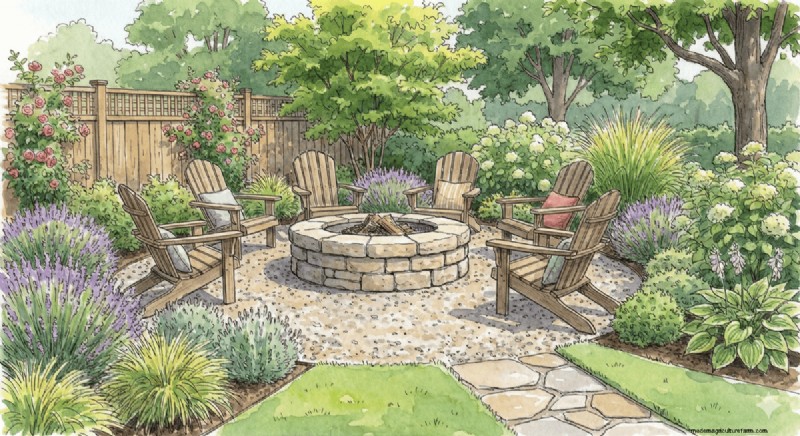
Those super-shiny concrete pavers and polished stone features that were all the rage a few years ago? They’re starting to look dated and out of place in gardens that are embracing a more natural, organic aesthetic.
What to do instead: Choose natural stone with its inherent texture and variation. Look for materials that will age gracefully and develop a patina over time. Limestone, sandstone, terracotta, and raw wood all develop character as they weather, making your garden feel more established and authentic.
Traditional, tawdry bedding plants are out, with plants that have far more soul taking their place. You know the ones: those perfectly uniform rows of petunias or impatiens that look great for about six weeks and then turn into a sad, leggy mess that you have to replace every season.
The problem with relying too heavily on bedding annuals is the cost (both financial and environmental), the maintenance, and the lack of ecological value.
They offer nothing to pollinators once they fade, require constant deadheading and watering, and need to be completely replaced each year.
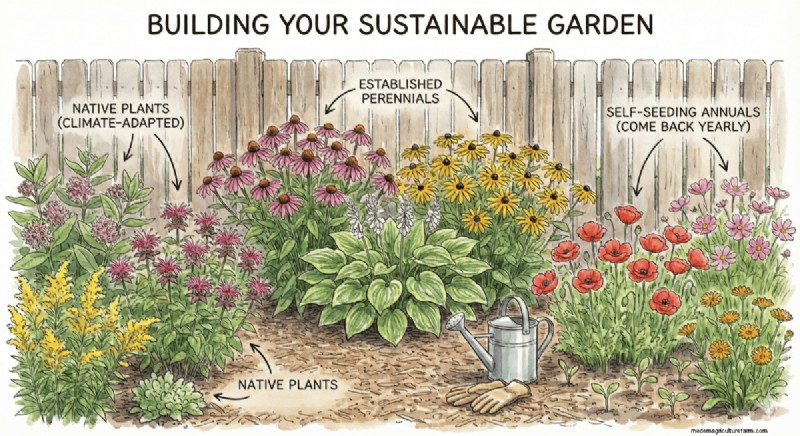
What to do instead: Build your garden around perennials, native plants, and self-seeding annuals that come back on their own. Focus on plants that provide year-round interest through foliage, seed heads, and structure rather than just a brief explosion of color.
You’ll save money, support local wildlife, and have a garden that looks intentional in every season.
This one should be obvious, but it bears repeating: planting water-intensive species in regions that don’t support them is becoming increasingly unacceptable.
Those lush English garden perennials you love? If you live in Arizona or Southern California, they’re working against you and the environment. The amount of supplemental water required to keep them alive is simply unsustainable.
What to do instead: Embrace xeriscaping and choose drought-tolerant plants that can thrive even as conditions grow harsher. Research climate-resilient edibles and ornamentals that are adapted to your specific region.
Native plants are always a safe bet, as they’ve evolved to handle your local climate conditions. Think succulents, ornamental grasses, and Mediterranean plants for dry climates.
Here’s what all of these “out” trends have in common: they’re high-maintenance, resource-intensive, and often work against nature rather than with it. The shift we’re seeing in 2026 is toward gardens that are more sustainable, more personal, and frankly, a lot easier to maintain.
The gardening world is moving toward working with nature, not against it, creating gardens that reflect our style, values, and the deeper connections we share with the world around us. That means fewer chemicals, less water waste, and more biodiversity.
Does this mean you need to rip out your entire garden if you have some of these elements? Absolutely not. Change takes time, and gardens evolve naturally. But if you’re planning new projects or considering a refresh, these guidelines can help you make choices you won’t regret in a few years.
Start small. Maybe you replace that patch of struggling grass with clover this spring. Or you let one section of your lawn grow a bit wild to see what native plants show up. Swap out that bright red mulch for natural cedar when it’s time to refresh your beds. Every little change adds up.
The best part about ditching these outdated trends? You’ll likely save money, reduce your maintenance time, and create a garden that’s actually better for the environment. That’s what we call a win-win-win situation.
Your garden should be a place of joy, not a source of stress or a drain on resources. By moving away from these trends that are on their way out, you’re not just following the latest gardening fashion. You’re creating a more resilient, sustainable, and personally meaningful outdoor space. And that never goes out of style.