Welcome to Modern Agriculture!

Whether you’re just getting started or simply looking to deepen your understanding, one topic that is absolutely vital to plant health, yet often confusing for beginners, is fertilizer.
In particular, you’ve likely seen those three mysterious letters – NPK – followed by a series of numbers on a bag of fertilizer. These letters and numbers hold the key to boosting your garden’s growth and ensuring the prosperity of your plants.
NPK stands for Nitrogen (N), Phosphorus (P), and Potassium (K) – the three primary nutrients required for healthy plant growth. But what exactly do these elements do? How much does your garden need? And how do you make sense of the ratios on fertilizer packages?
Join us on this exploration of plant nutrition, and equip yourself with the knowledge to make informed decisions that will help your garden flourish.
With a clear understanding of NPK ratios, you’ll be well on your way to gardening success.

Each number in the ratio corresponds to the percentage of these nutrients in the fertilizer by weight.
For example, if a fertilizer is labeled as 10-10-10, it means it contains 10% Nitrogen, 10% Phosphorus, and 10% Potassium by weight.
The remainder of the fertilizer is usually composed of fillers, other nutrients, and trace elements. The specific NPK ratio needed can vary depending on the type of plant and its stage of growth.

Different types of plants require different nutrient balances, and that’s where the various NPK ratios come in. Here are a few examples of NPK ratios and what types of plants they’re generally best for:
These are general guidelines, and it’s essential to consider the specific needs of your plants and the existing nutrient levels in your soil.
Soil testing can be very beneficial to determine what nutrients your soil might be lacking and choose the right fertilizer accordingly.
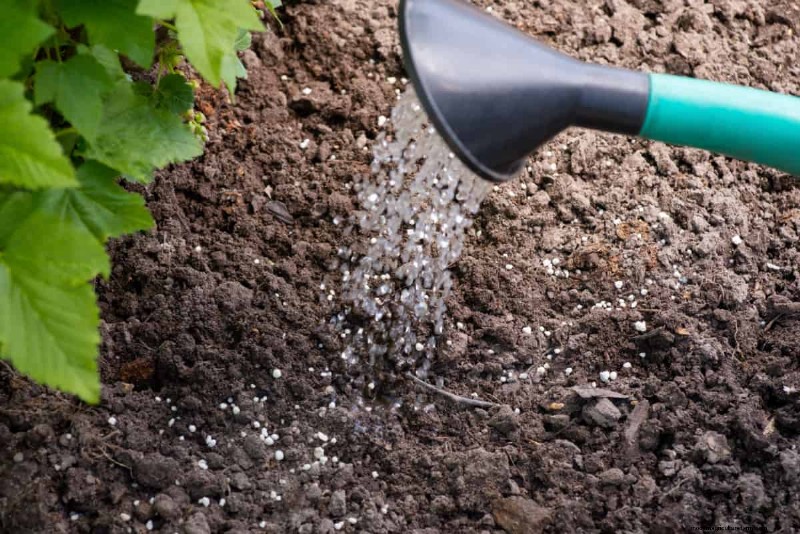
Micronutrients play essential roles in plant health, although they are required in much smaller quantities.
Micronutrients commonly found in fertilizers include:
While these micronutrients are required in small quantities, their deficiency can lead to stunted growth, discolored leaves, poor fruit or seed development, and other problems.
Different types of fertilizers contain different combinations of these micronutrients, and they should be chosen based on the specific needs of your plants and soil.
Choosing the right fertilizer for your plants involves several steps:
Different plants have different nutrient requirements. Some plants may need higher nitrogen levels for leaf development, while others may need more phosphorus or potassium for fruiting or flowering.
Research or consult with a local nursery or extension service about the specific nutritional needs of your plant.
A soil test is the most accurate way to determine what your soil has and what it’s lacking. The test results will show the levels of various nutrients in your soil, and often come with fertilizer recommendations tailored to your specific needs.
You can usually get soil testing kits at local garden centers or online, or you can use a professional soil testing service.
The nutrient requirements of plants can vary throughout the year. For example, lawns often need a high nitrogen fertilizer in the growing season but a high potassium fertilizer in the late summer or fall to help prepare for winter.
The pH level of your soil can affect how well plants can take up nutrients. Some nutrients become less available in highly acidic or alkaline soils.
If your soil pH is too high or low, you may need to add lime to raise pH or sulfur to lower pH before considering fertilization.
We'll email it to you so you can read it later!
By saving, you agree to receive occasional emails. Unsubscribe anytime.
Fertilizing your plants is much more than just a routine task – it’s a science and an art that involves understanding the specific needs of your plants, the makeup of your soil, and the role of each nutrient in plant health.
From the macronutrients NPK to the myriad of micronutrients, the world of plant fertilizer can seem complex, but with a bit of knowledge and practice, you can master it.
And remember, the goal is a thriving, vibrant garden, where your plants have just what they need to grow strong and healthy!