
Welcome to Modern Agriculture!

Growing your own food is a hugely satisfying achievement for any gardener with a keen sense of taste. But that doesn't need to mean hours of digging in a muddy potato patch, or months spent tending tomatoes toward ripeness. Bean sprouts and other sprouting seeds are a quick, easy, and rewarding way of putting home-grown produce onto your plate.
Sprouting seeds is extremely straightforward, and something anyone can do at home. You don't even need a sunny windowsill, far less a vegetable patch. No specialist equipment is required, and although the process itself takes a little time, care, and attention, you can have an edible harvest within just a few days.
What's more, sprouts offer an excellent combination of health and taste, packing all the nutrition and flavour of a mature plant into a versatile, crunchy vegetable that you can use in salads, stir fries, soups, and more.
Almost any seed which produces edible adult plants can be used for sprouting, some of the most popular sprouting seeds include:
Whichever type of seed you decide to use, it's important to use ones specifically described as suitable for sprouting. Depending where you got your seeds from, sometimes seeds are chemically treated to prevent fungus and rot, and some even have added insecticides. The short growing life of sprouts means that any chemical residues have no chance to dissipate, and so only non-treated seeds should be used. Don't be tempted to sprout leftover seeds whose history you can't vouch for.
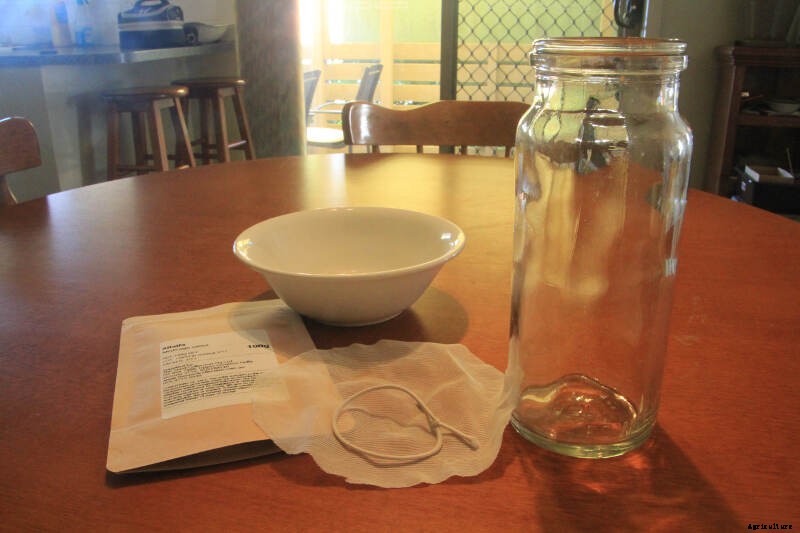
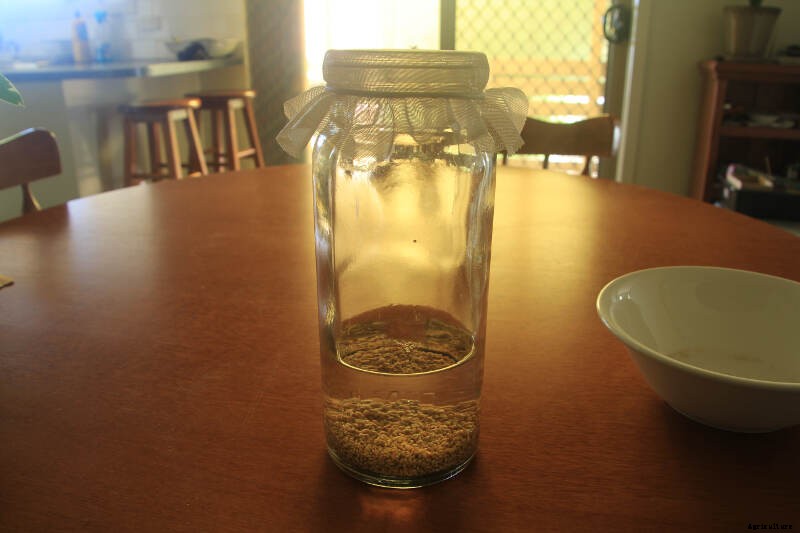
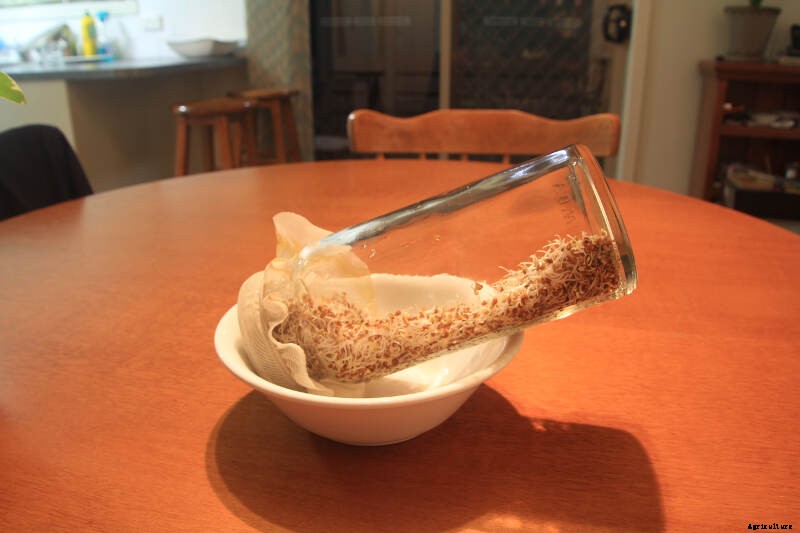
Serious sprouters can buy specially designed jars with a mesh lid to make draining easy, but to begin with you can use common household items and achieve equally good results. You'll need:
Keeping the sprouts in the dark throughout the whole process will produce sweeter shoots, but you can also put the jar on a sunny windowsill for the final day to give a greener, stronger-tasting result.
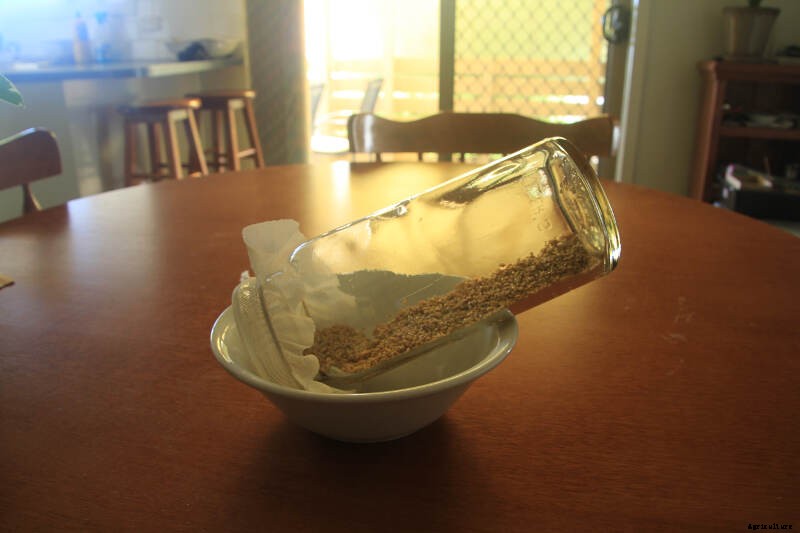
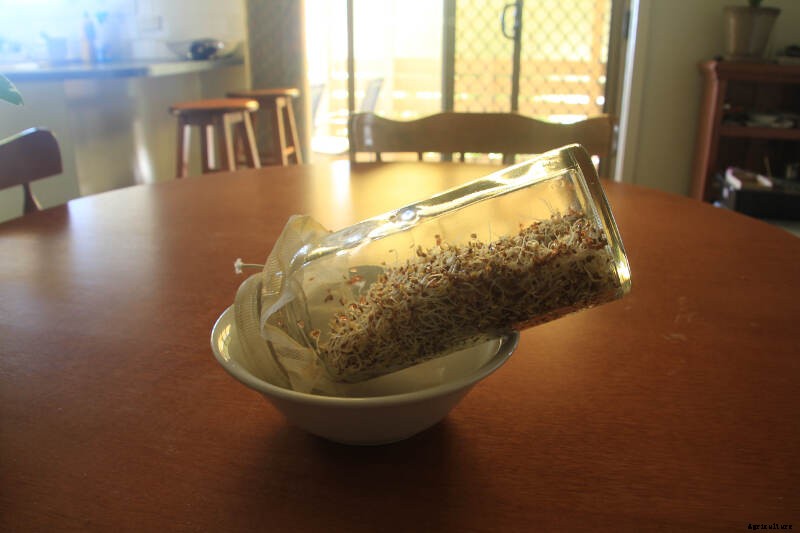
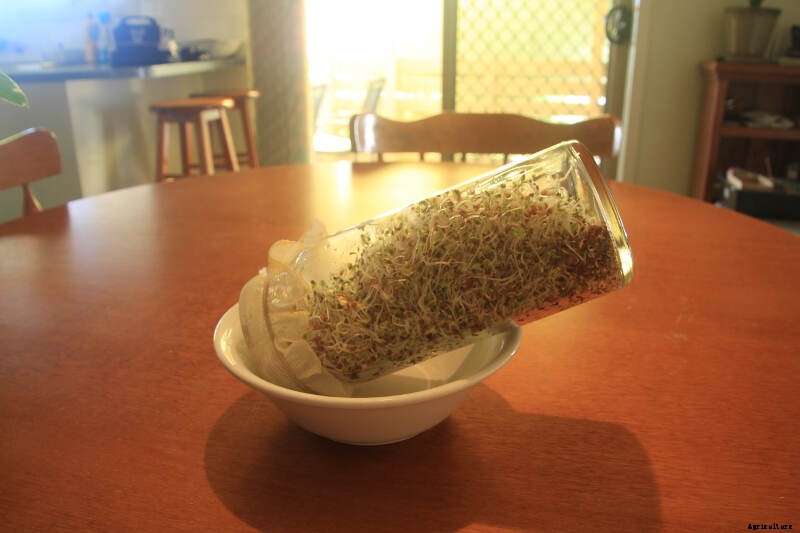
After around three days of repeated rinsing and draining, your seeds should have sprouted. They're ready to harvest from when the sprouted tail is the same size as the original seed. Grains can be used now, while legumes and other seeds can be left to develop for a day or two longer - try sampling a sprout at regular intervals until they've reached the right taste and texture point for you. However, you should always halt the sprouting process before any leaves develop.
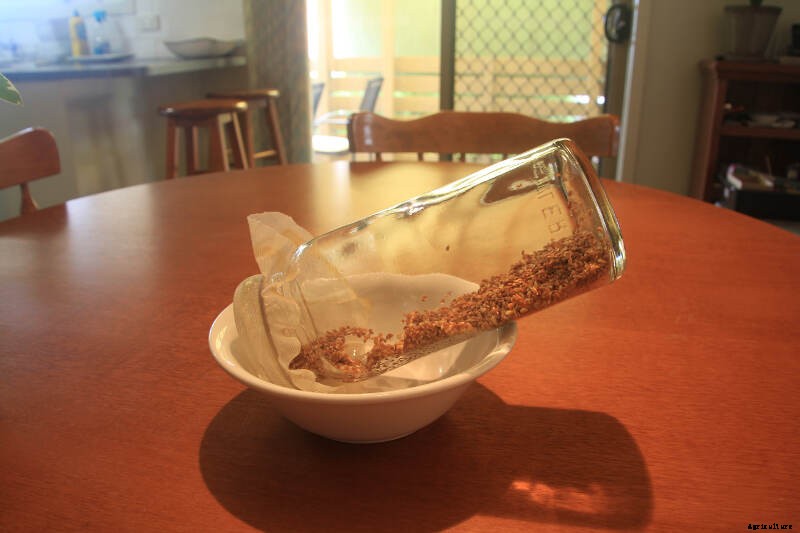
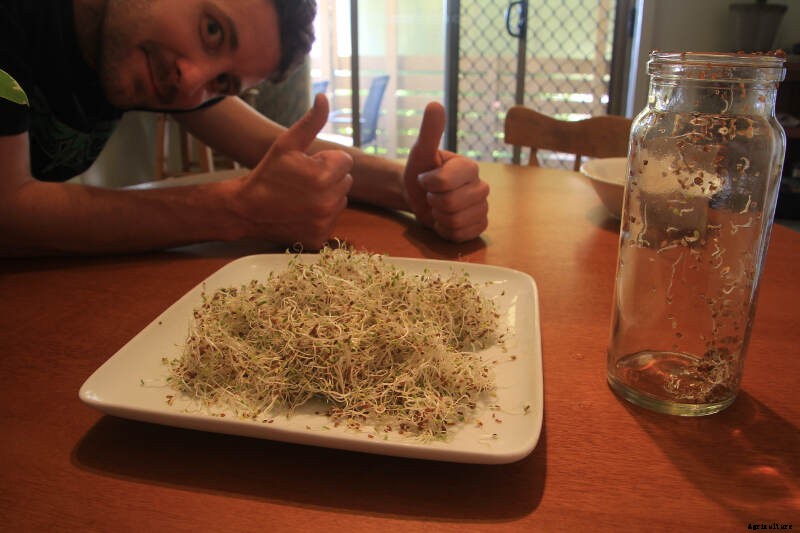
Once they're ready to harvest, give the sprouts a final rinse, and drain them thoroughly. Take the sprouts from the jar, discard any unsprouted seeds, and leave to dry on kitchen paper. Damp sprouts won't store well, quickly turning slimy or mushy.
Use the sprouts as soon as possible, although they can be kept for three or four days sealed in the refrigerator. Discard immediately if there any signs of mould or any unpleasant smell. Ideally, grow small batches at staggered intervals so you can always eat the sprouts at their freshest.
Most sprouts can be eaten raw or cooked, although soybean sprouts require cooking to break down the toxic proteins they contain. In general, don't eat any raw sprouts where you couldn't also eat the uncooked mature plant.
However, the good news is that nearly all sprouts are delicious in stir fries, soups, or served as a simple steamed vegetable. The exception to this is alfalfa, which degenerates into an unappetising mush after only a little heat. Other seeds can start to turn slimy if overcooked, so in general keep cooking times to a minimum to retain the crunch and flavour.
Before using any type of sprout for the first time, give one a taste test. A few seeds such as wheat or sunflower can have bitter roots, so these will need to be snipped off before using. However, the vast majority of sprouts can be eaten whole.
Despite their usefulness in cooked dishes, perhaps the most common way of serving sprouts is as part of a fresh salad or sandwich, particularly dressed with Asian-style flavourings such as lime and chilli. For best results, grow a range of different sprout types as each has its own flavour and texture, and mixing several makes for an impressive and interesting meal.
Delicious though they are, the mung bean and alfalfa sprouts typical of supermarkets offer only a hint of what sprouting can do for your plate. Growing your own lets you try a vast number of alternatives, and it costs very little to experiment. It's easy and quick, and once you start your sprouting adventures you'll wonder why it took so long to begin.
Browse our range of sprouting seeds.
Browse our range of sprouting seeds.


