
Welcome to Modern Agriculture!

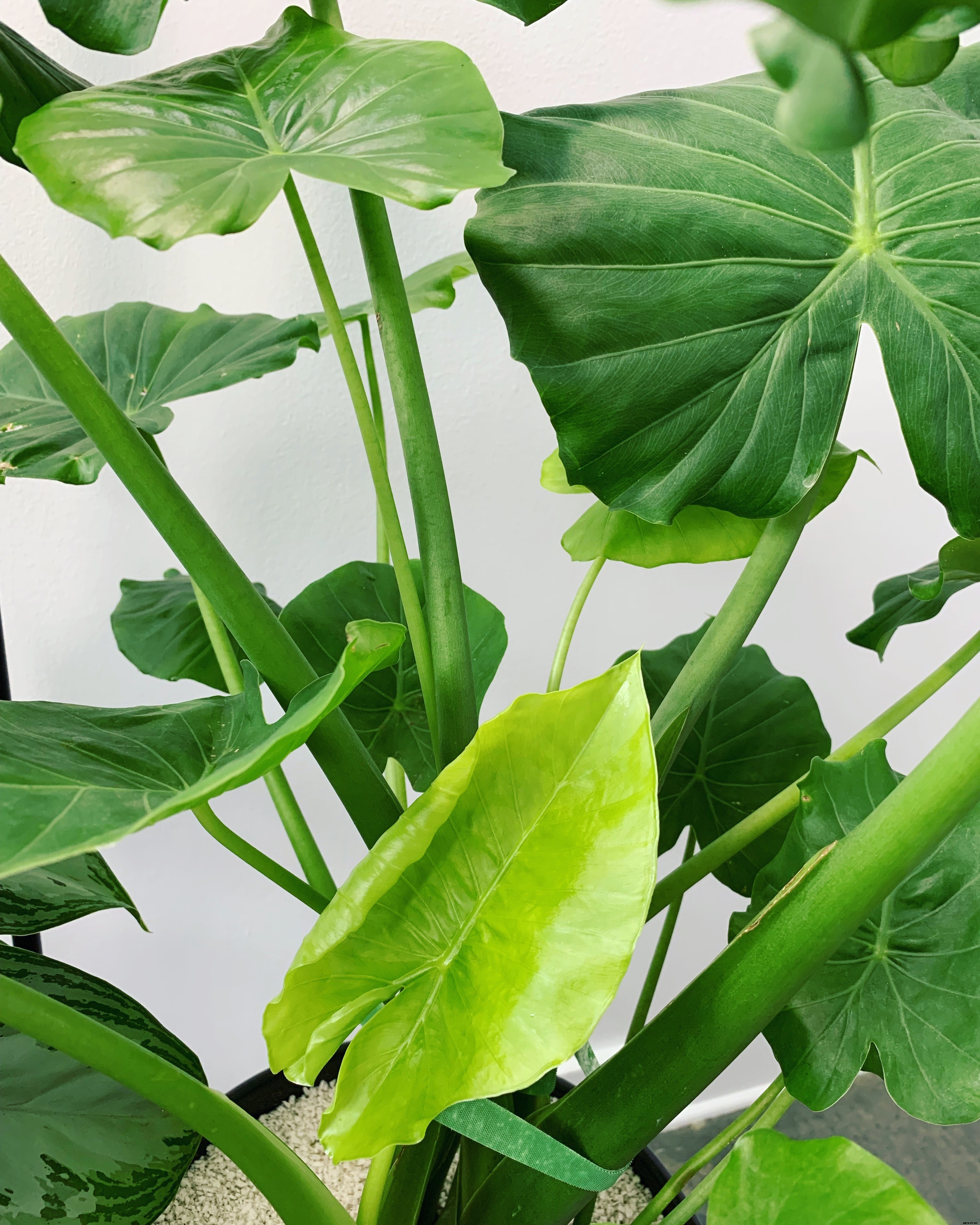
Elephant ears are luxuriant rainforest plants with huge heart-shaped green leaves. While elephant ears cannot be grown from cuttings like many other plants can, they can be divided from a healthy parent plant’s tubers. This should be done in the fall, and then the tubers should be planted in containers or stored for the winter before being planted outside in the spring. In either case, these tough elephant ears will bring a touch of elegance to your decor.
For the best chance of success, dig up your parent plant in the fall. To achieve the best results, wait until the parent plant begins to droop in the fall and the leaves begin to die before removing it from its container or in-ground position. Dividing the new tubers from the original growth in the fall reduces stress on the parent plant, which means you have a better chance of properly separating the young tubers without hurting the parent plant.
If you grow your elephant ear parent plant outdoors in the ground and the temperature goes below 40 °F (4 °C) in your area during the winter, dig them up in the Autumn or fall and keep the bulbs indoors. Because you’ll be digging up your plant anyhow, this is an excellent time to separate the new tubers
.● Elephant ear bulbs should be dug up, taken inside, and stored in the fall or Autumn when temperatures drop below 40 degrees in your area. This is a good time to do further excavating, because you’re already going to need to get your plant.
Tip:If you want to give the tubers a little extra stress, you can dig them up and divide them in the spring. The best method is to wait until spring and then dig the roots out, separating them from the parent plant.
2. Bleach your tools to avoid illness spread. Begin by adding one part bleach to nine parts water to a fresh bucket. It’s time to finish up the pruning using your pruning knife and shovel (or hand tools). Leave them in the pruning solution for one to two minutes. Wash them off with clean water and let them soak in a solution for 30 minutes before using them to dig and cut new growth tubers from your parent plant.
● Your instruments are sterilized by bleach, helping prevent illnesses, such as bacterial or fungal infections, from passing between the parent plant and the cuttings.
● Furthermore, your equipment is less likely to have bacteria introduced to the parent or new plant that may be clinging to your shovel or knife.
3. To transplant a parent plant, first dig it up and put it in a new pot or place. Take hold of the stalks and remove the elephant ear plant out of its pot. Use your hands or a shovel to dig up the plant to loosen the soil, then use your hands to grab the plant by the stems and pull it out of the ground.
● Slowly and carefully dig around your plants to avoid injuring the good roots and tubers.
4. To divide healthy tubers, use tubers with roots. After this, make sure to loosen the soil and brush off any debris to see the tubers so you can be gentle when you move the plant (bulbs). Then, see which of the new growth tubers are producing roots by examining them. They will almost certainly be able to live if they have one new root bud or sprout, no matter how far away they are from the parent plant.
● Choose vegetables with no flaws or spots indicating rot, as they are more likely to be carrying illness that could limit their successful propagation.
5. The new tubers should be taken away from the parent plant. To separate the tuber’s roots from the parent tuber’s roots, you first unknot and then carefully cut both roots. After this, use a sharp knife to cut away the newly-grown tubers from the parent plant tuber at any intersections they may have.
● Elephant ear tubers have a unique potato-like feel which is much easier to cut than you’d expect.
● If you cut away all of the new growth tubers from the parent plant, the plant will get bigger more quickly. Alternatively, if you want the parent plant to get bigger, you can leave some of the new growth tubers attached.
1. Grow them in a container so that you can start seeing results right away. If you wish to place them in a pot, you can plant the tubers immediately. The huge pot you’ve selected should have drainage holes, and be filled with a container of well-draining potting soil. First, dig a hole the size of the tuber towards the base of the plant, then place the tuber with the “business end” upwards. Settle some soil around the tuber and wet it with little water.
● Elephant ears like to grow on a soil made from sand and peat moss.
2. If you choose to plant the tubers outside, store them in a cold, dark location until spring. If you reside in a cold-weather region, make sure to keep your elephant ear tubers safe over the winter. Put each tuber in a paper bag and store it in a cold, dark, dry area until it warms up. While basements work well, be careful to avoid those that are too humid.
● Keep the tubers in a room at temperatures between 50 and 60 degrees Fahrenheit (10 and 16 degrees Celsius) for the greatest results.
Tip: Keep the tubers in a room at temperatures between 50 and 60 degrees Fahrenheit (10 and 16 degrees Celsius) for the greatest results.
3. Select a planting place with various levels of sunlight. Elephant Ear plants prefer a warm, sunny climate and thrive in warm places. Don’t put them under trees or other structures that offer a lot of shadow. Ideally, it is best to plant elephant ears in places that receive at least 6 hours of sun a day.
● It is advisable to pick a secluded area if feasible.
4. Put the tubers in the ground after the temperature is above 40 degrees Fahrenheit. If you live in a warmer area or kept your tubers indoors all winter, you may safely plant them outside. Dig a hole approximately 5 inches (13 cm) deep for each tuber. Set each tuber with its point in the air. The tuber must be covered with dirt, and then the whole thing should be watered throughly with a hose.
● For the best results, the soil should be at least 65 degrees Fahrenheit (18 degrees Celsius).
● The new elephant ear may not appear for a couple of weeks.
5. Space elephant ears apart between 3 and 6 feet (or 1.91 and 1.83 meters). Elephant ears are a huge plant that needs a great deal of room for each tuber. You must avoid placing them too close together; if you do, they will grow poorly.
● Elephant Ear plants have a beautiful appearance, and may create a great impact if you line your path or fence with them.
6. Keep the soil moist by frequently watering your plants. Elephant ear plants grow well in damp soil that is never soggy. Check to ensure if the soil in your potted plants is dry before you water them, and do so every morning. Keep your plants hydrated by watering the soil and not the leaves.


