
Welcome to Modern Agriculture!

Thanks to Bridget Hilshey for this great piece.
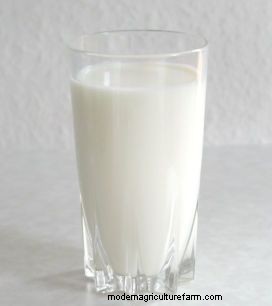
Sawing a person in half is magic. So is spraying a couple gallons of anything onto an acre of pasture and expecting production to double. When the lights come on or the sun comes up, the person is whole again and the pasture looks just like it did before you sprayed. Anyone who tells you anything else is either a conjurer or selling you something.
Spraying dilute raw milk onto pastures has recently gained attention as a potential means of increasing forage production and quality. All dairy operations generate milk and whey that is not saleable, usually around 5.75 to 16 gallons per cow per year. For farmers, it can represent a large economic loss to the farm and a confounding disposal problem. Disposal through waste-water treatment plants impair the plant’s functioning. Effluent storage ponds don’t fair any better. With biological oxygen demands of more than 10 times that of raw sewage, milk and whey discharged into storage ponds can overwhelm the processing bacteria. The result is inefficient and very stinky anaerobic decomposition. The easiest, least expensive and most environmentally friendly means of disposing of large quantities of milk has always been to feed it to other livestock or land application. In fact, disposing of milk by spreading it is a recommended means of dealing with it.
But how did we get from simple, safe disposal to applying milk as soil amendment? Raw milk is not something you’d pick up at Agway, so even though it has no sales force behind it, maybe there is a reason some people promote it as a way to improve pastures. Milk contains proteins and other compounds which are potent fungicides and viricides. There are amino acids in milk and maybe they stimulate grass growth and vigor. There is a wide variety of bacteria naturally occurring in milk; those night be beneficial soil microbes. But do all these factors add anything to your bottom line?
The short answer is: no, we don’t think so.
Graziers expressed interest in learning more about this practice to help them decide whether it was worthwhile to adopt this practice. So researchers complied, setting up the first and only known controlled and replicated on-farm analysis of the effects of raw milk on pasture. The study was completed this year under a SARE Partnership Grant. Two Vermont dairy farmers, John Clark, of Applecheek Family Farm, and Guy Choiniere, of Choiniere Dairy Farm, sprayed 20 gallons of raw milk per acre on 2-3 acres of mature pasture in the spring of 2012. Then, one and two months later, University of Vermont graduate students analyzed almost 200 forage and soil samples from those pastures and from adjacent pastures not getting raw milk. Extremely dry weather that summer could have muted any effects of raw milk, but there were no differences between the plots, and the farmers couldn’t tell where they had sprayed either. There probably wasn’t any difference because the raw milk simply doesn’t do anything.
It would be nice to think raw milk is a great pasture rejuvenator, but so far, it hasn’t shown any signs of being one. Unless and until other research proves otherwise, we say spraying raw milk is simply a way to get rid of excess milk. If you have data or documentation to prove otherwise, please share it with us. We’ll be sharing more stories on this topic in issues to come.


