
Welcome to Modern Agriculture!

A grazier’s dream pasture would deliver just like the post office: “Neither snow nor rain nor heat nor gloom of night stays this pasture from turning forage into meat and/or milk.” We all want a pasture that comes back year after year, so we grow and maintain perennial species. But when we’re in the middle of summer, and it’s hot and dry, perennials may not do the job. In addition, for those of us running dairies from our pasture we want forage that maintains high protein and digestibility so we can keep milk production up, and enough that we can store forages to get us through the winter.
That’s where summer annuals can help.
Popular summer annuals are sorghum, sudangrass, sorghum-sudangrass hybrids, Pearl millet, Japanese millet, and corn. There’s also a new entrant in the assortment, teff, that comes to us from Ethiopia. Which should you choose? We’d love to give you that answer, but each of our readers has a different operation with different requirements, so a one-size fits all solution doesn’t fit anyone.
Because there is so much information available about each of these options, we’ll be putting together more for you in the future. In the meantime, since June is the time to get your annuals in, we’ll give you a summary of the upsides and issues for some of the different annuals. That way, if you’re interested in planting something this grazing season, you have some background that you can take to your extension agent, NRCS staffer, or someone else you trust to help you figure out quickly what you can do. We’d also encourage our On Pasture Community to join in here, sharing your experiences with annuals, what you’ve tried and what you liked or didn’t like about the results.
Summer Annual Species
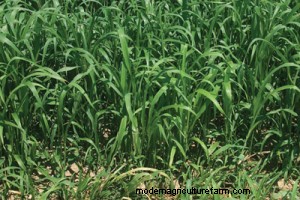
Sorghum has stems and leaves similar to corn and like corn, once cut, it doesn’t grow back. If you’re looking for a corn silage alternative or need grain, this is a good choice. There are lots of varieties of sorghums, falling into two categories. Grain sorghums, also known as milo, are shorter, and are used primarily for grain production. They have a low dry matter yield, so they’re not good for forage. Forage sorghums can grow 8 to 13 feet tall and are primarily used for silage.
Sorghum silage feed value is 80-90% that of corn silage. Long-season and/or non-flowering types must be frost-killed before they are dry enough for ensiling.
Sudangrass has 1/2 inch wide leaves and thin stems making it a better candidate for hay making than sorghums. It can grow from 4 to 7 feet tall and has good regrowth potential. It can be grazed, or harvested as green chop, hay or silage.
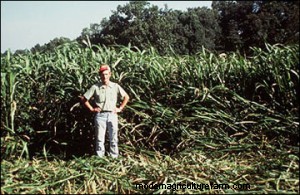
Sorghum-sudangrass hybrids have thinner stems than sorghum and a leafier nature. They have moderate regrowth potential and can be used for grazing and multi-cut stored feed. Yield is generally less than forage sorghums, but higher than sudangrass. Its slightly larger stems make drying it for hay more difficult than for sudangrass.
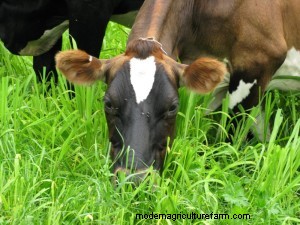
Millet has smaller stems and greater leaf biomass. It’s bushier, and shorter than the 8-foot tall sorghums. It has a lot more leaf biomass, along with decent regrowth, which makes it useful for grazing and multiple harvests. It doesn’t have prussic acid issues, and tolerates wetter conditions better, while still tolerating drought.
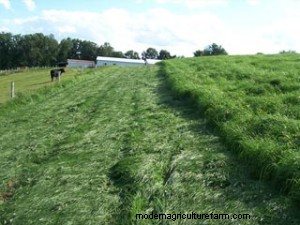
Teff is a relatively new grain to North America. It comes to us from Ethiopia where it is used as fodder and as a cereal crop. It has thin stems and a leafy nature, tolerates many soil types, regrows rapidly, and is extremely drought tolerant. According to a Virginia Tech Cooperative Extension article, “hay yields can range from just under 3 tons to over 5 tons per acre, depending on moisture and fertility. First cut hay can be harvested 45 to 60 days after planting. Researchers have found that it produces very high quality hay suitable for dairy cattle and horses. Independent trials show cattle gaining about a pound per day more than those grazing a fescue/clover pasture.
How to plant your summer annuals
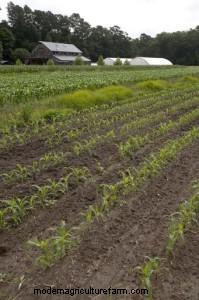
Summer annuals should be planted when soil temperatures reach 60-65°F. Delaying the planting much beyond then means that there is poor soil moisture at the time of planting, and the growing season might be cut short at the end with cooler temperatures.
A grain drill is a good tool for planting, putting the seed 1 – 1 ½ inches deep. Plant sorghum, sudangrass, and their cross at 35-55 lbs per acre,and millet at 28-30 lbs/acre. Teff requires 4-5 lbs/acre of its tiny seeds, and should only be planted at about 1/2 inch deep.
All of the crops have high nitrogen requirements of 50 lbs per cut or grazing event. They should be fertilized with manure prior to planting, but a second application of manure will be necessary. Manure applications should supply enough phosphorus and potassium. For optimal production, the soil pH should be in the 6 to 6.5 range.
Because summer annuals grow so quickly, staggered plantings may help manage harvesting and grazing. These crops grow very fast and the cows may not be able to keep up. Planting on a couple of dates may help keep things manageable.
Summer Annual Grazing Tips
Strip grazing with back fencing is a great way of taking advantage of your summer annuals, with strips of twenty feet or so at a time. Anticipate that 20 to 30% of the forage will be trampled. You can consider this added organic matter for your soil.
Sudangrass should be grazed when plants are 18-30 inches tall, about 4-6 weeks after planting. By letting the herd graze the pasture down to 6-8 inches and then letting it regrow, you’ll get two to three uses out of the pasture.
Looking at forages in a dry August in Vermont, BMR sudangrass had higher quality than the perennial pasture forage. So, not only is there more forage with summer annuals, but also higher quality. This is not to say everything is rosy with BMR sudangrass. Its quality and utilization does drop over the course of the season. When the crop gets really tall, the herd will just strip off the leaves, leaving the stems behind.
Harvesting summer annuals for stored feed
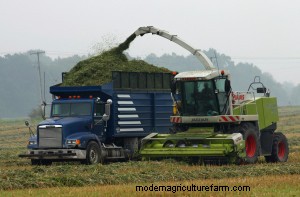
Sorghum is a single-harvest crop harvested at the soft dough stage. (You’ve reached soft dough stage when a squeezed seed kernal feels like a rubbery dough like substance and there is no milky fluid.) At about 8 feet tall, sorghum is quite a bit taller than the other crops. It is chopped and stored in one step. High concentrations of prussic acid are eliminated in when sorghum is harvested for storage.
Sudangrass and sorghum-sudangrass hybrids are harvested when the crop is 3 to 4 feet tall, cutting to about 6 inches. Mow and dry, then put up as haylage or baleage. If working with hybrids, reduce drying problems by conditioning hay and spreading it in wide swaths. Expect your largest yield from the first cutting.
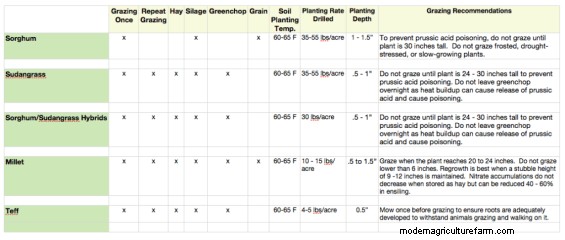
Summary Table
That’s quite a bit of information to digest. So to help, here’s a table of the basic information. Click to enlarge it for better viewing.
Add to the conversation!
There’s your summary of things to consider when adding summer annuals to your pasture. We’ll be adding more in future issues, and we’d like to hear from you. What else do you need to know? What have you used and how did you like it? Do you have recommendations based on your operation style? Can you tell the On Pasture Community what they should avoid? If two heads are better than one, then all our heads together must be really great!
Thanks to Rick Kersbergen of UMaine Extension and Heather Darby of University of Vermont Extension for inspiring this article. http://www.extension.org/pages/68106/organic-dairy-forages:-focus-on-summer-annuals They are part of a team researching summer annuals in the northeast. We will check back in with them to give you updates on what they find.


