
Welcome to Modern Agriculture!

Researchers comparing high and low fertility soils in Wisconsin pastures, concluded that the best chance of getting a return on fertilizer expenses is when soil fertility is low at the start. As you know, manure is really the key source of nutrients for grass-based farms, and since it’s basically free, researches found it showed the greatest net return on investment. But when adding nutrients, it’s easier to raise a pasture you might grade at a C- to a C+ or B-. Working with the A or B, though there’s less room to improve, so you won’t see quite as much bang for your buck.
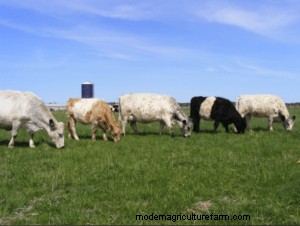 If you have really limited abilities to improve soil health, where should you put your resources? I’ve been considering this ever since a consulting visit to a farm on Martha’s Vineyard. The solutions one farm
er has come up with can give you an idea of how changes to your management can help your under-performing pastures.
Jon Previant manages Katama Farm, (pronounced “Kuh–Tay-Ma”) raising beef, sheep, and chickens. The farm is also home to the Farm Institute, an organization dedicated to connecting people of all ages with a working farm.
Katama Farm, like others on the island, has the challenge of sandy soils that don’t hold a lot of nutrients. Sitting on the southern shore of Martha’s Vineyard, no bridge connects the island or Katama Farm with the rest of the world. Every item needed on the island comes over on the ferry, so boosting production by improving fertility can be quite expensive, so it’s important to figure out what to focus on first. How do you improve under-performing land, and where do you prioritize your efforts?
The solution Jon has worked out has several parts. First, he tightened pasture management. Instead of keeping the herd out on a single large pasture for long stretches, he’s got them moving through 7-acre paddocks every Monday/Wednesday/Friday, because there’s not enough labor for more. This has let them graze only the top half of the available forage. The sheep graze with the beef, which gets a bit more production out of the pasture. With this simple change in management, over the course of one relatively dry grazing season, available forage at 7″ climbed from 150 lbs/acre to 300 lbs/acre, which felt like success.
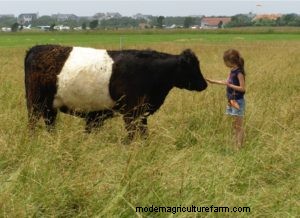 second part of the solution has been to bring in fertility in the form of hay. Because Katama Farm can’t produce nearly enough hay to take the livestock through the winter, Jon has no qualms about buying quality hay. He looks at it as buying in fertility.
Through the winter, the cattle and sheep are in a pasture by the barn. Excess bedding gets scraped up when they move out to graze. That pile is turning into compost, and it’s going to go on under-performing pasture for that much needed boost.
When the farm has the money, Jon’s going to add lime to pastures that are at pHs of around 5.7. At $100/acre, it would be money hard to come by, but well spent. The long-term goal is to seed in more desirable species sometime in the future, but fertility has to come first, with compost and lime.
This triage management fixes the worst pasture first, because that’s the one he’ll see the biggest rebound. Hopefully you’re not facing the same challenges as Jon is, but wherever you are, you deserve the best return on your fertility investment. That comes from taking your low-scoring pasture to something that shows improvement, rather than putting those resources into the higher performing pastures to get a little bit more out of them.
If you have a pasture with soils so inadequate that it rates an F, though, you could be throwing your resources into a bottomless pit. Problems might be extreme acidity, beach sand, completely eroded or graveled areas, or areas consistently too wet to support palatable forages. In those cases, cut your losses, and spend your resources on more viable land.


![Where Do You Cut When Pruning A Plant? [And At What Angle?]](https://modernagriculturefarm.com/article/uploadfiles/202211/2022111711153487_S.jpg)