
Welcome to Modern Agriculture!

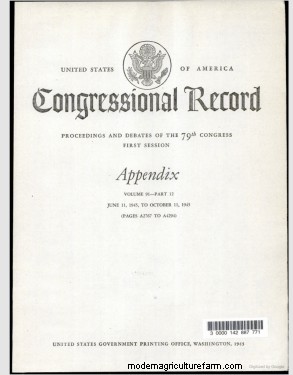 On Pasture reader Kirk Cunningham wanted to know if I had ever found studies on cows grazing teasel. I knew of nothing off the top of my head, so I spent quite some time searching the internet. The only thing I found was from the 1945 Congressional Record. Sandwiched between remarks on the results of a “Gallup Poll on Questions of Interest to the Army” and “The Peace We Want – a Continuing Peace,” were comments by the Honorable Glen H. Taylor of Idaho titled “Salt and Weeds as Cattle Feeds.”
Here are Senator Taylor’s Remarks from Wednesday, July 25, 1945:
Mr. President, I ask unanimous consent to have printed in the Appendix of the Record an article published in the Lewiston (Idaho) Tribune entitled “Grangeville Farmer Lures Cattle to Graze on Weeds Which Have Been Lightly Salted to Provide Flavor” It strikes me it is an excellent plan to induce cattle to feed on salted weeds.
There being no objection, the article was ordered to be printed in the RECORD as follows:

Agronomist Lechner’s idea that a liquid application of salt could work well is something that prescribed grazier Ray Holes has demonstrated works well. When his goats are headed to a pasture with weeds they may not be familiar with, Ray sprays them with a little saltwater. This encourages the goats to try them, and then they continue eating them in pasture, regardless of whether or not they’re all salted. This works because weeds are nutritious, and once an animal has tried a nutritious plant, it will continue to eat it as part of it’s over all diet. In essence, that’s what the neighbors cow demonstrated as well. Once she’d tried the salted weeds, she went home and ate them there even without salt.
I have no information on the nutritional value of teasel. Most “weeds” haven’t been analyzed so that’s not unusual. My rule of thumb based on analysis of many weeds is that if it’s green and growing it’s nutritious, and the fact that Baker’s cattle ate it well is a good indication that it has value. This is also a safe plant for your livestock to eat.
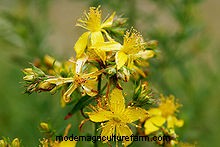
Saint John’s Wort (Hypericum perforata) on the other hand can cause photosensitivity in livestock if they eat too much. What this means is that when an animal eats St. John’s Wort and is then exposed to the sun, it will suffer from very itchy skin, reddening and swelling on it’s body, blisters and even sloughing of the skin of the teats, udder, escutcheon, and areas that are less pigmented or have little hair. These symptoms occurred in 500 to 700 pound calves that ate as little as 1% of their body weight. Sheep have an advantage because their wool protects most of their bodies from the sun, so these signs will usually only be found on their ears and faces. If you see this happening to your animals, remove them from pastures with St. John’s Wort until they recover. It usually only takes a few days unless the symptoms are severe.
I’ve found a number of other solutions to modern problems in old journal articles and papers. I’ll be sharing those as we go along.
Save

