
Welcome to Modern Agriculture!

Learn how to season cast iron pan and/or Dutch oven, because my friends, a well-seasoned cast iron skillet or Dutch oven will be one of your most beloved and used homestead kitchen items ever. And when done right, truly produces a non-stick finish without the harmful chemicals or coatings of Teflon.
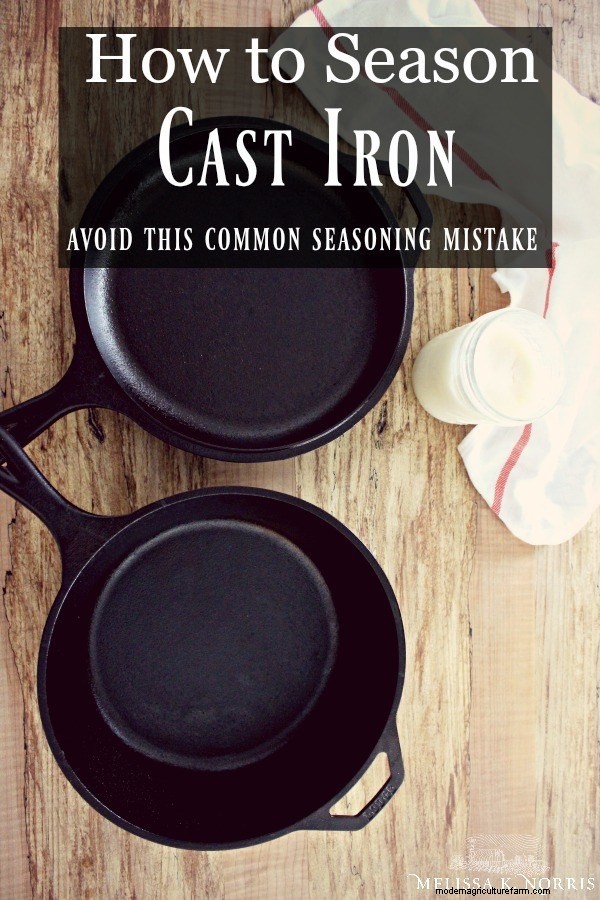
Because cast iron is iron, it will rust if not properly taken care of. The seasoning along with proper care, will eliminate rust issues and give you many a delicious meal with easy clean-up.
Seasoning is when the oil (fat source) is applied to the surface and with the use of heat, the oil goes through two processes of polymerization and carbonization. The oil (when applied correctly) creates a polymer layer on the surface of the cast iron. When heat is applied just above the smoking point it creates a carbon layer that finishes our non-stick seasoning. The oil is baked down into the pores of the cast iron and sealed, making that smooth shiny black surface we all covet on our cast iron.
I created a video for you below to walk you through it (make sure you subscribe to our YouTube channel, I've got weekly homesteading videos coming your way!) but will also walk you through the process below with a bit more detail on why I use the temperature and oils I do.
Even if your new cast iron says it comes seasoned, it's not seasoned enough. Always do a seasoning, regardless if it has a factory seasoning.
Many people like to use flaxseed oil as they feel it creates a superior ploymerized layer (mainly due to the popularity of one blog post, but I've never used it and I can cook eggs over easy and scrambled eggs in my pan without issue, I think it's more the slow long process of doing 6 seasonings in a row but haven't tested it myself) however the pioneers and homesteaders of old were using well-seasoned cast iron for centuries without having access to flaxseed oil.
The best oils to use are unsaturated fats because they form bonds easier than saturated fats.
This depends on your use of the cast iron. When used regularly you'll rarely have to season it because you're using oil to cook with it so it's basically getting seasoned every time you cook with it.
If it develops gummy or sticky spots, wipe it clean, and place it in the oven at 425 degrees Fahrenheit for an hour. This will help any of the excess oil to polymerize.
If it's really sticky, gummy, or rusty, you'll need to strip it down and then season it again following the steps above.
If you go a long period of time without using your cast iron then you may need to season it when bringing it out of storage.
There you have it, how to season cast iron pan and a new lodge Dutch oven. Do you have any favorite cast iron seasoning tips?
Check out my Cast Iron & Dutch Oven Outdoor Campfire Cooking
Living Like it’s the 1800’s – Wood Stove Cooking & Frugal Living Tips


