
Welcome to Modern Agriculture!

Guppies are a popular pet fish. They are pretty to look at, with their fancy colors and tails. They are easy to care for and to breed. Guppies are hardy fish that can survive a wide range of conditions.
Guppies are so hardy that when something is wrong, it can be a surprise. Just like any other animal, fish, or living thing, they too can get sick.
Guppies can get sick from infections, diseases, and parasites. There are diseases that they share with others, and there are ones that are unique to Guppies.
Luckily, there are ways to prevent these diseases, infections, and parasites. There are ways to recognize them and treat them. Being a responsible guppy owner means learning the different illnesses, prevention, and how to treat them.
Here is a quick list of the 17 most common Parasites and Diseases that affect Guppies that you should look out for. In the following sections, you’ll find detailed information on each one: how to recognize if your Guppy has it, what causes it, and how to treat it.
Before we get into the details of the diseases and how to treat them, it is important to note that the best treatment is always prevention. There are a number of things owners can do to help protect their guppies from diseases, parasites, and sickness.
Guppies are hardy fish. Healthy guppies can fight off most diseases with minimal treatment. There are a few things that can affect a guppy’s ability to fight illness. Stress, Overcrowding, Water Temperature, and Water Quality can all affect a Guppy’s immune system and make them more susceptible to diseases and parasites.
Stress can weaken a Guppy’s immune system making it harder for them to fight off illness. A number of factors can cause your fish to feel stressed.
In the wild, guppies have plenty of places to hide in order to protect themselves. If they are in a tank that does not provide enough hiding places, they can get stressed out. Make sure you have enough hiding places for all your guppies.
In addition, if you add any non-guppy fish to the tank, you can cause distress in your guppies. Guppies are peaceful fish, but not all other fishes are. More aggressive fish may scare or threaten your guppies.
Overcrowding can affect a Guppy’s immune system as well. Overcrowding can cause stress. It can also make it easier for illness or parasites to transfer from one Guppy to another.
In general, you can keep about ten guppies in a 20-gallon tank. You need to make sure they have enough space for everyone and enough hiding places for them all.
Water temperature that is too high can cause illnesses to spread quicker. It can also weaken the immune system of your fish and cause them stress.
Water temperatures that are too low may cause stress and weaken the immune systems of your guppies. With weakened immune systems, they may get sick much easier.
Make sure to maintain a tank temperature of 72 to 82-degrees Fahrenheit, which is 22 to 28 degrees Celsius.
Water quality can affect your guppies through the introduction of illness and through the stress it causes their immune systems. Dirty water in the tank can turn your fish tank into a breeding ground for bacteria and parasites.
Change out 30-50% of the water each week. Make sure the water you add is chlorine-free, has the right temperature, and has the right pH balance.
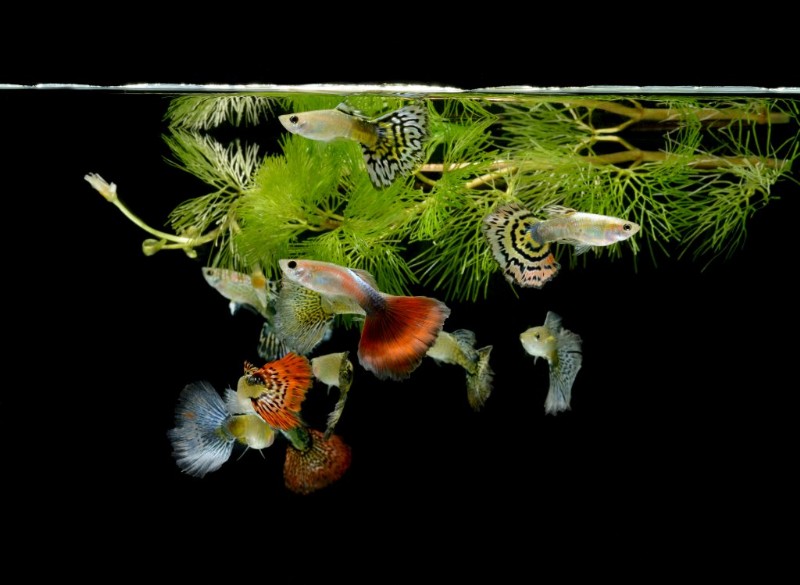
Check your guppies every day. Make sure to look for anything unusual or out of the ordinary. If anything looks wrong, remove them from the tank immediately. Even if it turns out to be nothing, you’ll be glad you didn’t risk your other guppies by leaving a potentially sick guppy in the tank.
Once you remove the Guppy, take a close look at it to identify what might be wrong. If you are unsure of what is wrong, take your Guppy to the vet. Once you know what your Guppy is sick with, you can administer proper care.
It is always a good idea to keep the medications on hand so you can treat your fish immediately if you are sure of your diagnosis. Don’t risk it if you are unsure since the wrong medication can make your fish sicker.
Below are the most common Guppy Parasites and diseases. You can use this list to determine the most likely cause of your Guppy’s illness and the best ways to treat what they have.
White Spots is one of the most common Guppy health problems. It is also sometimes called Ick and Ich. White Spots is deadly if not treated. An ectoparasite is the cause of White Spots.
Fish with Ich will start rubbing themselves against the rocks and things in their tank. They may lose appetite. The most obvious sign of Ich is the appearance of white spots.
Treating White Spots is fairly easy. While taking your sick Guppy out of the tank and quarantining it will help. You need to apply the following treatment to your main guppy tank as well. You want to make sure there is nothing of the parasite left.
Velvet is uncommon in hobby tanks, but it is deadly if left untreated and spreads quickly. Velvet is unfortunately hard to recognize early on as the golden spots are quite small. If your fishes’ skins start peeling off or they start bleeding, immediately quarantine the sick fish and begin treatment for the rest of your fish.
If caught early, you can successfully treat Velvet. When you check your fish every day, look for golden spots appearing on their body or fins.
It is important to note that Shrimp and Snails can get sick from the copper. Once it has been used in a tank, it is hard to get it out. You should not try to keep snails or shrimp in the tank after treatment.
Fin or Tail Rot can be caused by a fungus or a bacterial infection. The fungus or infection takes hold where fish have been nipped in fighting. Dirty water and ammonia from rotting food can also cause Rot.
The fins of a guppy suffering from Rot may look stuck together. If the fins look damaged, then the Rot is most likely caused by the fungus. If there is no noticeable damage, then it is most likely that the cause is bacterial. It is important to know the cause since they are treated differently.
Protozoan is also called Guppy Disease because it mainly affects guppies. It can affect other fish but not as severely. It is caused by parasites.
The parasite will attach itself to the fish and burrow in until it gets to the bloodstream. The parasites will usually develop in a tank with bad water quality and water that is not warm enough.
This infection may look like a fungus, but don’t let it fool you. It is actually caused by bacteria. The bacteria form a colony that looks like a big white splotch on the mouth or middle.
A fish suffering from Columnaris and Mouth Fungus will become paralyzed and slowly stop swimming. They may also lose their appetite.
This bacteria is highly contagious. Mostly, it affects female guppies, but male guppies can also catch it. Without proper treatment, it can wipe out your whole fish colony.
To successfully treat Columnaris and Mouth Fungus, start treatment the minute you notice signs. You can quarantine your sick fish, but it might be best to treat the whole aquarium due to the possibility that other guppies are sick but not yet exhibiting symptoms.
Dropsy is a bacterial infection that affects the liver and or kidneys. It can cause fluid to fill the abdomen. Your fish will appear swollen, distorted, and discolored. Scales may appear like spines on a pinecone, sticking out instead of lying flat.
The bloating will make it hard for your fish to swim. A number of things may cause Dropsy, including:
Unfortunately, Dropsy is untreatable. Once the symptoms present themselves, the fish is already too sick to cure. All you can do is try to make your Guppy’s last days the best they can be.
Separate any guppies that have Dropsy, and you can treat them to an Epsom salt bath. This bath will help make them more comfortable but will not cure their sickness. Use two tablespoons of salt for one gallon of water. Put the fish in for 30-45 minutes. Make sure the water is at the same temperature as your tank.
Gills are a fish’s way of breathing. Swollen gills will cause a fish to gasp for air at the surface of the water.
Swollen gills can be caused by too much ammonia in the water or carbonate poisoning. Ammonia usually comes from decomposing fish food, organic waste, and fish waste. Carbonate can come from the rocks and substrate in the tank.
Red Blood Spot will usually appear on a Guppy’s body. Red Blood Spot is usually caused by ammonia or nitrites poisoning.
If you recently got a new tank, then the tank may be the problem. A new tank can take up to six weeks to fully cycle and be safe for fish.
Unfortunately, there is no treatment. However, if you catch it before your fish have been severely poisoned, you can save your fish. Prevention is the best course of action.
Viral Hemorrhagic Septicemia is also referred to as VHS. A virus in the bloodstream is the cause of VHS. The first signs are lesions on the body of your fish. As the illness progresses, sores and ulcers will begin to appear.
Other symptoms include fins rotting, bulging eyes, and turning pale. Eventually, your fish will begin to refuse food and become darker in color.
Pop-Eye or Popped Eye Disease is very hard to treat as it can be caused by a number of things. Knowing how to treat it means knowing the cause, and it is often hard to determine the exact cause for it.
Causes include:
Swim Bladder Disorder is rare in Guppies, but it can affect them. It is most commonly caused by stress. You may notice them bobbing at a weird angle or even upside down. It will appear as if they have no control, and they don’t. Bad water and High ammonia can also cause Swim Bladder Disorder.
Swim Bladder Inflammation is easy to identify. The first signs will be similar to those of Swim Bladder Disorder. Your fish will begin swimming in strange ways.
Next, you will notice the belly distending and swelling. A virus is the cause of Inflammation in the Swim Bladder.
Unfortunately, there is no treatment for Swim Bladder Inflammation. It is highly contagious, so you need to remove your sick Guppy immediately. There is nothing you can do for your fish. It is best to give them a quick death so they do not have to suffer anymore.
Gill Flukes, also called Gill Worms, can be seen with the naked eye. They are small worms that will invade your Guppy’s gills and live there.
They cause your Guppy’s gills to bleed. In addition, you will notice your Guppy is having trouble breathing. They may be lying at the bottom of the tank or at the top, gasping for air.
Gill Flukes are usually introduced to aquariums by outside fish and plants being added. This is one reason why you should quarantine your new fish and plants is important. They can also spread more rapidly if the water is not clean enough.
There is only one treatment that works: a special medication you can get from your vet. Follow the directions carefully and treat your whole Guppy Tank.
Guppies with Gill Flukes can be saved. However, if they are at the stage where they have started bleeding, then there is little you can do. Even with the Gill Worms gone, the bleeding will lead to death.
Camallanus Internal Worm is one of the most common health problems for guppies. It is a parasite that can reach up to 3/4 of an inch. Part of the parasite is visible sticking out of the anus of your fish.
You can tell it apart from fish waste because it moves like a worm, doesn’t leave the fish, and is orange or brown in color.
No one is completely sure where the parasite comes from. However, breeders have noted that it is more prevalent in guppies that are kept outside or fed Cyclops.
The good news is that this parasite is treatable.
Hexamitiasis appears as a hole in the head or body of your fish. Hexamitia is a protozoan parasite that causes Hexamitiasis. This parasite is rare, but it does occasionally strike Guppies.
The first sign of Hexamitiasis is fish waste that appears white and stringy. Then their colors began to pale. They will refuse to eat. Lesions will eventually appear. Most often, they are on the body of the Guppy.
Bent Spine or Crooked Back isn’t common, but it isn’t rare in guppies either. It can be caused by environmental factors or genetics. This disease is usually noticed while guppies are still fries.
Sometimes you will notice it when looking from above. Other times you may need to be looking at the fish from the side. It is best to check your fish from all angles in order to catch this.
Guppies with Scoliosis will have trouble swimming
If your Guppy is swimming upside down, however, It can be a sign of something else. Find out what it means here! They are often weaker and may have a shorter life span. In addition, they may be bullied by others, making them stressed and more susceptible to illness.
There is no treatment for Bent Spine. Luckily, Scoliosis can not be passed from fish to fish like bacteria, parasites, or viruses. However, a mother or father guppy with Scoliosis can pass it on to their offspring. There is a high probability of most of the offspring being born with this genetic deformity.
This is not a deadly disease, and a guppy can still have a good life. Make sure to feed them well and give them plenty of places to hide.
Mycobacterium is the bacteria that causes Tuberculosis. In fish, it presents at first a lack of any desire to eat. The following symptoms show the progression of the disease.
Tuberculosis in fish will cause death if not treated. In addition, it can be passed on to other fish in the tank.
Tuberculosis is not easy to treat in fish.
While rare, Tuberculosis can be passed to humans. It is important to be careful while treating your fish. Make sure you are wearing a mask and gloves. Also, make sure you have no open cuts or wounds in which the bacteria could get into you.
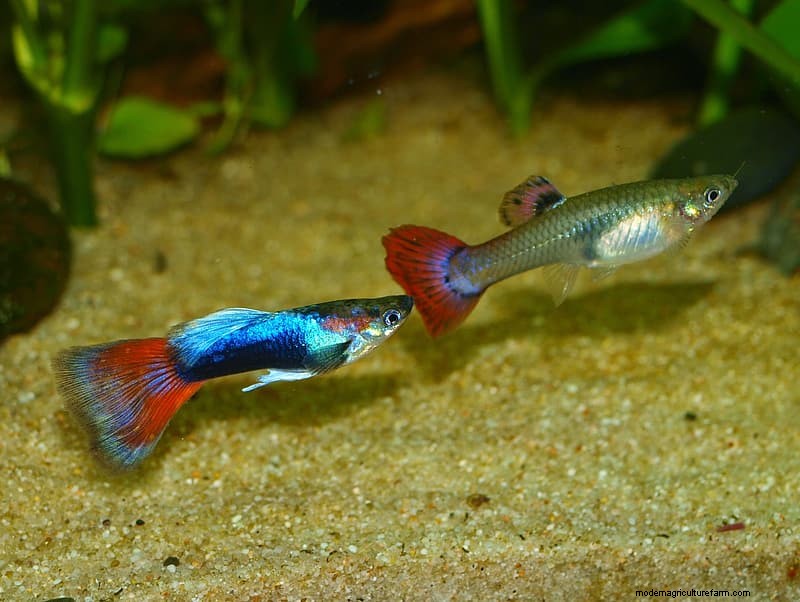
Here are some frequently asked questions about Guppies and sickness.
Yes, Guppies can get parasites.
Yes, Guppies can survive Ich or White Spots with the proper treatment. Curing Ich is not that hard, especially in comparison to some of the other health issues guppies can have.
Signs of parasites will be different depending on the parasites.
Guppy illness is most often caused by overcrowding, bad conditions, and the introduction of sick fish to the tank. The best way to keep your fish healthy is to take preventive measures to ensure your fish are as healthy as possible.
If you liked this article, make sure you check out the rest of the website! And if you have any more questions you can ask them in the Q&A Section!


