
Welcome to Modern Agriculture!

Identifying the sex of a crab is essential for breeding programs, behavioral studies, and responsible pet ownership. While some species display subtle differences, most crabs reveal their gender through clear external traits that can be observed without dissection.
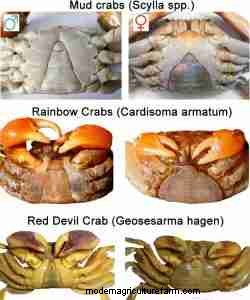
In some species, such as Scylla spp., mature females also show a darker apron, a secondary cue that can aid identification.
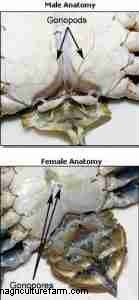
Gonopods are specialized pleopods that males use for sperm transfer. When gently lifting the abdomen, you can see:
Because gonopods are externally visible and species‑specific, this method provides a 100 % accurate sexing tool.
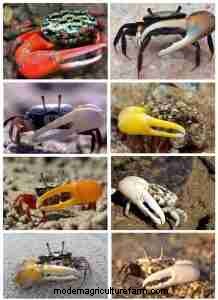
Many species exhibit claw dimorphism:
Claw size alone is unreliable, as overlapping ranges occur, but combined with other traits it can reinforce the sex determination.
Male crabs are often larger on average, but size overlaps heavily with age and species. Relying solely on carapace length can lead to misidentification, especially in small species such as the Thai Micro Crab or Red Apple Crab. Use this cue only in conjunction with more definitive markers.
In several taxa, males display brighter or more ornate colors than females. This coloration can serve as a warning to rivals or as a visual cue for females. However, color changes during molting or seasonal shifts mean that pigmentation should never be used as the sole indicator.
During copulation, a male typically lifts the female, positioning his claws and legs to secure her and access her gonopores. Aggression is more pronounced in males, who defend territories and compete for mates. While these behavioral cues can hint at sex, they are context‑dependent and not reliable for identification in a static setting.
| Trait | Reliability | Typical Pattern |
|---|---|---|
| Gonopods | 100 % | Present in males, absent in females |
| Abdominal flap | 100 % | Brood pouch in females; inverted "T" in males |
| Claw size/dimorphism | Low–Medium | Male claws larger or asymmetrical in some species |
| Overall body size | Low | Average male larger, but overlap exists |
| Coloration | Low | Males often brighter; molting may mask differences |
| Behavior (aggression, mating stance) | Low | Context‑dependent; not a standalone indicator |
Accurate sex identification hinges on examining the abdominal shape and the presence of gonopods. While secondary traits such as claw size, coloration, and behavior provide useful supplementary clues, they should not be used in isolation. Mastery of these external cues enables researchers and pet owners to manage breeding, study social dynamics, and ensure ethical care of their crustacean companions.


