While some crayfish species have gained popularity among enthusiasts, many equally fascinating species are often overlooked as potential pets. Cambarus bartonii—the Appalachian or Common Crayfish—is one such gem.
Hardy and adaptable, this species thrives in cold, low‑pH waters and is a top choice for beginner aquarists seeking a low‑maintenance, yet engaging, tank inhabitant.
Quick Reference Sheet
- Scientific name: Cambarus bartonii
- Common names: Appalachian Crayfish, Common Crayfish
- Minimum tank size: 10 gallons (~40 L) per animal
- Average adult size: 3–4 inches (7–10 cm) long
- Optimal temperature: 50–70 °F (10–21 °C)
- Optimal pH: 6.0–7.0
- Hardness (GH): 3–12
- Diet: Omnivore
- Temperament: Moderately aggressive
- Lifespan: Up to 5 years in captivity
- Color: Brown, often with lighter ventral tones
Etymology
The genus name Cambarus derives from Latin Gambarus, itself adapted from Greek Kammaros meaning “sea crab or lobster.” The species epithet bartonii honors American botanist Benjamin Smith Barton (1766‑1815).
Taxonomy
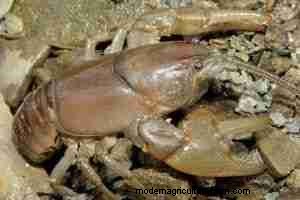
Kingdom: Animalia
Phylum: Arthropoda
Subphylum: Crustacea
Class: Malacostraca
Order: Decapoda
Infraorder: Astacidea
Family: Cambaridae
Genus: Cambarus
Species: C. bartonii
Note: The species includes several subspecies, such as C. bartonii bartonii, C. bartonii carinirostris, C. bartonii cavatus, and C. bartonii montanus.
Distribution
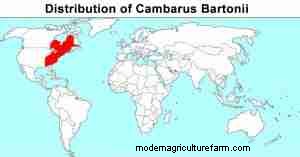
Endemic to the eastern United States—from Georgia to Nova Scotia—and inland to the Ohio River and Great Lakes drainages. States include Alabama, Connecticut, Delaware, Georgia, Kentucky, Maine, Maryland, Massachusetts, New Hampshire, New Jersey, New York, North Carolina, Ohio, Pennsylvania, Rhode Island, South Carolina, Tennessee, Vermont, and West Virginia.
Natural Habitat
Predominantly found on rocky substrates in fast‑flowing stream sections, where their strong claws keep them anchored. They also inhabit intermittent streams, ponds, and lakes, though at lower densities.
Physical Description
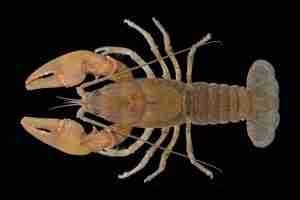
Medium‑sized crayfish reaching 3–4 inches (7–10 cm) in length. Key features:
- Carapace: Subcylindrical, slightly dorsoventrally flattened.
- Rostrum: Parallel or slightly concave margins.
- Claws: Smooth, robust. Male chelae are 80–110 % of carapace length; female 72–88 %.
- Coloration: Shades of brown from light beige to deep chestnut; ventral surfaces fade to cream.
Fact: Their brains dedicate 30–40 % of volume to olfactory processing, underscoring their reliance on chemical cues.
Lifespan
In the wild, they likely live at least four years; with optimal care, captivity lifespans of five years or more are common.
Behavioral Profile
- Fully aquatic; they can crawl briefly on land but require permanent water.
- Nocturnal: active mainly after dusk to avoid visual predators.
- Secondary burrowers: create intricate burrows 1–3 ft deep (0.3–1 m).
- Territorial and moderately aggressive; tend to retreat against larger or similarly sized conspecifics.
- Opportunistic omnivore and scavenger; diet includes live and decaying vegetation, algae, insect larvae, worms, small fish, amphibians, and carrion. Cannibalism can occur.
Dietary Guidelines
- Offer a mix of plant matter and protein sources: leaves, plants, vegetables, crushed snails, earthworms, brine shrimp, dead fish or shrimp, frozen blood worms, detritus worms, tubifex worms, blackworms, etc.
- Feed 3–4 times weekly for adults; juveniles require daily feeding.
- Leave uneaten food for 24 hours before removal to avoid water contamination.
- Do not discard molted exoskeletons; crayfish will consume them later.
- Check hiding places regularly to prevent bacterial buildup.
- Rotate foods to maintain dietary diversity.
Plant Compatibility
Cambarus bartonii is not plant‑safe. They will chew and shred any plant they can reach. If planted tanks are desired, use floating or artificial plants only.
Calcium Requirements
Crayfish depend on calcium for exoskeleton formation, especially during molting. They store only 10–20 % of the calcium needed in gastroliths, losing up to 50 % of body calcium during a molt.
Tank Setup & Water Parameters
- Tank size: Minimum 10 gal per individual; pairs need at least 15 gal. Larger tanks provide better water stability and hiding spaces.
- Overcrowding increases aggression and cannibalism; avoid housing multiple males together.
- Length matters: long tanks are preferable to tall ones, allowing horizontal movement.
- Cover the tank securely; these creatures are strong escape artists.
- Temperature: 60–70 °F (15–20 °C). They tolerate 32–86 °F (0–30 °C) but prefer colder waters.
- pH: 6.0–7.0. They can endure extreme acidity (pH 2.43) for short periods; however, sublethal acid exposure impairs reproduction, feeding, and chemoreception.
- Hardness: KH 1–6; GH 3–12.
- Oxygen: Use an additional pump to ensure high dissolved oxygen levels, mirroring their fast‑flowing stream origins.
- Filters: Standard aquarium filters are sufficient; ensure flow is moderate to avoid stressing the animal.
- Lighting: Minimal light is natural; adapt if housing plants or other species.
- Substrate: No special requirement; a sloping, rocky bed facilitates burrowing.
- Decor: Provide plenty of hiding places—rocks, driftwood, PVC pipes, leaf litter—to reduce stress and aggression.
Reproduction & Breeding
Sexing
- Male claws are ~20 % larger than females of equivalent size.
- Male tails are slightly narrower; females possess wider tails.
- Male claspers (L‑shaped appendages) behind the last two legs; females have a circular semen receptacle.
- Females display white cement glands on the ventral surface of uropods when mature.
Maturity & Spawning
- Sexual maturity at ~3 years, ~1 in (2.5 cm) carapace or 2 in (5 cm) total length.
- Natural mating occurs in fall; spawning takes place in early spring.
- Females carry eggs for ~1 month before hatching.
- Juveniles are dependent on the mother for the first two weeks; they should be transferred to a separate rearing tank afterward to prevent aggression.
Tankmates & Compatibility
Do not house with other crayfish species or conspecifics; interspecies aggression is common. They may also prey on fish, crabs, dwarf frogs, and freshwater snails. Bottom‑dwellers and fish with long fins are especially vulnerable.
Conclusion
Cambarus bartonii is an easy‑to‑keep, low‑tech aquarium species that thrives in acidic, cold water. While they are hardy, their aggressive nature limits tank‑mate options. Proper tank design, adequate space, and careful feeding are key to a healthy, long‑lived specimen.
References
- Dunham, David W. “Aggressive interactions between the crayfishes Cambarus bartonii bartonii and C. robustus (Decapoda: Cambaridae): interspecific and intraspecific contests.” Journal of Crustacean Biology 19, no. 1 (1999): 131-146.
- Thoma, Roger F., and Raymond F. Jezerinac. “The taxonomic status and zoogeography of Cambarus bartonii carinirostris Hay, 1914 (Crustacea: Decapoda: Cambaridae).” Proceedings‑Biological Society of Washington 112 (1999): 97-105.
- Hadley, Kristopher R., et al. “Altered pH and reduced calcium levels drive near extirpation of native crayfish, Cambarus bartonii, in Algonquin Park, Ontario, Canada.” Freshwater Science 34, no. 3 (2015): 918-932.
- Dunham, D. W., K. A. Ciruna, and H. H. Harvey. “Chemosensory role of antennules in the behavioral integration of feeding by the crayfish Cambarus bartonii.” Journal of Crustacean Biology 17, no. 1 (1997): 27-32.
- Distefano, Robert J., et al. “Response of the crayfish Cambarus bartonii bartonii to acid exposure in southern Appalachian streams.” Canadian Journal of Zoology 69, no. 6 (1991): 1585-1591.
- Sherba, M., D. W. Dunham, and H. H. Harvey. “Sublethal copper toxicity and food response in the freshwater crayfish Cambarus bartonii (Cambaridae, Decapoda, Crustacea).” Ecotoxicology and Environmental Safety 46, no. 3 (2000): 329-333.
- Hartman, Kyle J., et al. “Influence of elevated temperature and acid mine drainage on mortality of the crayfish Cambarus bartonii.” Journal of Freshwater Ecology 25, no. 1 (2010): 19-30.
- DiStefano, Robert J. “Effects of acidification on the crayfish Cambarus bartonii bartonii in southern Appalachian streams.” PhD diss., Virginia Polytechnic Institute and State University, 1987.
- Appalachian brook crayfish (Cambarus bartonii). Ecological Risk Screening Summary. U.S. Fish and Wildlife Service, June 2015.


