
Welcome to Modern Agriculture!

Tilapia farming: Here is an article on how to start a catfish farm. Tilapia is a popular delicacy eaten worldwide recent development in aquaculture has increased the production and population of the fish. Growing culture includes earthen ponds, lakes, rivers, tanks. Top producers are found in Asian countries and West Africa.
Top producers are found in Asian countries like Taiwan, Viet Nam. Others are China, Philippines, Bangladesh and Thailand.
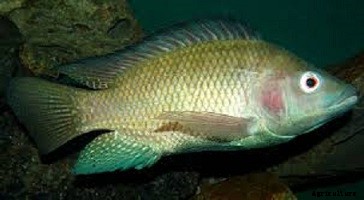
This fast grows fish lives on a vegetarian diet with low levels of omega 3. It is a good source of protein, carbohydrates, potassium, vitamin B. Regarded as lean meat it has low calories, saturated fat. Culinary uses includes roasting, frying, boiling or baking.
Starting a catfish farm is adequate land
Tilapia is a hardy fish not susceptible to many diseases. However they will kill themselves, fight or die if the pond has low levels of oxygen. Waste or pollutants from pelleted feed, over feeding or extreme cold will kill them.
Tilapia Diseases
There are several hundred types of tilapia fish. You have the Nile, Mozambique, karomo, Redbreast. Others are zebra, spotted, redbelly and different species of Oreochromis.
More include lake chala tilapia, Fissi, Coptodon,kululu,Lake Rukwa. Based on geographical location the commonly fished verity are the Mozambique, Blue and Nile. They are ideal for commercial production fast growing perfect for acquaculture.
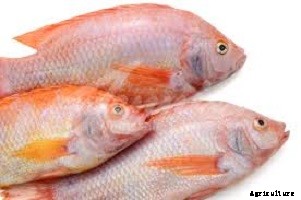
Live food is essential for quick development of fry or juveniles. Place them in breeding pond for effective management of growth. Fry’s eat zooplankton, phytoplankton while juveniles, young fish eat formulated feed.
To achieve faster growth within a short period farmers use high quality formulated feed. Pelleted feed is used in commercial intensive farming system alongside pond fertilization.
supplementary food for catfish
Production of phytoplankton is possible in a pond environment. A technique used by farmers is to fertilize the water which stimulates growth of the plankton.
In advanced aquaculture male fish are generally considered more profitable. This is because of fast rate of growth, good feed conversion ratio. The male are larger than the female, weigh more. To reduce competition between them stock male and female separately.
Different techniques are deployed to select or produce mostly male offspring’s. A poplar technique is producing YY chromosome males. Fry are selected and treated with estrogen to produce females with the XY chromosome.
Then the next generation are mated with those with only XX chromosome. Finally breeder fish with YY are selected and used to produce XY male offspring. This technique is highly scientific and used in research laboratories or big farms.
How to start a tilapia farm in your backyard
This method is highly controversial with safety, ethical issues. A farmer adds methyltesosterone to the feed to encourage development of mostly male fish.
The female develop male characteristics while traces of the chemical in the fish are noticeable over a 30 day period. Dangerous effect of this method is liver damage to fish, concerns about the safety when consuming.
Selecting the right breeding stock is moderately challenging. Methods include cold tolerance, color and size. Select those that display good activity, disease free, shooters (fast growers).
The commercially viable type are the Nile and Mozambique. 20,000 fry of 1 gram is stocked in 1 acre by 18 weeks they will produce 110 grams fingerlings.
Tilapia are highly prolific breeders and easily produce young in deal conditions. There are two basic ways the fish reproduce, substrate spawners or mouth brooders.
Popular substrate breeders are tilapia Zillii, tilapia rendalli. This group of fish spawn eggs in substrate by evacuating or digging a nest. The female lays fertilized eggs with both parents on guard duty. A farmers should provide a gravel bed as substrate to encourage egg laying.
Nile, Blue and Mozambique tilapia are mouth brooders. Males display aggressive behavior towards other male while the female build nest in preparation for spawning.
Courtship is short with a notable darkening of male. The female lays unfertilized eggs which are then fertilized by male. The female then collected in the mouth for safekeeping and hatching.
Stock 2 male to 6 female or 1 male to 3 female for best results. Hatchery techniques to consider are tray, jar, hapa or pond hatchery. Environmental cues are 12 hour variations in water temperature from warm to moderately cold.
2. Gather Eggs: The second way is to gather the eggs into a separate tank to hatch. The bottom-line is to remove the eggs or fry to prevent the adults from preying on them.
To encourage fast growth feed them pelleted feed specially formulated for Tilapia. Low oxygen levels is harmful to the fish especially fry. Maintain pH of 6.5, temperature 25c minimum oxygen level of 4mg/l.
Fish type stocking temperature pH oxygen level Tilapia 1 male/3 female 25c 6.5 4mg/l.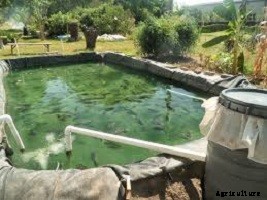
There are things to consider before building a pond. Logistics are good site location, closeness to market, transportation. Others are soil quality, availability of water, soil free of contaminants.
The pond types depends on material used and purpose. Pond types based on usage are spawning, holding, nursery, grow out, segregation ponds.
Different ponds based on material are concrete pond, block pond, wooden pond. Others are earthen pond, canopy, plastic and tank.
Plastic ponds are purposely built for fish production. They have inlet, outlets with different water capacity. To install the pond build a concrete base and place the pond on top. Tank ponds are similar to plastic ponds but made with galvanized material.
To build a wooden pond get a carpenter to build a sturdy frame. Then place a canopy or tarpaulin over the frame to make the pond. Make sure the frame is strong to withstand water pressure and stock.
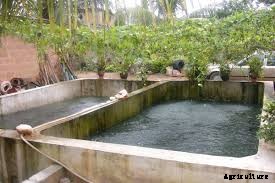
Earthen ponds are dug out type on flat land, sloppy or close to stream. They require evacuation of the soil have good stocking capacity. This type of pond provides fast growth rate however it requires good water management. Earthen pond are based on water availability, contour, diversion, and barrage.
There are different types of concrete ponds. We have free flow concrete, stagnant concrete, and water recycling concrete pond. Free flow requires flow out channels while stagnant acquires water through the aid of pumping machine.
Select a secure site close to source of water natural sun. Peg four corners of the pond, evacuate the lower part for foundation. Erect the walls with concrete blocks and reinforce with broken blocks as required.
If the pond length is more than 6 feet add pillar to avoid collapse from water pressure, gravity. Make sure the bricklayer provides an overflow pipe, water inlet and outlet. Get a plumber to install the inlet/outlet before plastering the outer surface.
Concrete is also used for the floor of the pond to retain water and prevent leakage. A water recycling concrete pond requires a refined filtration system.
It provides good efficiency, water management, increased stocking capacity. It improves dissolved oxygen in the water, growth rate, remove dirty.
A concrete pond is a permanent structure that require low maintenance. It is ideal for fingerlings or grow-out production. Perfect for catfish or tilapia farming in urban areas.
Natural ponds are ideal for integrated aquaculture system. Locate chicken pen over a portion of the pond for fresh manure. Other systems are pig or duck integrated to the fish farm.
Draining of the pond is the normal practice for harvesting. However some farmers deploy the seining method for low density populations. Sell to market women, frozen food stores, supermarkets, meat stores


