
Welcome to Modern Agriculture!

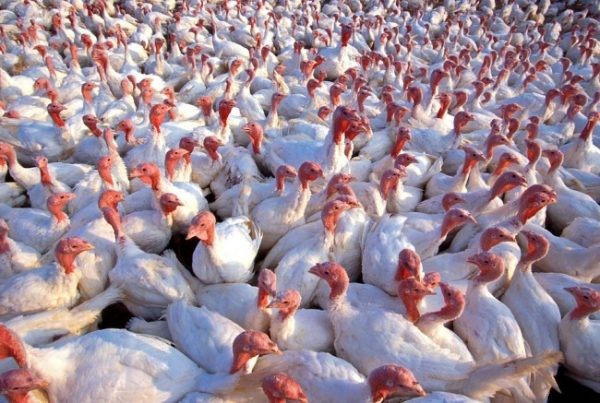
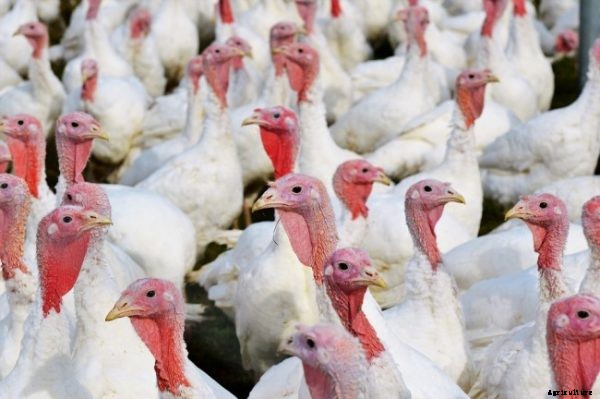
Turkey Farming is the best alternative to chicken farming. Turkey farming is gaining popularity for its best profits day by day. Turkeys are suitable for commercial egg, meat productions and can also be raised as pets. Turkeys are very beautiful and can increase the beauty of your home. And for commercial livestock business purpose, turkeys are highly meat productive, not suitable for commercial egg production. Turkeys are grown very faster and suitable for slaughter purpose earlier like broiler chickens and pigs. Warm weather suitable for Turkey farming, like chicken farming. Before you plan Turkey farming you should have a complete idea of their raising system. Commercial turkey business can earn you good profits with proper care and management.
Turkeys incubation period is 28 days. And there are two methods of incubation one is Natural incubation with broody hens and other is Artificial incubation.
Temperature – Relative humidity
The turkey eggs should be turned at hourly intervals daily. Turkey eggs need to be collected on a frequent basis to avoid soiling and breakage and to get better hatchability.
0-4 weeks period in Turkey is called as the brooding period. As per season, in winter brooding period will be up to 5-6 weeks. According to the thumb rule, turkey young ones need double hover space as compared to chicken. Brooding day old young ones can be done using infra-red bulbs or gas brooder and traditional brooding systems.
The average Mortality rate is 6-10% during the first four weeks of life. Young ones by nature are reluctant to eat and drink in the first few days of life, primarily because of bad eyesight and nervousness. Hence, they must be force-fed.
You should feed turkeys with the healthy and nutritious food they promote good growth and production. The food you feed should be balanced and nutritious. Each turkey needs 3.25 K of feed to gain 1 kg of body weight. All types of turkey’s feeds are available in markets, and you can add some extra amount of protein to feed. Along with feed, you should provide them sufficient amount of fresh clean water.
The major problem for early mortality of young ones is starving. You should take special care for supplying feed and water. In force-feeding, milk should be fed @ 100 ml/1 liter of water and one boiled egg must be given @ one/young ones up to 15 days. This will compensate the protein and energy requirements of the young ones. Young ones can be attracted to the feed by gentle tapping of the container with the fingers. Placing colored pebbles in feeders and waterers will also attract young ones towards them. Since turkeys are fond of greens, some chopped green leaves should also be added to the feed to improve the feed intake.
Litter materials used for brooding should be wood shavings sawdust, paddy husk, and chop saw etc. The thickness of the litter material should be 2 inches at the beginning and may increase to 3 to 4 inches in course of time by gradual addition. The litter should be turned over frequently to prevent caking.
Turkeys are used under free-range or intensive systems.
Advantages:
Advantages:
In case of deep litter system, the general management conditions are like that of chicken but care should be taken to provide adequate floor, waterer and feeder space to accommodate the large bird.
Catching and handling of turkeys: Turkeys of all age group taken from one place to another with the help of a stick. To catch turkeys you need dark room so that they can be picked with both legs without any injury. Turkeys should not be hanged more than 3 to 4 minutes.
Visitors are restricted to the Turkey houses.
Debeaking: Young ones should be debeaked to control feather picking and cannibalism. Debeaking can be done at day old or 3 to 5 weeks of age. Remove the break at about one half the distance from nostril to the tip of the beak.
Desnooding:
Desnooding is the removal of the snood or dewbill, this is done to prevent the head injuries from picking and fighting. For the newborn turkey of age on the day, snood can remove by figure pressure. For 3 weeks snood is removed using sharp scissors.
Toe clipping:
Toe clipping is done at the day old by removing the tip of the toe just to the inside of the outer most toe pad including the entire toenail.
Feed:
There are two types of feeding: Mash Feeding and pellet feeding.
Green feeding in Turkey farming:
In the intensive system, green can be fed up to 50% of the total diet on dry mash basis. Fresh Lucerne is the best green for turkeys at all ages. Desmanthus and Stylo are also best green fed to turkeys to reduce feed cost.
Natural Mating:
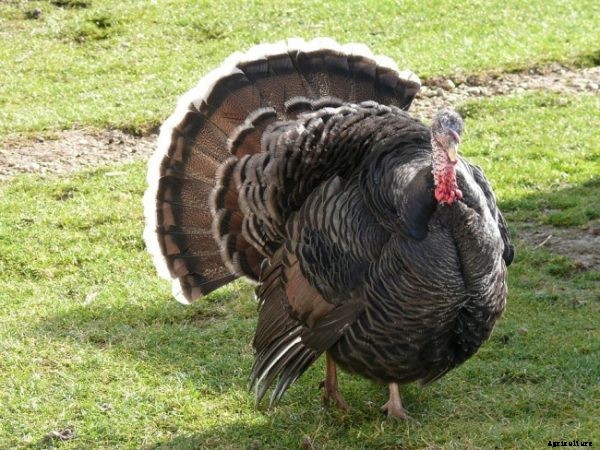
The strut is a mating behavior of male turkey, where it spreads the wings and makes a peculiar sound frequently. In natural mating, the male: female ratio should be of 1:5 for medium type turkeys and 1:3 for large types of turkeys. Each adult female turkey can produce 40 to 50 young ones on average. Adult males are rarely used for mating after the first year due to reduced fertility. In turkeys there is a tendency to develop an affinity towards a female, so we must change the adult males for every 15 days.
Artificial Insemination in Turkey farming:
Artificial insemination is used to increase the fertility of turkey flock throughout the season.
Insemination of hens:
Infectious synovitis Mycoplasma gallisepticum Lameness, breast blisters, Enlarged hocks, and foot pads. Purchase clean stock. Infectious sinusitis Bacteria Nasal discharge, swollen sinuses, and coughing. Secure young ones from disease-free breeders. Mycotoxicosis Fungal origin Haemorrhages, Pale, fatty liver, and kidneys. Avoid feed spoilage. New Castle disease Paramyxo Virus Twisting of neck, paralysis , gasping, wheezing, and soft-shelled eggs.
Vaccination.
Paratyphoid Salmonella pullorum Diarrhea in poults. Prevention and flock sanitation. Turkey Coryza Bordetellaavium Snicking, rales, and discharge of excessive nasal mucus. Vaccination. Coccidiosis Coccidiaspp Bloody diarrhea, and loss of weight. Proper sanitation and management of litter. Turkey Venereal disease Mycoplasma meleagris Lowered fertility, and hatchability. Strict sanitation.Vaccination Schedule
Day Old ND-B1 Strain. 4th and 5th-week Fowl Pox. 6th-week ND-(R2B). 8 to 10 weeks Cholera Vaccine.Turkey farming and meat demand rate are increasing day by day. With proper care and management practices, the turkey becomes suitable for slaughtering purpose within their 6 months of age. At this age, they weight around 10 to15 kg. Female turkey takes slightly more time and they weigh less compared to male. You can sell your turkeys everywhere, you can choose local markets and some large supermarkets.
Commercial turkey farming can be good business to earn profits for new and existing farmers. Before you plan to start Turkey Farming you can visit some farms directly and learn about turkeys and their rearing system.
Turkey Eggs
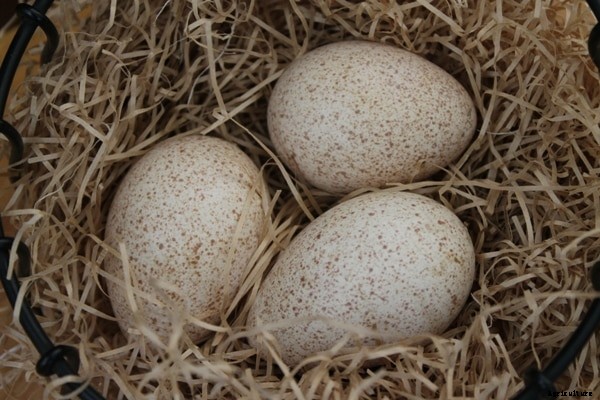
Turkey starts laying eggs from the 30th week of age and its production period is for 6 months from the point of lay.
Turkey Meat
The protein, fat, energy value of turkey meat is 24%, 6.6%, 162 calories per 100 grams of meat. Mineral-like potassium, calcium, magnesium, iron, selenium, zinc and sodium are present. Turkey meat is rich in amino acids and vitamins like niacin, Vitamin B6, and B12. And rich in unsaturated fatty acids and essential fatty acids and low in cholesterol.


