
Welcome to Modern Agriculture!

The Mallard duck is easier to recognize. The male has the head of metallic green color. Its flanks are gray. It has a black curly tail that together merits being considered the easiest duck to identify. For a long time, Mallard duck has been hunted to eat, and almost all domestic ducks come from this species. The Mallard duck is found in ponds, marshland parks, and natural ponds throughout North America and Eurasia.
The Mallard duck is found in almost all swamp habitats, including wetlands, swamps, riverbanks, flooded areas, lagoons, lakes, reservoirs, lagoons of urban parks, farms and estuaries. They are also found in depressions of marshy terrain, grasslands, and seasonal marshes. Also, they can be seen eating on the roadsides, pastures, crops and rice plantations.
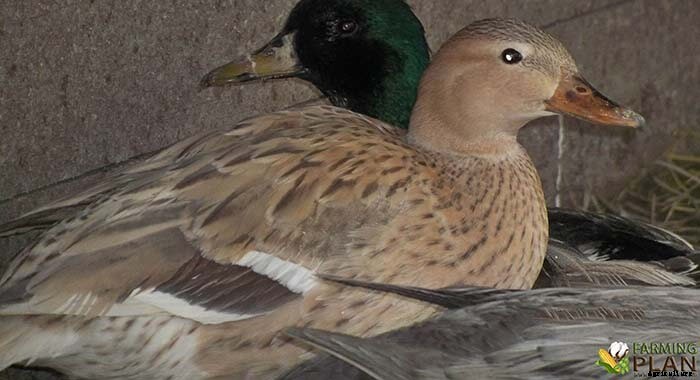
It is thought that this duck has been used in most crosses to obtain the races that currently exist, with the exception of the Muscovy duck. Mallard (mallard) is the best-known and probably the most widespread wild duck in the northern hemisphere.
The Mallard Duck has a green head and neck with a chestnut chest, while the female is brown. It is a bird that lives in a group, besides it is a sedentary animal and does not realize migrations. It has very varied food. The fact that this bird can eat almost anything puts it in clear advantage over other birds making it an invasive species.
However, when living in cities, it depends on the human being to survive and artificial feeding becomes a key to the survival of the wild ducks living in the parks and gardens of towns or large cities. The breeding season of the wild duck is in March. The female of this species puts about 10 grayish-green eggs on a nest made of the ground and well concealed by the vegetation of the zone.
The female builds a depression or basin on the ground, on damp ground. She does not transport the materials to make the nest; On the other hand, she pulls vegetation around her and accommodates her while she is perched on the basin.
During the period when she lays her eggs, she covers the nest with grasses, leaves, and twigs around her. In addition, it pulls larger vegetation to hide its nest and itself. During the incubation period, the female pulls feathers from the breast and uses them to cover the eggs and the interior of the nest. He lives in places associated with water, often in humanized places.
The weight for the male is between 0.9 and 1.5 kg. And for the female, it is 0.8 and 1.3 kg. They measure between 50 and 68 centimeters. They can live up to 13 years. It is a diurnal and territorial species. They reproduce between 9 and 13 eggs per layer.
The mallard eats by splashing and “upending”, which means that they turn in the water, face first and with the tail in the air to reach below the surface with the head in the depths of lakes, ponds, streams, And marshes. Most of the time stay on the surface and do not submerge except for the little birds or those who can not fly are submerged to protect themselves from danger.
Their diet consists mainly of grass seeds and lake plants and other aquatic vegetation. They will also eat mollusks, insects, small fish, frog eggs, freshwater snails, fish eggs and frogs.
The Mallard Duck is the wild species that has given rise to the domestic duck. As with the domestic duck, this breed takes advantage of its flesh, the reason why the man gives a home.
The Mallard duck knows how to withstand the inconvenience caused by man’s contamination and destruction of territory and adapts to almost any place. For all this, the true predecessor of the domestic duck still lives in many parts of the world today and very abundantly. You can even see these birds in numerous cities they choose as their home.
They swim with their tail above the water and when they are alarmed, they jump out of the water and into the air. The sudden flight can be a spectacular sight. The Mallard Ducks are plentiful in urban and suburban parks because park visitors feed them. They can become very tame and accessible in the park. However, in wilder areas and where Collar Ducks are hunted intensely.
They can be very fearful of people approaching them. It is common for them to relate to or reproduce with other surface ducks. Collar Ducks exhibit a huge range of behaviors, which can fascinate observers wishing to decipher them.
If you’re interested in learning more about the mallard or wild duck, we’ve got a guide for that. And if you’re looking to raise these waterfowl at your home, be sure to check out our blog on how best to care for them!
As A Reference: Wikipedia


