
Welcome to Modern Agriculture!

The Pomeranian duck has their name by the locality where they were developed which was on the coastal shores of the sea Baltic of Pomerania. This breed arises from the crossing of the Shetland duck and Swedish blue ducks.
The Pomeranian duck is a very old breed originating in Pomerania. Pomerania was an area shared by Germany, Poland and Denmark before the Second World War. The Pomeranian ducks are thought to have begun as a landrace of domestic duck breeds that were developed in this region over many centuries. Pomeranian ducks are still being bred today, but only by private individuals or organizations with interests in preserving rare poultry breeds.
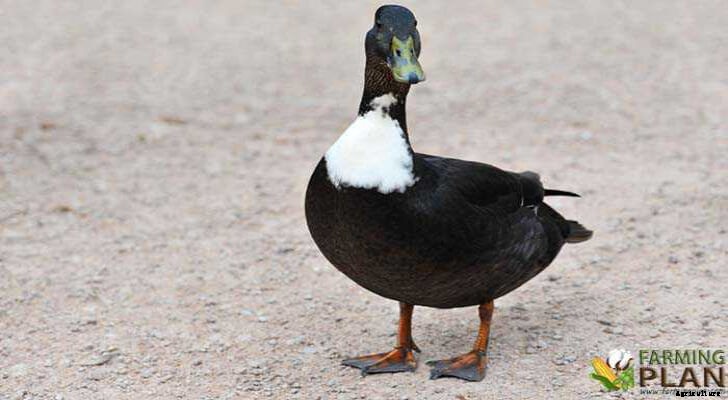
The Pomeranian duck exists in three colors. The most common are black and blue. Brown is not so popular. The 3 colors of these races have a white chest and when they are black have a green hue that is observed with the light of the sun. The beak is reddish-pink, and the legs are orange and the feet. The eyes are brown. Females tend to be more opaque in color than the male.
Which makes it easier for them to be hidden from predators when they are in the nests protecting their ducklings. Whereas the male of this species is of brighter colors, more eye-catching, and draws the attention of both people and possible predators. They produce between 70 and 100 eggs each year. Weight between 80 to 90 grams each. Eggs are white, and others are slightly greenish in color.
This breed has a sturdy and quite long body. His posture is always upright, which makes him look likes a very elegant floor, which makes it attractive. Males weigh up to 3 kg while females are lighter than males and weigh 2.5 kg. They can be outdoors during the day but should be protected at night.
The Pomeranian duck feeding is based on larvae and pupae that get underneath the rocks. Their feeding on plant material, small fish, seeds, snails, aquatic animals, slugs, rice bran, insects and organic foods.
The Pomeranian duck was bred for several reasons including its meat, egg production. They are an elegant breed, which makes them exposed to duck competitions. Nowadays this breed is raised for ornamental purposes. It was formerly bred for the exquisite taste of its flesh, and even this tradition is maintained.
The Pomeranian duck is quite noisy, as they emit very loud sounds when communicating with other ducks. Some specimens are quiet and peaceful, while others are very aggressive. It is considered endangered since there are only 600 specimens of this species in Europe.
They can live from 4 to 8 years and some specimens of this species live 12 years. The Pomeranian ducks despite their size and weight, are good fliers. They fly in a herd and in a “V” shape that makes their flight more relieved, and in a better way.
They have also been raised as domestic animals, but because they are not all easy, and in some cases they are aggressive. It will not be good to breed them where children are present since they can attack them when the children try to play with them. Ducks should always be taken care of by an adult, who respects them and does not mistreat them because ducks could take that action to attack.
A unique feature of this species is that when you look at this breed from behind, and see the feathers from your shoulders and back it looks like a heart. They can be raised in ponds, gardens, and outdoors. A peculiar fact, this breed emits squawking before the visit of someone unknown, such condition they do to tell their masters the presence of an intruder, characteristic that is in the dogs.
Now you know more about the Pomeranian duck! If your business needs to order this breed of domesticated waterfowl, then we can help. You may also want to take a look at our blog post on how to start raising ducks for profit if that sounds like something you’d be interested in doing as well. We hope this guide has helped and good luck with whatever endeavor you decide is best suited for your farm or homestead!
As A Reference: Wikipedia


