Here are tips on how to identify and get rid of earwigs, also known as "pincher bugs," in the garden.
What Are Earwigs?
Earwigs can be found in almost any growing zone, although they are more likely to inhabit warm, humid climates. You might have trouble spotting one—not only are they quick movers, they are also nocturnal, and tend to hide out during the day when you are tending the garden. They like decaying wood and plant material, and dark, damp spaces. Oftentimes, they can be found in basements and woodpiles.
Earwigs are the sole members of the insect order Dermaptera, ancient bugs that began crawling around Earth about 208 million years ago. Today, nearly 2,000 species are scattered everywhere but in Earth's polar regions. The name "earwig" comes from the Old English ear-wicga, which means "ear wiggler"—so named because the insect was once thought to seek out human ears to reside in. In France, they're called "ear piercers," and in Germany, "ear worms."
In North America, we're most familiar with Forficula auricularia, a European species thought to have arrived with our immigrant ancestors. Earwigs were first reported in North America in the early 1900s, and they have now spread to most of the United States and parts of Canada.
Earwigs enjoy a lively social scene. They congregate during the day because they tend to find the same hiding places. Their nests can number in the thousands, and they aren't territorial, so they often live together.
What Do Earwigs Eat?
Pincher bugs are omnivores, meaning they'll eat pretty much anything that's made available to them. In the garden, they primarily feed on dead or decaying plant and animal matter. However, they will also readily prey on aphids, insect eggs, maggots, grubs, and army worms. When their population gets out of control, they may turn to feasting on living plant matter, especially the seedlings or young foliage of vegetables and flowers.
This creates a conundrum for gardeners... Should earwigs be allowed to remain in your garden to eat up aphids and other pests? Or should they be removed before they turn their attention on your plants? Generally, earwigs do not cause enough damage to be worth fighting. However, if you do see large numbers of them around your plants, you can consider taking action.
Do Earwigs Pinch?
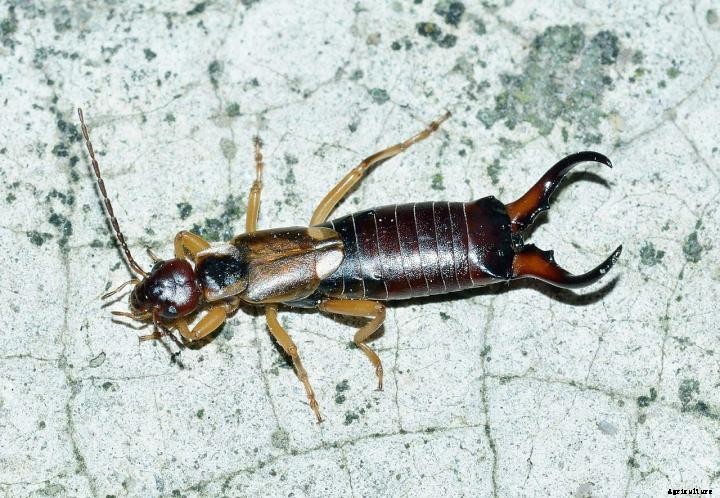
The pincers at the end of an earwigs abdomen look rather formidable. They are capable of pinching (and sometimes biting) humans, but the pinch is not particularly powerful. Earwigs usually use their pincers to ward off enemies like toads and birds, or—in some species—to catch prey.
The pincers, or "cerci," are also important for romance. They are indicators of gender, like tusks on an elephant. A male earwig's pincers are long and curved, while a female's are shorter and straighter.
Identification
How to Identify Earwigs
- Earwigs get to be about 3/4-inch long. They're reddish-brown insects with appendages on their tail-ends that look like forceps. Few other insects have a set of scary-looking pincers like the earwig has. This is why some folks call them "pincher bugs" or "pinching bugs." Attached at the insect's abdomen, these appendages are called cerci.
- Earwigs run very quickly and can also fly, though they rarely do so. They actually have two sets of wings, and their pincers aid in unfolding the wings.
- What do earwigs eat? Nocturnal by nature, an earwig's main meal is decaying plant material and wood, but it will attack living plants, including vegetables, fruit trees, and ornamentals, if given the opportunity. Earwigs are especially fond of flowers, lettuce, celery, and fruits.
- Female earwigs lay 40 to 50 shiny eggs in underground tunnels. The eggs are protected from predators and hatch in about a week, making it very difficult to control earwig populations before they hatch.
- Nymphs simply appear to be miniature versions of adult earwigs. They shed several skins, and ten weeks later, they reach adulthood.
- Earwigs often hide underneath pots during the day and then eat the flowers in the pots at night.
Signs of Earwig Damage
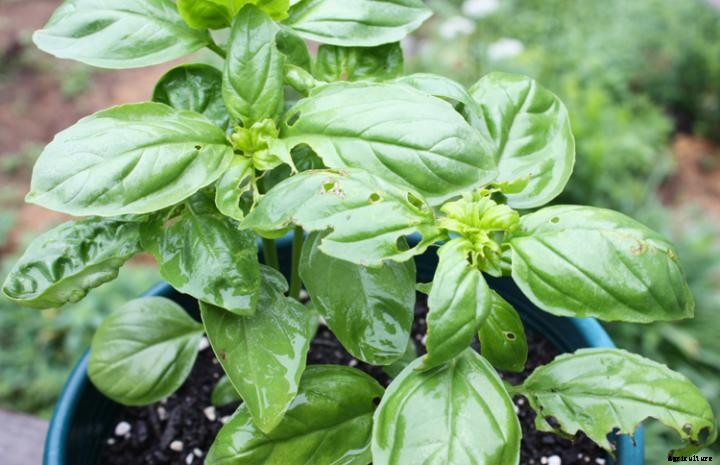
- Leaves will appear jagged and full of holes. Plants will become ragged overnight, and some leaves will only be partially eaten. There will also probably be a scattering of earwig excrement, which will be small, black pellets.
- Damage will often occur after rainy weather, which forces earwigs to seek dry shelter and climb up into plants and leaves.
- You might find the earwigs under pots that contain damaged plants.
- Earwig damage looks similar to that of slugs and snails. To tell the difference, look for the tell-tale sign of slugs and snails: a trail of slime residue on foliage.
Control and Prevention
How to Get Rid of Earwigs
Generally, earwigs are not as much of a threat to your garden as other pests, like Japanese beetles and aphids, though they can be as big of an annoyance! They can also produce a foul odor when disturbed, so keep that mind. Try these remedies:
- Lay one-foot sections of bamboo or garden hose in the beds between your plants. Check these “traps” each morning, and dump the earwigs into a bucket of soapy water.
- Spread petroleum jelly around the stems of your plants. Earwigs won’t crawl over it.
- If they are infesting your woodpile, try sprinkling borax around it, but keep pets and children away from this area after doing so.
- Oil pit traps are a great remedy for earwigs. Combine equal parts soy sauce and olive or vegetable oil, put it in a small plastic container, and secure the lid. Punch holes in the top of the container, near the lid. Make the holes large enough for the earwigs to get in. Bury the container in the soil just up to the holes. The soy sauce will attract the earwigs, and the oil will prevent them from escaping. Change the mixture as needed.
- Alcohol controls these pests by acting as a surfactant, or wetting agent, that can penetrate an insect’s waxy coat of armor and kill on contact with the body. Isopropanol (rubbing alcohol) works fine and is easy to find, but be sure it doesn’t have additives. Ethanol (grain alcohol) seems to work best. Alcohol usually comes in 70 percent strength in stores (or 95 percent strength purchased commercially). To make an insecticidal spray, mix equal parts 70 percent alcohol and water (or, if using 95 percent alcohol, mix 1 part alcohol to 1 ½ parts water).
- WARNING: Before using an insecticidal spray on your plants, test it on a single leaf. Wait 24 hours and observe to see if the plant has an adverse reaction. If it does, dilute your alcohol solution more and test again.
- Earwigs are also susceptible to diatomaceous earth (DE), so consider placing a ring of DE around the bases of plant if the soil is dry enough. In wet weather, DE is not effective.
How to Prevent Earwigs
- Expect more earwigs during rainy years, and prepare accordingly.
- Avoid growing susceptible plants near walls covered in ivy or hedges, as many earwigs might live in these areas.
- Birds and toads are both natural predators of earwigs. Check out our tips for creating a bird-friendly garden.
- Occasionally, earwigs will move from mulch and other moist material outside into your house. They aren't harmful, but can be an annoyance nonetheless. To prevent this, check for bugs on everything you bring inside, especially laundry, lawn furniture, flowers, vegetables, houseplants, and firewood. Also, move mulch away from your house's foundation and establish a zone of bare soil that will dry out. If earwigs do happen to get into your home, vacuum them up.


