
Welcome to Modern Agriculture!

Having trouble with flea beetles in your garden? Here are tips on how to identify, control, and get rid of flea beetles so that they stop eating your crops!
Flea beetles are small, shiny-coated beetles with large rear legs, which allow them to jump like fleas when threatened (the source of their name!).
There are many species of flea beetles. Some species attack a wide range of plants, while others target only certain plant families. In the garden, a number of vegetable crops are susceptible to these pests, particularly those in the Brassica family, like broccoli, cabbage, kale, radishes, and turnips, as well as Nightshades such as tomatoes, peppers, and eggplants.
IdentificationGiven that there are so many species of flea beetles, they vary in appearance quite a bit. Colors range from black to tan, with other, brighter colors mixed in, and the beetles may have a solid, striped, or spotted pattern depending on the species.
To identify flea beetles, it's easier to look for signs of their damage (described below) than for the beetles themselves. At only 1/16 of an inch in length, flea beetles are very tiny and will quickly spring away—like fleas—if they see you approach!
Adult flea beetles overwinter in brush and wooded areas. Adults pose the biggest threat early in the planting season as they are emerging, typically when outdoor temperatures reach 50ºF (10°C). At this time, seedlings are being planted, too, and they are most susceptible to beetle damage.
Eggs are laid at the base of plant stems in early summer after the spring feeding period, and larvae feed at the roots.
Adult beetles feed on foliage, producing “shotholes” in the leaves. Look out for these holes especially on young seedlings, where damage is most rapid and will cause the most harm. The holes they make will be round and can quickly damage leafy greens. New leaves are usually damaged first, and they will have a lacy appearance.
Flea beetles usually don’t cause fatal damage to established plants because the leaves are already large enough to survive with a few holes. The real danger is that the beetles can spread bacterial diseases, such as wilt and blight, from plant to plant. Therefore, they are still important to consider a pest.
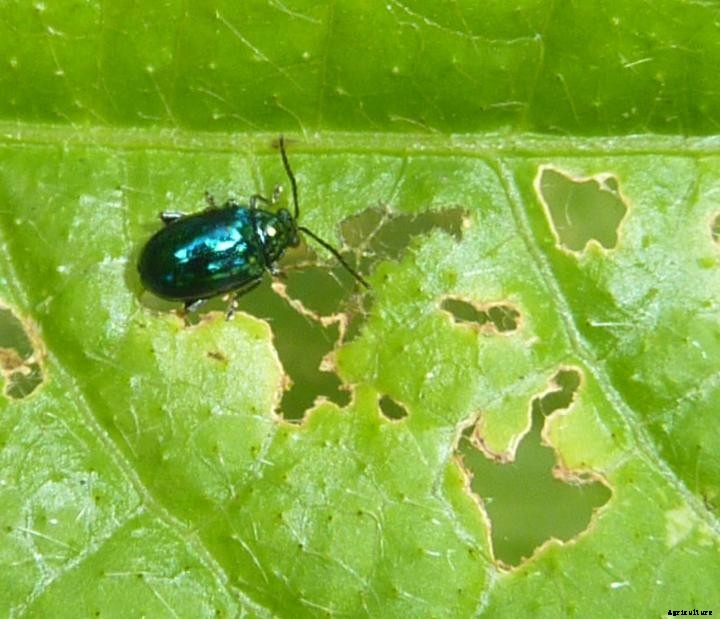
Photo Credit: University of California White Mountain Research Center. Flea beetles can cause leaves to appear lacy after they've caused a lot of damage.
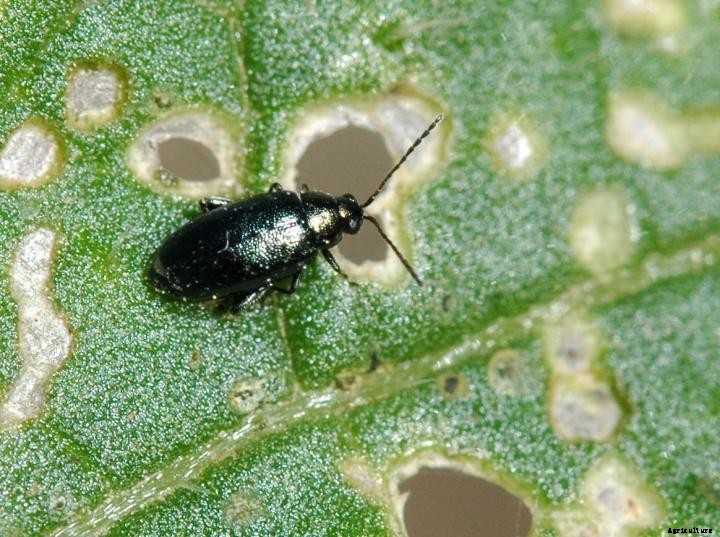
Photo Credit: Jeff Hahn, University of Minnesota Extension. If you didn't take preventative measures, it might be impossible to stop the flea beetle damage.


