
Welcome to Modern Agriculture!

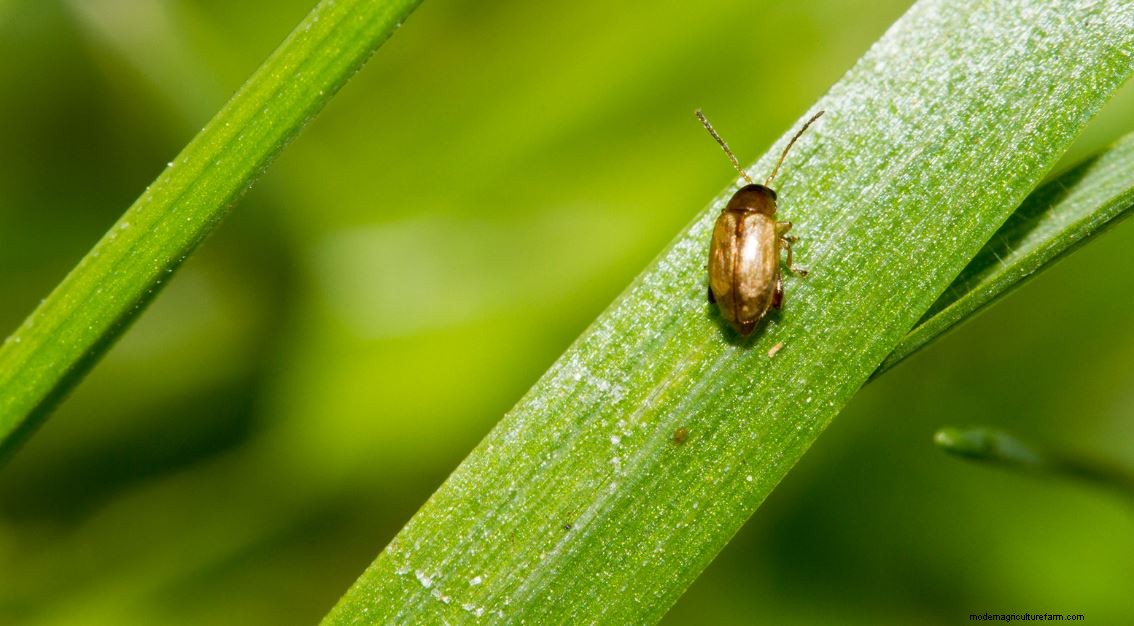 Flea beetle Photo: Nikk Valentine
These tiny beetles "pepper" leaves with multitudes of tiny holes as they feed. Flea beetle feeding results in stunted, distorted growth and spreads disease, including blight and bacterial wilt. If flea beetle damage is severe enough, it can kill a young plant. Almost all plants are susceptible, especially as tender seedlings, and flea beetles have a special preference for plants in the cabbage family.
Flea beetles get their common name from their tendency to jump like fleas when disturbed. Several species are garden pests. Markings and coloration varies, though most are shiny black and about 1/16″ long.
Adult flea beetles emerge in spring after overwintering in plant debris. They feed on weeds (pigweed is a favorite) until more succulent garden crops are available. The adults lay eggs on the soil surface, and their larvae feed on roots of most garden plants. Flea beetles thrive in hot, dry conditions. There may be one or two generations of this pest each year and they are found throughout North America.


