
Welcome to Modern Agriculture!

Cutworms can be a major annoyance in the garden, particularly for young seedlings or transplants. Here's how to identify, prevent, and get rid of cutworms in your garden.
"Cutworm" is the name used for the larvae of a number of moth species. The adult moths lay eggs on plant debris from spring through fall. Some species' eggs hatch in spring and summer, while others hatch in the fall, with the larvae overwintering in the soil or a woodpile.
Cutworms do the most damage early in the gardening season, when they emerge and feed on seedlings. Cutworms are caterpillars, but they are often mistaken for the grubs of beetles such as Japanese beetles (which are damaging in their own right).
IdentificationCutworms feed on a wide variety of vegetables and flowers—any young seedlings or transplants. To identify them, try patrolling your garden at dusk or during the evening, when cutworms will begin to feed. They are also partial to cloudy days.
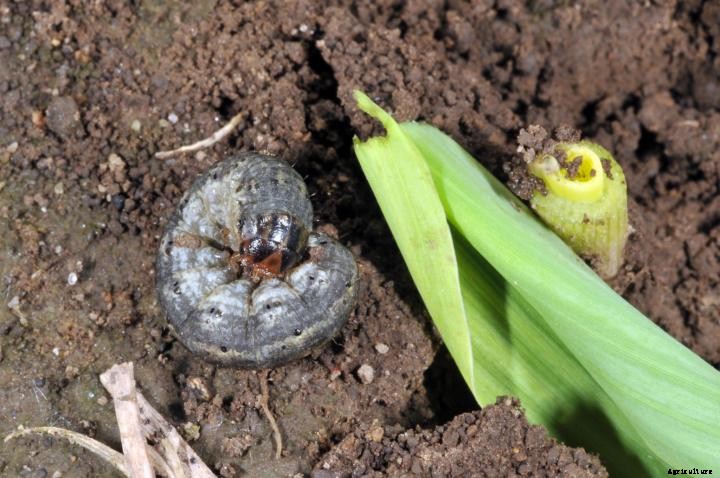
Different species range in color from grey, pink, green and black and can be as long as two inches. They can be solid, spotted, or striped. They tend be curled up when they are not on the move. Cutworms are stealthy, and tend to feed only at night, hiding during daylight hours.
Black cutworms, Agrotis ipsilon, are one of the most common cutworms. They have small dark spots on their bodies and mature into the dark sword-grass moth.
Variegated cutworms, Peridroma saucia saucia, are another common species. They are mottled brown and have a faint white stripe down their backs.
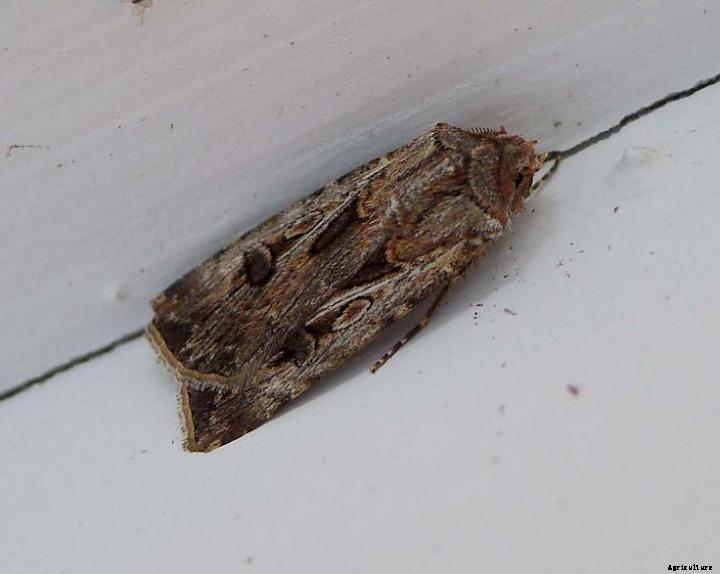
Adult cutworms are moths of dark wing colors. They are usually brown or gray, and get to be about 1½ inches long with a 1½-inch wing length. Keep an eye out for the adults, because the females will lay eggs in dry soil after they mate.
Cutworms chew through plant stems at the base. They primarily feed on roots and foliage of young plants, and will even cut off the plant from underneath the soil. In most cases, entire plants will be destroyed; they do a lot of damage in no time at all. Even if only the bottom of the plant is destroyed, the top will often shrivel and die.
In the summer, cutworms sometimes crawl to the tops of plants and do damage there. Be careful not to mistake this damage for slug or cabbage worm damage.
 Control and Prevention
Because cutworms can do a lot of damage to seedlings, prevention is key!


