
Welcome to Modern Agriculture!

Half-eaten pages in your books? Chewed-through boxes in your pantry? These are signs of a silverfish infestation. Here's how to identify, get rid of, and prevent silverfish infestations in the home.
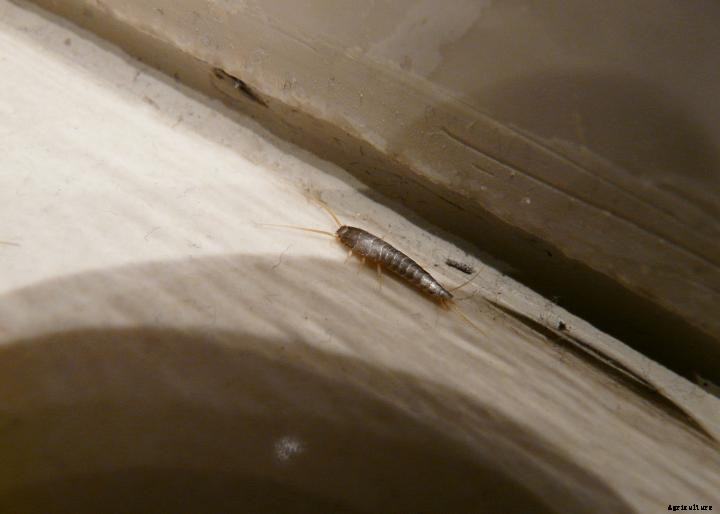
The silverfish (Lepisma saccharina) is a slender, silvery insect pest found around the globe.
Siverfish are only considered a nuisance pest when they get into homes. There they are difficult to control but they are not harmful to humans nor spread disease. Instead, silverfish are known for damaging material goods, such as books, wallpaper, photos, clothing, and dry foods in the kitchen pantry.
Silverfish are particularly attracted to under-sink areas in the bathroom or kitchen, where the environment is humid and dark. They may also live in walls, closets, or crawl spaces. They remain hidden during the day, but at night, they emerge to forage for food.
A similar insect pest, the firebrat, looks and behaves much like the silverfish. Both pests can be controlled using the same techniques.
Fun Fact: The latter half of the silverfish's Latin name, saccharina, refers to the insect's fondness for eating materials made of polysaccharides (complex carbohydrates), such as cellulose and starch, which are found in paper products, fabrics, and foods.
IdentificationSilverfish are slender, softbodies, wingless insects with long carrot-shaped bodies approximately 1/2-inch in length.
They resemble a fish due to their shiny silver, scaly bodies that taper gradually to the rear. Their bodies have no obvious segmentation, and are easily identified by the two slender antennae stemming from their heads and the three tail-like appendages on their back-ends. They are smaller and thinner than cockroaches, and a different color than the similarly-sized earwig.
Silverfish have rather stubby legs, but don't let that fool you. They are capable of moving very, very quickly, especially when startled. This is when most people see silverfish: when the pests' late-night feasting is interrupted and they scurry back to the dark corners of your home. Their rapid side-to-side movement resembles a swimming fish, which is said to be the source of their name.
Normally, silverfish live outdoors under rocks, bark, and leaf mold; they'll also live in the nests of birds and ants.
In the home, silverfish are often found in bathtubs, sinks, or washbasins. Though silverfish usually stick to more humid places, they may also invade the kitchen pantry and target flour, cereals, and other grains.
Practically any material containing carbohydrates or proteins is susceptible to silverfish damage.

Silverfish damage in a book. Photo by Micha L. Rieser/Wikimedia Commons.
Do you have any tips for preventing or stopping silverfish infestations? Tell us in the comments below!


