
Welcome to Modern Agriculture!

Caring for laying ducks may seem like a simple task, but they do not require more care than the simpler birds, such as chickens. Ducks have access to water at all times to prevent sensitive feet from drying out, and laying duck requires a diet rich in minerals for proper shell development. With a little bit of hard work, ducks will be safe, healthy and producing eggs in a matter of days.
Ducks are good creatures of nature. Laying ducks live happily and produce higher quality eggs, by proper care and management. There is one more thing that you must know about them: Pekin ducks have chicken-like flavors!
You can give your laying duck small pieces of fruit and vegetables justify over. Avoid excess starch. An occasional piece of bread is fine. But the excess is not healthy.
Never allow children or pets to chase the laying duck. They will be frightened and may stop laying eggs.
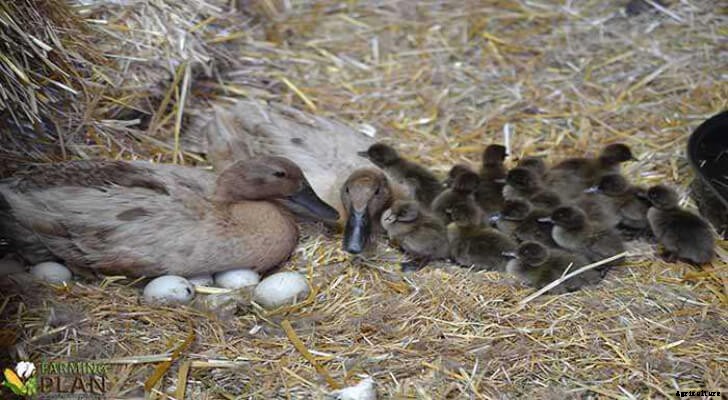
Usually, female ducks are not too dedicated to hatching their eggs and sometimes neglecting them, so if you give them some care you can help the baby to be born. The ideal for duck eggs would be to receive the heat of an incubator, but if you do not have this artifact you can place them in a drawer that you will fill with grass or leaves, imitating a natural nest. For eggs to hatch correctly. It is important that they are located on their sides, and with the higher end somewhat elevated.
On the drawer, a lamp will help keep eggs always warm, which you should rotate gently three times a day (every 8 hours) because it is considered a way to reduce the stress of the embryo and exercise it.
After the first week and up to about three days before hatching – 28 days is considered the mean incubation time – sprayed eggs daily with warm water. Curiously, in nature. There were many successful cases of ducklings that were born after being incubated by hens. If you have these birds do not hesitate to take advantage of their natural instinct, which will also be very beneficial for duck eggs.
Duck eggs can be difficult to identify when compared to hen’s eggs. If you find a mysterious nest of eggs in nature and wonder if they are duck eggs, there are some tips to help you identify them.
We hope this guide has helped you learn more about the care of a laying duck. Ducks require an appropriate diet and water to thrive, but they are otherwise not much different from other poultry animals that people may be used to caring for. The only difference is ducks have sensitive feet so need access to water at all times in order to prevent them from drying out. When cared for properly, your ducks will produce eggs quickly with no problems! If you still have questions or concerns after reading this article please don’t hesitate to contact us via email or phone – we’re always happy to help our customers find solutions!
As A Reference: Farming


