
Welcome to Modern Agriculture!

Kristen hails from Modesto, CA. She is self-employed, raises chickens in her backyard, and bakes her own bread.

I've been successfully raising hens in my backyard for about a year now, doing everything I can to make sure their environment is safe and predator-free. They are free-range during the day (as we have a fairly large fenced yard), and they are locked away in a secure coop at night.
One morning, our hen showed up with a mysterious injury. We decided to give her a chance and administer first aid. Since it's a chicken and technically a farm animal, there isn't a whole lot of help available, especially when you don't live in a more urban or suburban area. That's when I reached out to some experts and learned about chicken first aid:
We've been through some pretty tough battles with predators—wild raccoons being the worst of them. Still, we managed to stay one step ahead at all times. We even managed to get our neighborhood's stray cat problem under control and chase off those raccoons—all in the name of protecting our little egg-layers!
After all this time and all the battles we've won, when I found out that one of my hens had been injured, I was shocked! It was late morning, and I was watering my garden when we noticed that she had quite a large gash on her shoulder where the wing meets the neck.
I had no idea what had happened to her. I didn't notice anything at all when I let them out of the coop that morning, and it had only been a few hours since then. As far as I could tell, the morning had been uneventful, and I had seen nothing out of the ordinary.
Nonetheless, there she was, looking like she had snagged herself a role on The Walking Dead. Her feathers were all wet and matted down, and she looked like she had a huge chunk of meat missing from her neck. The wound looked horrifying, and we immediately thought there was no way she was going to survive!
When my boyfriend spotted her, he shouted: "Oh, sh***, how are you even alive?!" He suggested that we should probably put her down, but neither of us really wanted to do that.
In the end, we were determined to give her a chance. I did a lot of research and took advice from some other chicken experts. She's totally fine now and back in good health and spirits. I learned a lot from this experience and from the research I did, and I wanted to share it in case someone else ends up in this same situation! Here's what you can do if you ever find yourself with an injured hen.
Chicken Doctor?
As always, besides administering first aid, take your injured chicken to your local veterinarian for diagnosis, treatment, and prognosis.
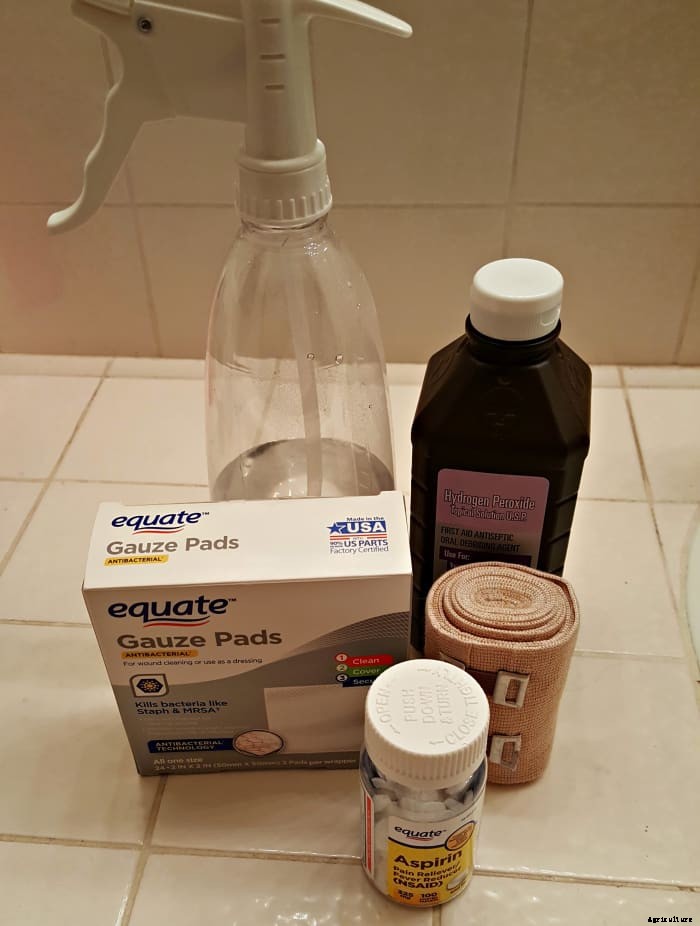
Here's what you'll need if you want to successfully administer first aid and save your injured hen:
I learned the hard way that it's helpful to have these things on-hand in a first-aid kit. I wasn't prepared, and I had to make a special trip to the store to grab all this stuff.
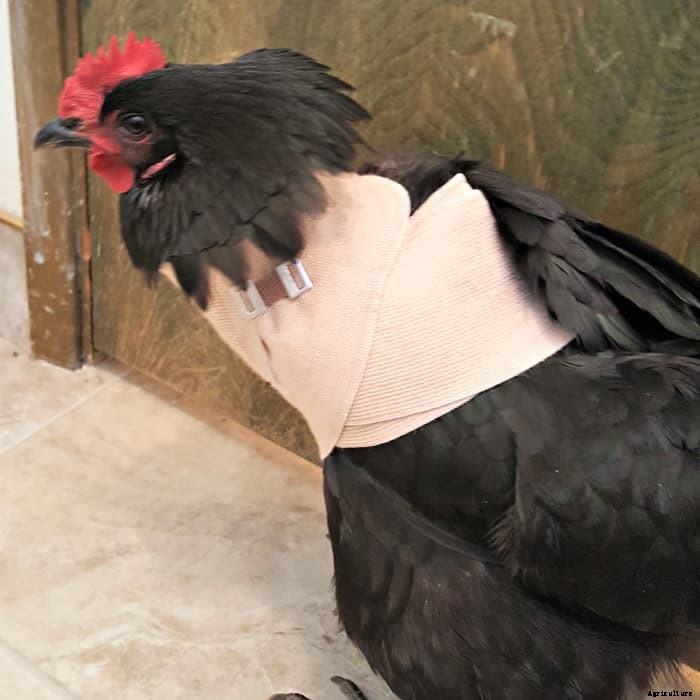
According to the research I've done, injuries in chickens aren't all that uncommon. Chickens are prey in the eyes of a lot of other animals—dogs, cats, and raccoons all want a bite out of these guys. I even found quite a few stories of chickens being attacked by hawks!
They are surprisingly resilient, though! Your hens can handle a lot more than they look like they can. If one of yours is injured, chances are pretty good that with a little TLC, she'll be recovering in no time.
You'll want to get your injured chicken away from the rest of the flock as soon as possible. My hens are jerks, and they will victimize one of their own if they get a hint that she's weak or injured. They will peck at her, pull at her feathers, and try to prevent her from eating. Even worse, though, I've read horror stories from other people about their chickens actually eating the injured one. It's better to be safe than sorry, so get her out of there as soon as possible.


