Welcome to Modern Agriculture!

Reuters reports that the decision is a victory for the food and environmental groups who sued under the Clean Water Act. A panel of the 9th US Circuit Court of Appeals ruled that the state's National Pollutant Discharge Elimination System Permit (NPDES) lacked sufficient safeguards to ensure that pollutants from CAFOs, typically manure from the thousands of animals raised in the facilities or litter, would not end up in nearby waterways.

EPA spokesperson Tim Carroll declined to comment.
Department of Environmental Quality (DEQ) spokesperson Mary Anne Nelson said the agency is working with the EPA "to determine the future of permitting for CAFOs in Idaho." and to seek a new, "compliant" permit.
Tarah Heinzen, the legal director with co-plaintiff Food & Water Watch, said in a statement: "Today's decision strikes a major blow against EPA's practice of granting ... special treatment to the factory farm industry."
CAFOs raise livestock and poultry, often in the tens of thousands, in confined spaces instead of pastures.
Idaho is home to about 365 CAFOs, EPA data shows, primarily dairy farms and cattle feed lots in the state's south, the ruling says.
Food & Water Watch and Snake River Waterkeeper challenged last June the permit issued months before, alleging its issuance was arbitrary and capricious because its lack of monitoring requirements threatens ecosystems and human health by preventing the reporting of illegal discharges.
Manure contains pollutants like nitrogen and phosphorous, which can fuel the growth of algae blooms that suffocate aquatic life, and can also contain E. coli bacteria. It can leak into surface and groundwaters from lagoons where it is stored, or run off from fields where it is applied as fertilizer.
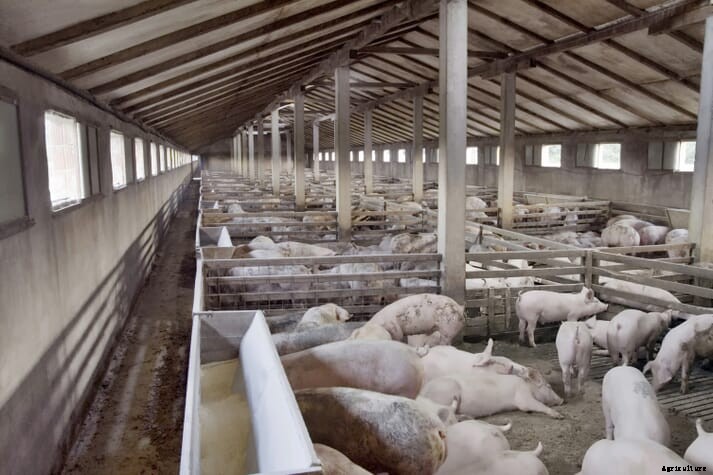
In Thursday's ruling, US Circuit Judge William Fletcher said that while the permit's daily inspection requirements make for sufficient monitoring for "above-ground" discharges, it contains no monitoring provisions for "underground" discharges from CAFO sites.
Above-ground discharges can be lagoons overflowing on land, while underground discharges can entail leaching through a lagoon's bottom.
"The failure of the Permit to require such monitoring is striking," Fletcher wrote.
The judge also noted an absence of monitoring requirements for runoff resulting from the application of manure and litter to fields during dry weather.
There are more than 21,000 CAFOs in the United States, according to EPA data. Nationwide, CAFOs generate more than 500 million tons of animal manure annually.
Fletcher was joined by US Circuit Judge Michelle Friedland and Senior US District Judge Frederic Block, who sat by designation.
There are more than 21,000 CAFOs in the United States, according to EPA data. Nationwide, CAFOs generate more than 500 million tons of animal manure annually, the ruling said.
The case is Food & Water Watch, Inc, et al v. USEPA, 9th US Circuit Court of Appeals, No 20-71554.
Read more about this story here.


