
Welcome to Modern Agriculture!

Article taken from Heifer International; read more and or support their causes at Heifer.org
During his #HeiferTogether discussion with Heifer CEO Pierre Ferrari on August 19, Smith described his work in Rwanda and opened up about the lessons learned from his time with small-scale farmers around sub-Saharan Africa. You can view the chat in its entirety in the video above.
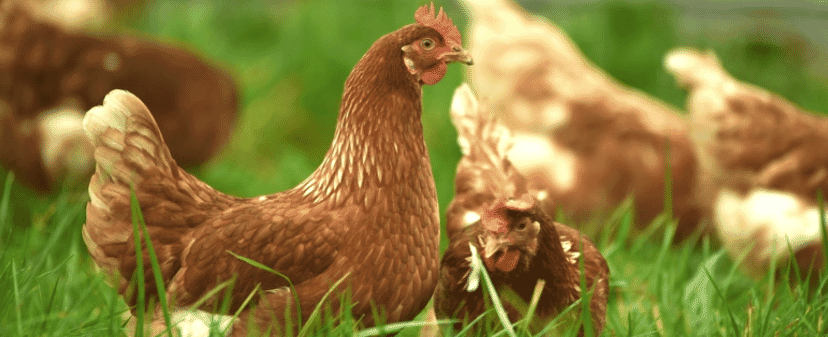
The African Sustainable Agriculture Project’s mission is to help subsistence farmers create sustainable, independent livelihoods by raising poultry. With 36 years of experience in agriculture, Smith is uniquely positioned to help farmers set up a lasting business. And, thankfully, he has the passion to see it through. “What I wanted to try to prove is that if we can successfully create a sustainable broiler business with ultra-poor, small-scale farmers on the side of a mountain at 7,500 feet of altitude in the middle of nowhere, we can make this work all over sub-Saharan Africa,” said Smith.
One of the first major lessons Smith and his team discovered in the midst of their first chicken project involved Rwandan markets. “A lot of times we have been way too optimistic about how much demand will be created and the price the market will bear for our super high-quality chicken," said Smith. "What we have to do is just be very cost-conscious because we are not going to dictate how the market is going to work in the areas that we are."
Interestingly enough, Smith found that the plump, juicy chickens he was used to raising and selling weren’t all that popular in Rwanda. Used to the muscular, flavorful bird grown in villages, consumers weren’t interested in Americanized birds. Fortunately, Smith found another market. “What I have found is that about 90% of the chicken trade in sub-Saharan Africa is a live bird, to this day," Smith said. "And so most of the processed birds that we sell (and it’s basically a frozen whole bird) we sell into the retail sector via restaurants and hotels. And they typically don’t want that stringy, tough, what I call “road-runner chicken” that a lot of people in Rwanda that are my age actually prefer and will pay a premium for.”
According to Smith, there’s power in numbers and he has learned that, when it comes to small-scale farming, co-ops are the way to go. “If I was doing this again, in order to be able to scale, instead of having 500 individual farmers we’d be much better off if we’d form co-ops of 5-10 farmers … I would rather do that because it would be much more logistically efficient and that would help the business,” said Smith.
“I’m stuck on this fact that the only sustainable form of agriculture is commerce. It’s not about can we go into Rwanda and teach a guy how to grow a chicken? Yeah. I can go anywhere in the world and teach a guy or a lady, in most of our cases, to grow a chicken," said Smith. "The problem is, can you make a business out of that and can you sustain yourself by growing a chicken? That’s the trick. So taking all of these industrial-sized principals that God trained me for 36 years and kind of stripping out the principals and injecting them in the same environment that we were growing chickens in America in about 1960 and making that work. That’s the key. That’s the key to helping a lot of people."
You can support Heifer International by donating here.

