
Welcome to Modern Agriculture!

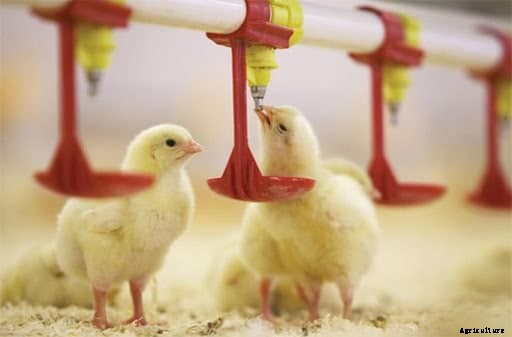
So you’ve decided to start a poultry farm and you’re wondering what kind of equipment will be good for a start.
We understand that starting up a poultry farm can be capital intensive.
But that doesn’t mean you should start off without adequate equipment.
In that regard, we bring all the necessary equipment you need to start this journey.
However, you should note that the kind of equipment you would buy depends on the size of the farm and the business in general.
If you’re running a small-scale poultry business you would need less equipment compared to a large-scale farmer.
For the purpose of clarity, we have divided this article into sections.
Let’s find out more about that.
But before that, learn about how to start poultry farming for beginners.
Poultry farm equipment refers to devices that aid in accomplishing tasks around the farm.
They are instruments or apparatus used in performing operations around the farm.
Such activities include incubation, hatching, brooding etc.
It would be out of thought in this dispensation to want to carry out most tasks on the farm by manual labour.
However, with the introduction of machine tools and equipment on the farm, work around the farm is easy breezy.
Here are some other reasons you need poultry farm equipment;
Below, you will find a list of equipment categorised according to use for a start-up poultry farmer;
Agro 4 Africa
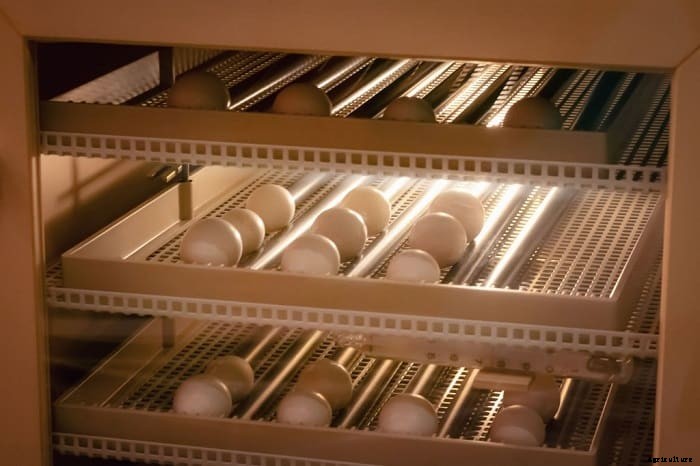
Incubation equipment is a device that keeps a chicken egg warm till the day it hatches.
Usually, they maintain eggs under conditions favourable for hatching, development, or reaction.
The list includes;
A setter is a piece of farm equipment that provides adequate humidity, temperature and turning for chicken eggs.
It’s the first incubation equipment where the eggs are kept for the first 19 incubation days.
From the setter, the chicken’s eggs move into the hatcher. The eggs stay in the hatcher for the last 3 incubation days.
Although the hatcher is similar to the setter, it doesn’t have a turning mechanism.
Also, the trays by design hold the newly hatched chicks.
Both the setter and hatcher come in various styles. Some you can find include;
Compressed air is needed to actuate the turning mechanism of the crates of eggs of some incubators.
Therefore, you will need a large central compressed air system.
Also, it blows down dust and other dry cleaning activities in the hatchery.
Incubation will only be efficient under constant electricity.
To mitigate power failure, the incubators must have a secondary source of electricity.
Hence the need for emergency standby electric plants.
The standby electric plant should have the capacity to carry all essential services of the hatchery.
These poultry farm equipment have an automatically controlled system.
By design, they perform some tasks that take the place of human labour.
Such equipment includes;
Kindly note that these incubation equipment are most convenient for large-scale farmers.
It will be super expensive for small-scale farmers.
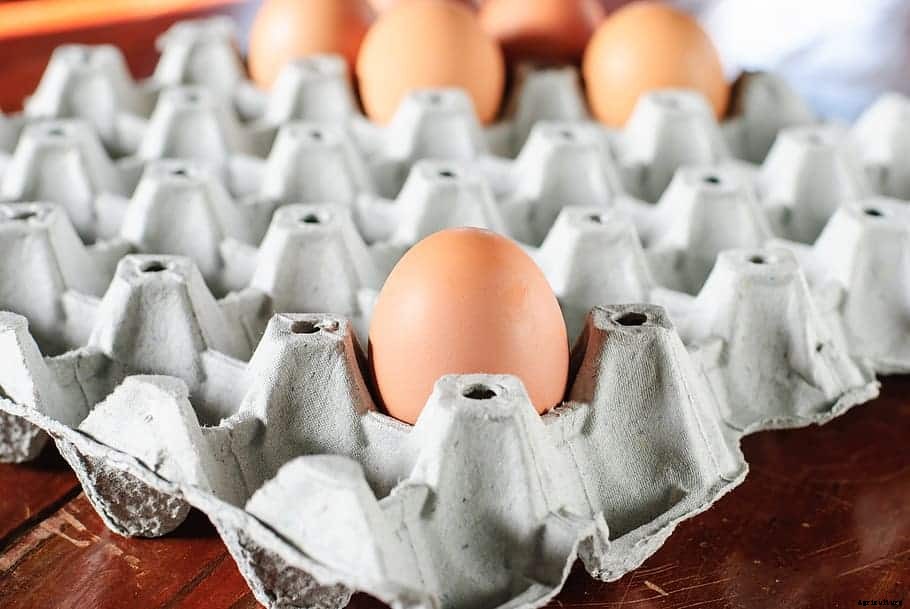
Egg handling farm equipment are different devices the farmer uses to carry or hatch eggs in the poultry.
This poultry farm equipment is major for both small-scale and large-scale farmers.
It’s the place where hatching eggs are set and placed in the setter or hatcher.
The farmer can arrange the chicken eggs in the flats or bug-eye type of tray.
Usually, each takes about 90 or 180 chicken eggs depending on size.
The hatching egg transfer machine is used to transfer eggs from the breeder farm trays to the hatcher trays.
You do not just pick eggs with your hands.
Doing that will be time-consuming.
Hence the reason why it’s usually employed in the hatcheries handling large volumes of eggs.
The egg handling equipment is convenient for both small-scale and large-scale farmers.
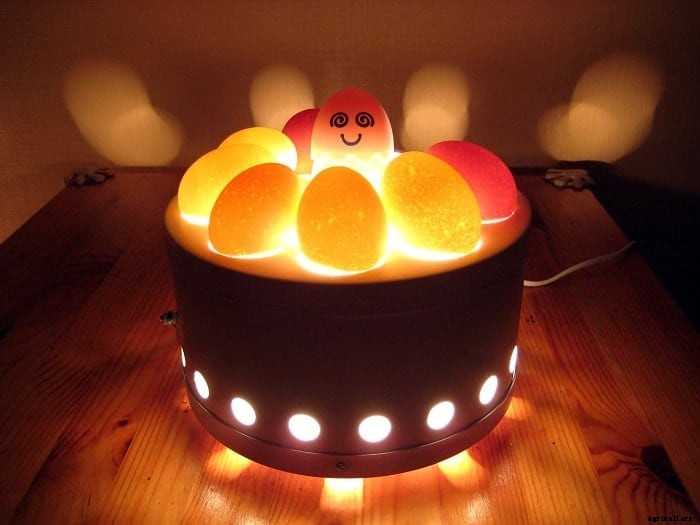
Just like the name suggests, the egg candler is a lighting device.
We use the egg candler to find out the internal structure of eggs.
Why?
The Cochin Chickens will readily sit on their eggs and start brooding.
Once this happens, chances are that the would-be chicks will start to take shape.
That’s where the egg candler comes in. Using the egg candler, you will get to differentiate a “forming egg” from a normal fresh egg.
Usually, there are two types of egg candlers available in most cities. They are;
Whether the eggs are for family consumption or sale, you need an egg candler for a start.
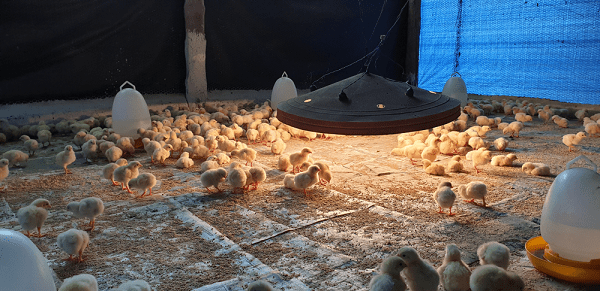
Brooder equipment basically provides warmth and light during the first few weeks of the baby chicks.
By design, they have a heating source, reflectors, light and heat adjustment components.
They include;
This poultry farm equipment comes in handy in areas where electricity is not constant, available or costly.
To use it, you will have to cover it with plates or pans to sustain the heat in the brooding area.
This is most convenient for small-scale farmers.
Here, warmth and light supply is through the use of natural gas, LPG or methane.
Either of these gases is connected to a heating element which is hung 3 – 5 feet above the chick to provide heat.
Furthermore, they attach the hung heating elements to canopy type reflectors which reflect the heat towards the chicks.
Both small-scale and large-scale farmers can use this poultry f0arm equipment.
The electrical brooder is a thermostatically controlled heating system.
It’s often referred to as the most convenient brooder equipment because it spreads a uniform required amount of heat above a large area.
With this equipment, farmers can prevent overcrowding of chicks under the brooder.
By design, one electrical brooder can warm 300 to 400 chicks.
A 150 and 250 watts infrared bulb provides warmth and light for 150 and 250 chicks, respectively.
This is another poultry farm brooder equipment that provides heat and light.
Usually, it comes in various sizes and types. Some you can find include;
Brooder guards are farm equipment used to restrict the movement of chicks.
Using this equipment, the chicks will always stay closer to the source of heat and light. Thereby, preventing chilling.
It’s usually about 1 to 1.5 feet high. Also, you can use thin sheets of metal, hardboard, or bamboo mat to make it.
Peculiar to this equipment is the presence of an adjustable temperature knob.
So, you can adjust depending on the season.
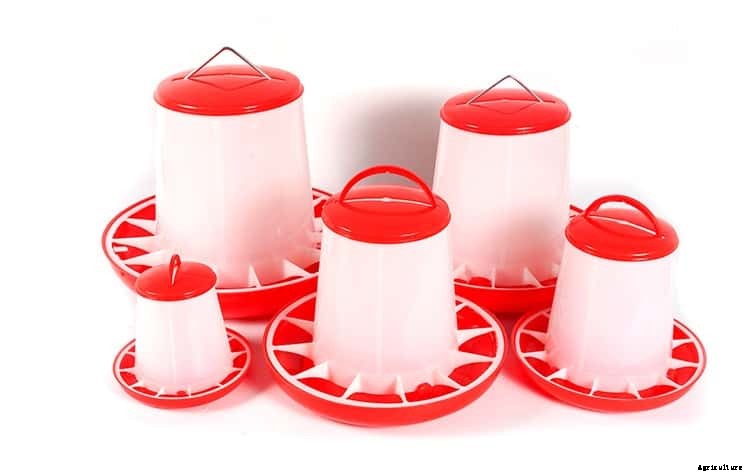
Feeding equipment is basically for feeding the flock. They can be manual, semi-automatic or fully automatic.
Also, they can come in various designs and shapes. They include;
As the name sounds, it’s fully automatic.
It’s a specially designed feeding trough that lines up from end to end of the poultry house.
Also, it uses the auger type or chain type devices to move the feed from the feed bin to the eating site.
Also, you can adjust the height depending on the age of the birds.
It’s also another feed equipment that is adjustable.
Usually, some produce it using galvanized iron. But today some have been made from wood, bamboo, etc.
Circular feeders are semi-automatic feeders that can hold 5 to 7 kg feed at a time.
It’s made of high plastic and usually suspended from the roof or from separate pipelines.
Also, you can adjust the height of this poultry farm equipment can be easily by a simple clamp mechanism.
Here’s a tip if you want to use this.
The layers prefer it brightly coloured (red or blue, generally).
As the name states, the shell grit box is used to make available shell grit to the layers as a supplemental source of calcium.
Majorly small-scale farmers use this to feed their flock.
It’s a no-no idea for large-scale farmers.
These are equipment the farmer uses to purify water used for poultry activities.
Water softeners and filter systems are used to reduce the TDS content of the water used for hatchery operations.
Both large-scale and small-scale farmers need this.
Most hatchery and other cleaning operations on the farm will require the use of hot water.
Hence the need for a water heater.
This farm equipment will be used to heat water to perform the needed activities around the farm.
Now, do not mistake this for water equipment.
Waterers or drinkers are used for providing water to the flock.
Usually, they come in different sizes, designs and shapes depending on use.
This farm poultry equipment is used to provide water for the chickens. It’s circular in nature.
It has a jar for filling water and a pan for delivering water.
This type is usually attached to the cages.
One end of it is designed as a funnel to receive water from a tap.
The other end has an opening to drain excess water.
Basins have varieties of diameters available (10”, 12”, 14” and 16” diameter).
Some have a separate grill attached to prevent birds from entering the water.
This has control over water flow and maintains the required water level always.
With this, farmers can be sure of a continuous water supply for the birds throughout the day.
By design, this farm equipment looks like a nipple.
When they’re pressed, water drops out.
One of the advantages of this water farm equipment is that it can be used for all types and classes of birds.
But most commonly, it is used in laying cages.
A nipple drinker in each cage housing 3 layers is enough.
Manual drinkers are used to providing water for chicks during the first week of brooding.
They are mostly referred to as “fountain drinkers” because the water flows out of the holes like a fountain.
It’s the best waterer for giving the birds vitamins and other probiotics/medicines/vaccines through the water.
Vaccination equipment will help you vaccinate the birds without having to chase them around the farm.
It is used to give intranasal or intraocular vaccines.
This is pretty cool poultry farm vaccination equipment.
Just like you see in the movies, the automatic vaccinator injects different doses of vaccine to large numbers of birds in a shorter period.
These vaccines can either be through an intramuscular or subcutaneous route.
As the name states, it’s used to give the vaccination against fowl pox disease at an intradermal route.
Usually, it’s given in the wing web region.
Other equipment you can add to the list includes;
Of course, the list above is quite necessary.
However, if you want to go for the essentials for a start, you can make do with this list below!


