
Welcome to Modern Agriculture!

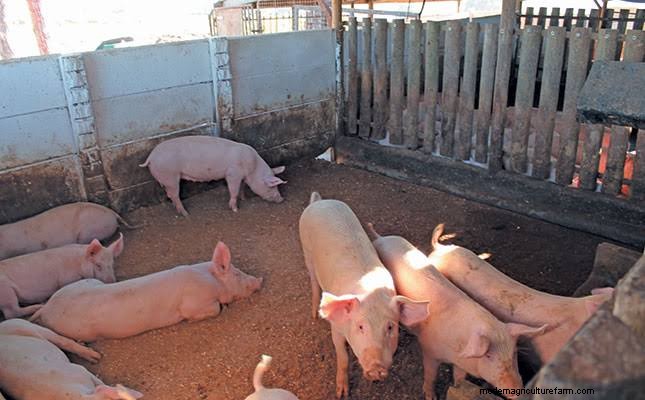
The farmer confines all the pigs within a building and does not allow them to move out. He raises the pigs inside the sties on either concrete or sawdust.
The farmer provides feed, water and veterinary services, routinely, in adequate measure. The system saves labour, provides the condition for management standards and easy control of internal parasites. There is also protection from inclement weather, predators and thieves.
The feeding efficiency is high, thus, the growth rate is also very high.
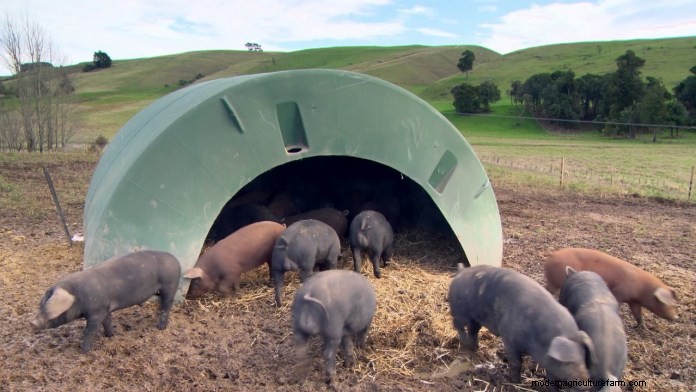
In this system, the farmer provides housing for the animals and allows them to move out to feed on natural vegetation. The farmer provides paddocks around the housing, which he has fenced. Wallow pits and shades are also provided within the farm. Moreover, the farmer allows animals to move about thereby, exercising themselves to prevent fat build-up in the body. Groups concerned about ethical standards in livestock farming would approve this model. The system needs less capital investment but the labour requirements, disease incidence and parasite infestations are high. Concentrate feeds are also provided.
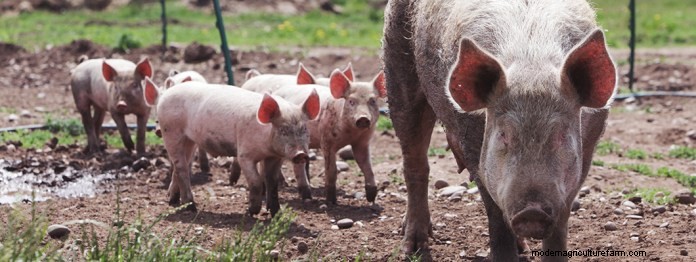
In this system, the farmer allows the pigs to roam about and fend for themselves. This system has little or no capital investment and the cost of production is low. However, disease incidence and worm infestations are very high. The animals are also exposed to adverse weather condition. In urban and peri-urban areas in most countries, this system is prohibited. Also, this model is not suitable for large scale commercial piggery undertakings.
PROGRESSIVE PIG FARMERS NETWORK OF GHANA (PPFN-GH)


