Welcome to Modern Agriculture!

Introduction to Goat Farming in Africa: Goat is a multi-use animal that is normally reared for meat, milk, and wool. Goat farming in Africa involves the raising and breeding of domestic goats as a branch of animal husbandry. Goat farming is one field of endeavor that has increasingly become popular locally. Starting goat farming in Africa is a very lucrative investment business. For years the rearing of goats has always been there but has been for subsistence purposes. Now the raising goats trend is that people rear them solely for commercial reasons. Goat meat has steadily developed into being a formidable contender when it comes to people’s meat preferences.
Goat farming can be suited to production alongside other livestock such as sheep and cattle on low-quality grazing land. Also, goats can be farmed with a relatively small area of pasture and with limited resources. Goat farming in Africa is becoming a popular business day by day. And, due to its high demand and good economic prospects, the goat farming business under an intensive or semi-intensive system has been gaining momentum for the past few years.
Goat Farming in Africa is a very important economic and social livelihood. Goats produce milk, meat, skins, and also play an integral part in religious and cultural ceremonies. Then, they are mankind’s first domesticated animal and farmed in conditions ranging from the harshest climates to the most modern intensive dairy farms in the world. The challenges facing South African and other developing countries’ goat industries is in the implementation of cost-effective systems for high-quality meat and milk which is safe to the consumer from communal farming regions riddled by several production challenges. Genetic improvement for economically important traits like growth, reproduction, and health, and product quality is currently based on convectional estimated breeding values. These systems have been practiced for several decades for breeds benefiting from efficient breeding schemes. Africa is one of the few countries in the world that have successfully developed high-producing commercialized goat breeds some of which have been adopted in other regions.
Benefits of Goat Farming in Africa
Here we are describing the top benefits of starting a goat farming business as a source of income in South Africa.
Breed improvement should be considered if the standard of management can be improved sufficiently to take benefit of the greater genetic potential. It is pointless to waste resources improving the breed potential of goats unless the ‘improved’ goat is fed well and then kept healthy. However, it is often found that owning an improved goat will stimulate owners to improve their feeding and management. Owners will quickly learn that the improved genetic potential, and expressed as milk yields or growth rates, brings greater rewards to better management.
All breeding improvement needs a long-term commitment, over 10 to 20 years, and this is often hard to achieve. New practice concerning the provision of agricultural services presents major opportunities for community-based or farmer-managed breed improvement. There is potential to improve traits of economic value with high heritability, mainly growth rates, through selection but this would need the long-term commitment of resources systematically.
Goats need proper and adequate housing requirements. These are several issues to take into consideration when it comes to goat housing. Ensure the goat housing floor is dry, and that there is proper ventilation and that the place is easily cleanable whenever need be. Proper ventilation ensures that fresh airs go to all parts of the goat housing, and the right temperature levels and humidity is maintained. These issues are important because poor ventilation and extreme temperature levels can foil optimum growth of the goats. An allowance for adequate spacing to allow free movement of the goats is necessary.
Goats are highly adaptive animals thus they do not need expensive housing. Inexpensive material could be used for constructing goat housing namely wood or any type of bricks. Feeding and water troughs are the required equipment for a goat farming business in Africa. Your commercial goat farming business plan must include the costs of purchasing the equipment and goat housing.
The important consideration you must first make for Goat farming is location. Generally, common goats survive in warm regions that are well-drained. Apart from temperature levels, space is necessary and Goats live in groups, so individual pens are not effective. A large field is necessary if you want animals to roam freely. Freely roaming goats have better resistance to sickness and infection. The best locations for goat farming are those that are far from towns because urban pollution is dangerous to animal health. These animals are known to eat a lot of grass daily. So their food source is highly accessible and not too far from the rearing area. It is important to select a suitable place for setting up the commercial farm with all types of facilities for goats. You have to ensure all types of facilities are available in selected locations wherever your goat farm is located.
The necessary facilities for establishing a commercial goat farm are given below;
The type of goat breed – The type of goat breed is the next important point to consider when you start keeping goats. Depending on business purposes, several breeds produce more milk while some grow quickly. Different breeds need different levels of care. Make your research and also consult an expert so he can help you decide what will be best for your farm.
Selecting the proper goat breeds for commercial farm business is very important. There are numerous breeds around the world. Some of them are highly meat productive, some goat breeds are famous for milk production, and some goat breeds produce high-quality skins and fiber. Some highly productive goat breeds are very suitable for establishing successful commercial goat farming business;
Boer – Boer breed is one of the world’s famous highly meat-productive goat breeds. Boer goats originated from South Africa but they are suitable for commercial meat production in almost all countries of the world. An adult Boer buck weights about 100 to 115 kg and doe about 90 to 100 kg. The famous meat goat breed is the Boer goat originated from South Africa. It is a native South African breed. It is a popular and highly meat-productive meat goat throughout the country and the whole world.
In case if you miss this: Goat Manure Advantages and Disadvantages.
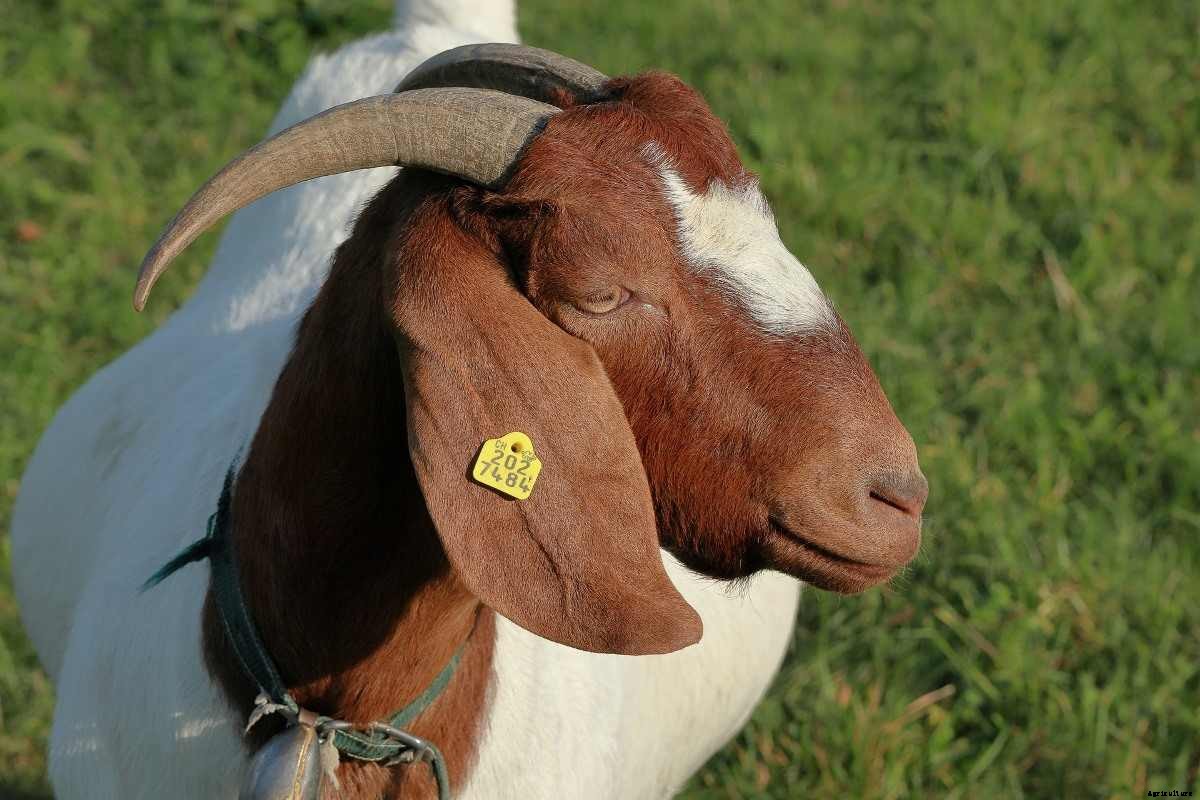
The Boer goat breed was developed in South Africa and it is mainly considered to be one of the desirable goat breeds for meat production. Boer goats are white with redheads. They have pigmented skin and roman noses. Under good nutritional conditions, Boer goat crossbreds with Nubians produce outstanding weight gains and carcasses.
Beetal – Beetal goat breed is another highly meat-productive goat breed. They are the world-famous meat goat breed. Beetal goat is suitable for commercial production. And, adult buck weights about 65 kg and doe about 45 kg.
Saanen – It is a world-famous dairy goat breed in Switzerland. But it is suitable for commercial dairy goat farming businesses around the globe. A Saanen doe can produce about 2 to 3 kg of milk daily. Toggenburg and Alpines are other highly productive dairy goat breeds of Switzerland.
Anglo Nubian – Anglo Nubian breed is a hybrid dairy goat breed and they are the result of cross-breeding of Nubian and English goat. Also, they are suitable for commercial production. A doe can produce about 2 to 3 kg of milk daily.
You may also check this: Organic Sheep Farming.
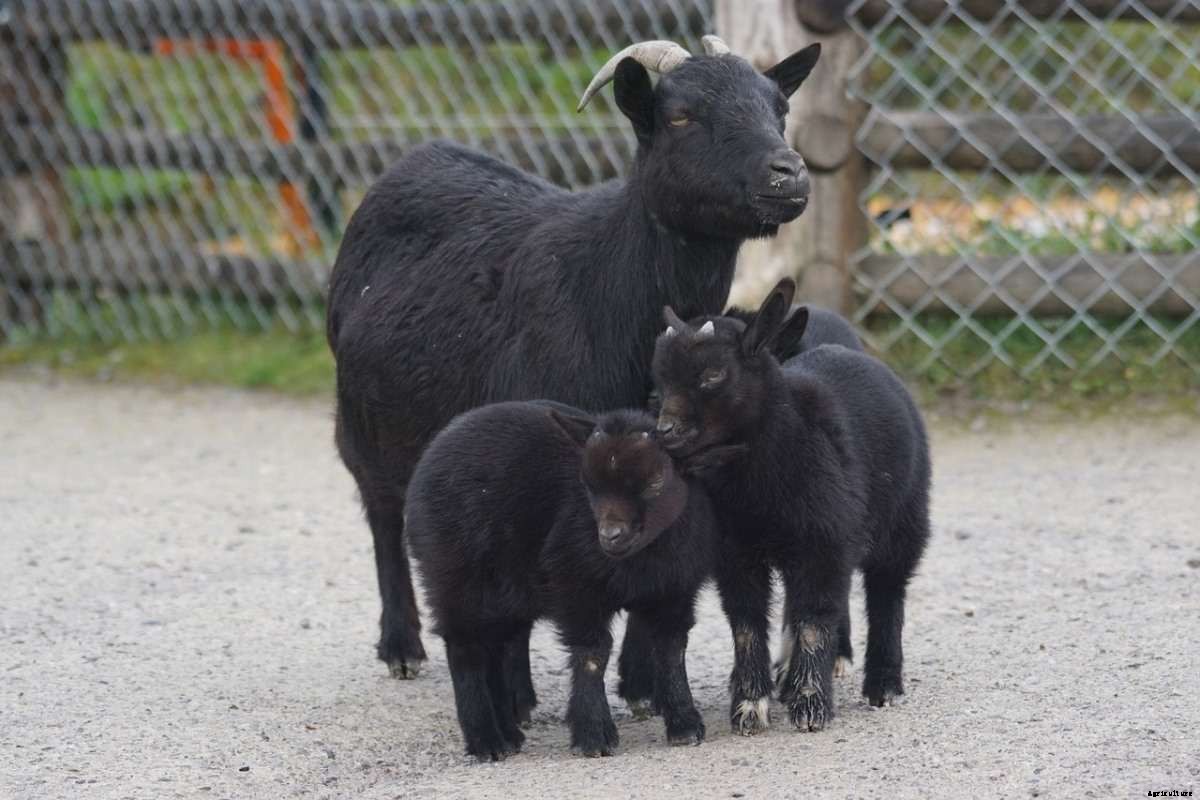
Like many other species, goats have a wide variety of breeds and each one of these is ideal for different farming practices like Milking, meat, cultural significance, and skin, etc. So, list the different types of goats in South Africa with their most common use.
Goat breeds for Meat
Goat meat is called Chevon when from adults and Cabrito when from young animals.
Goats for Cultural Value
Goat breeds for Milk
Goat breeds for Fibre
Feeding costs tend to be the biggest cost in a commercial goat farming business in Africa, as you will require supplementary feed. Your goat farming business plan must take into account the feeding costs.
Goats are sensitive animals with strange feeding habits. Goat feed must be clean and always be put in a trough. Keep troughs clean by removing any leftovers. Goats are ruminants and rather eat leguminous fodders like Lucerne and cowpeas (high in protein) than sorghum, maize, silage, or straw. Buy the best quality feed that you can afford and then store it away from the sun and rain. Collect hay in the growing season and then store this for times of food shortage in the dry season. Cereal crop residues and grass fodder must be chopped before feeding and grains can be crushed. To provide feed fresh, and only feed for one day’s feeding must be mixed. Do not let the goat feed become old or moldy. Any changes in the feeding of goats must be made gradually, over at least a week.
Goats also require protein. Protein is the primary building block of every cell in the bodies of all animals and is necessary for growth, disease resistance, reproduction, and lactation (production of milk). Adding a sufficient amount of greens to a goat’s regular diet is a must, whether you are producing goat meat or goat milk. Dairy goats need greens more than meat goats, so ensure a good supply of greens for your goats. If pasture is not available, plant several types of hybrid grass and small trees on a separate piece of land. Pasture and browse are the common feeding avenues for goats. Goats are browsers by nature, and they are not primarily grazers, even though they also eat grass. Thus goat farms should ideally have low-lying bushes. Though, trees, leaves, bushes, and twigs are the common browse materials for goats. Goats can eat more than 80 types of plants, and they are highly adaptive to different kinds of environments.
Making a fence around your goat farm area will keep your goats safe and free from other harmful animals like dogs. Also, fencing helps you to keep your farmlands green food safe and being feed by other animals like sheep and cattle. For commercial goat farming, fencing is very urgent and you can make a fence with general wire or electric wire.
Understanding goat behavior goes a long method to keeping them safe. With proper planning, materials, and installation systems, goats will be well protected. For starters, invest in the best fence you can afford for goats. Then, the right installation ways will make a significant impact on the result, so be sure to take the time to plan and install the fence properly.
Access to a veterinarian is another important thing to consider for goat farming. When starting goat farming, you expect many of your animals to contract diseases. A veterinarian can also help you in disease control and management to avoid losses. Also, vets can help you diagnose diseases or recommend vitamins and supplements to keep your animals in good health especially during stressful situations such as weaning.
Woven wire fencing is the most reliable form of goat fencing as it provides a strong but flexible barrier. Individual knots are tied to the horizontal and vertical wire intersections, making a mesh that holds tight and won’t slip. Then, the knots create a springy texture, so the fence will flex when challenged, rather than snap the way welded wire can.
If a goat can get its head through a fence and wire fence spacing must be no more than 4 inches high and 4 inches wide to keep goats from breaking free. A fence at least 4 feet tall will deter most goats from jumping to the other side while keeping unwanted animals out. You could install one electrified line about 18 inches off the ground to prevent climbing on the mesh.
Firstly, you must keep your goats healthy and strong. Keeping the animals healthy by making them happy is not a hard task. Goats are picky with food and they don’t eat dried or soiled grass. Make sure you have enough clean and fresh grass for them so they don’t go hungry.
Farm Africa will help vets and community animal healthcare workers expand their operations and deliver veterinary services to local livestock keepers. Farm Africa will establish community-run goat breeding stations where high-yielding dairy goats that are suitable to the local landscape and climate can be bred and sold. At the same time, establish buck rearing stations where goat owners can bring their local does to crossbreed them.
Keeping goats healthy is important for all livestock keepers and particularly poor ones. Goats can make up a large part of the family’s total assets and so steps need to be taken to ensure they do not die or get sick needlessly. Keeping goats healthy does not involve the use of expensive drugs and then highly trained veterinary staff. In most situations, the majority of the important diseases can be mainly controlled through simple preventative measures like good feeding, clean water, clean housing, vaccination, drenching and spraying/dipping, and foot trimming. If these basic measures are done, when appropriate, 80-90% of the important diseases affecting goats can be controlled. Efforts must be directed at establishing what the common and important diseases are in any area, and efforts should be focused on controlling them.
Veterinary services remain weak and have been hard hit, in many countries, by fiscal reforms and staff retrenchment, leaving livestock keepers bereft of veterinary support. The privatization of veterinary services inevitably means that services will concentrate in the higher potential areas, serving commercial livestock farmers, and leaving marginalized goat keepers without any veterinary services.
Never delay or stop caring for your goats. Always provide them good care and management for Goats. Though, proper care and management can ensure maximum production and high profit from commercial goat farming. A farmer with a sick goat has to buy medicines, syringes, and needles. It is better for a farmer if goats stay healthy and do not get sick. Therefore, before we consider how to treat diseases, it is best to think about how to recognize healthy animals and how to keep them healthy.
Giving an animal shelter from cold and wet conditions prevents stress that can lead to disease. Vaccinating is the non-natural way of making an animal resistant to disease. This has to be done before the goat is exposed to the disease.
If the animal is sick it can be caused by many things, most commonly one or a combination of the viral infection, a bacterial infection, internal or external parasites, or poisoning. Observation (appearance, history, appetite, temperature, respiration, and other clinical symptoms) cannot be used as the only method of identifying a disease. Overuse of antibiotics is a common and growing problem as they are used in conditions that cannot be treated effectively. Though, correct antibiotics are the effective intervention that can be used against certain conditions if used at the right dosage.
Hygiene or cleanliness is an important part of keeping livestock and yourself healthy. Germs and organisms that cause disease and illness can spread between sick and healthy animals if you do not maintain cleanliness such as washing hands and cleaning your equipment after treating.
This is the easiest but it is the most important part of commercial goat farming. Firstly, try your local market, and then big markets in-country and finally you can try the international market. Local market or market within the country is best for small or medium commercial goat producers.