
Welcome to Modern Agriculture!

Introduction to Backyard Turkey Farming in India: Turkey farming is defined as the process of raising Turkeys for meat or eggs production. It is suitable for small and marginal farmers in India. Turkey birds can be easily raised in the free-range system or under a semi-intensive system with less investment. Turkey birds are reared for meat purposes as their growth rate is more. In this article we also covered the below topics about backyard Turkey farming;
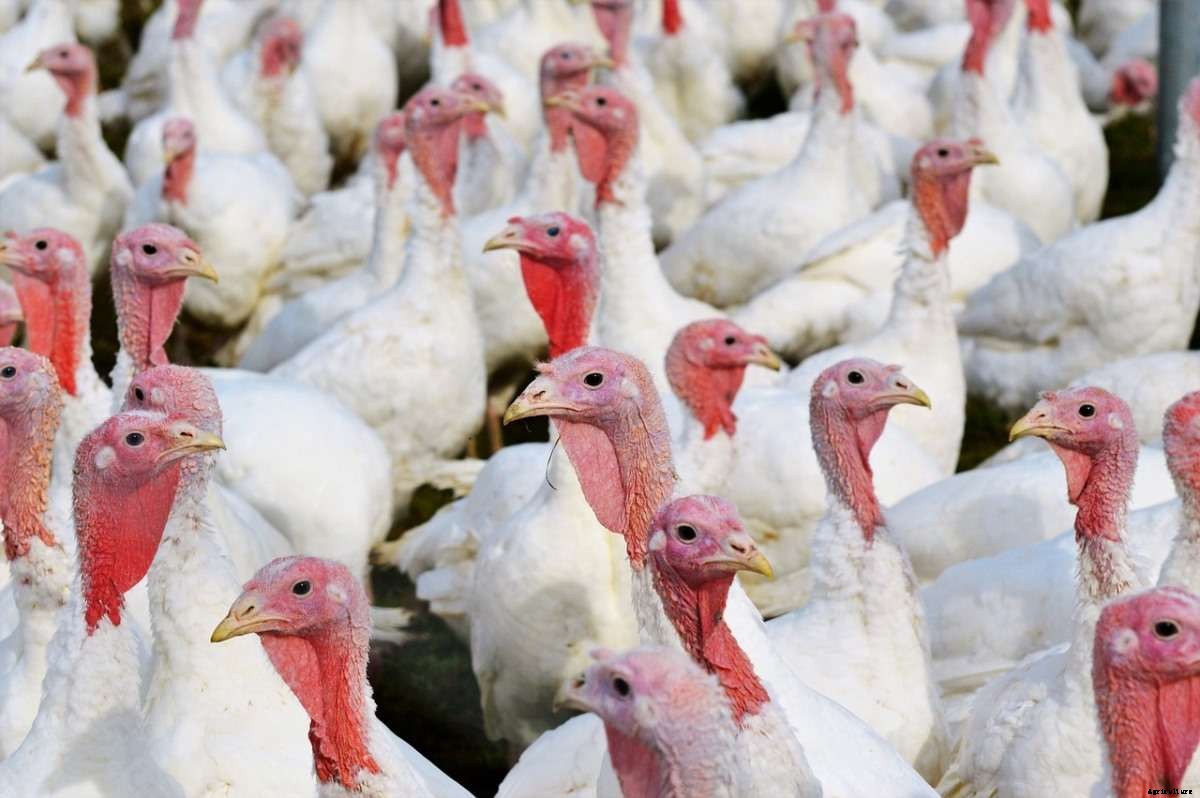
In India, Turkey farming can be the best alternative to the poultry farming business. Climate conditions in India suit well for Turkey business and with good management, a farmer can make a good profit. Though Turkeys lay eggs, they are popular for their meat than egg production. Their popularity for meat production is because Turkey grows fast and then is ready for the market within a very short time. Turkey meat is one of the leanest of all poultry species and it is consumed in every country across the globe.
Raising Turkeys in the backyard is somewhat like raising chickens. It requires a brooder space when they are young. Turkeys require a high-protein Turkey starter food for the first 6 weeks and it is not acceptable to substitute chicken starter food. The nutrient needs of the two are quite different because controlling the protozoa that mainly cause coccidiosis is different in each bird. Purchase them from a certified breeder and those sold at feed stores may be from a certified nursery or maybe not. Make sure to ask so you’ll start with a healthy Turkey bird. If you’re growing the Turkey bird for a holiday feast, check the time needed for maturity. Most breeds need 14 to 22 weeks to grow into a mature and edible stage.
For raising Turkeys in the backyard you need to find the type of Turkey breed you want to raise, then you need to prepare enough roaming space, provide shelter and optimize the environment for their needs like proving lamps, bedding, and feeders. Though not all areas permit Turkeys to be kept, or there are restrictions in place. And, always check with your local authorities ahead of time.
In case if you miss this: How To Start Goat Farming In Maharashtra.
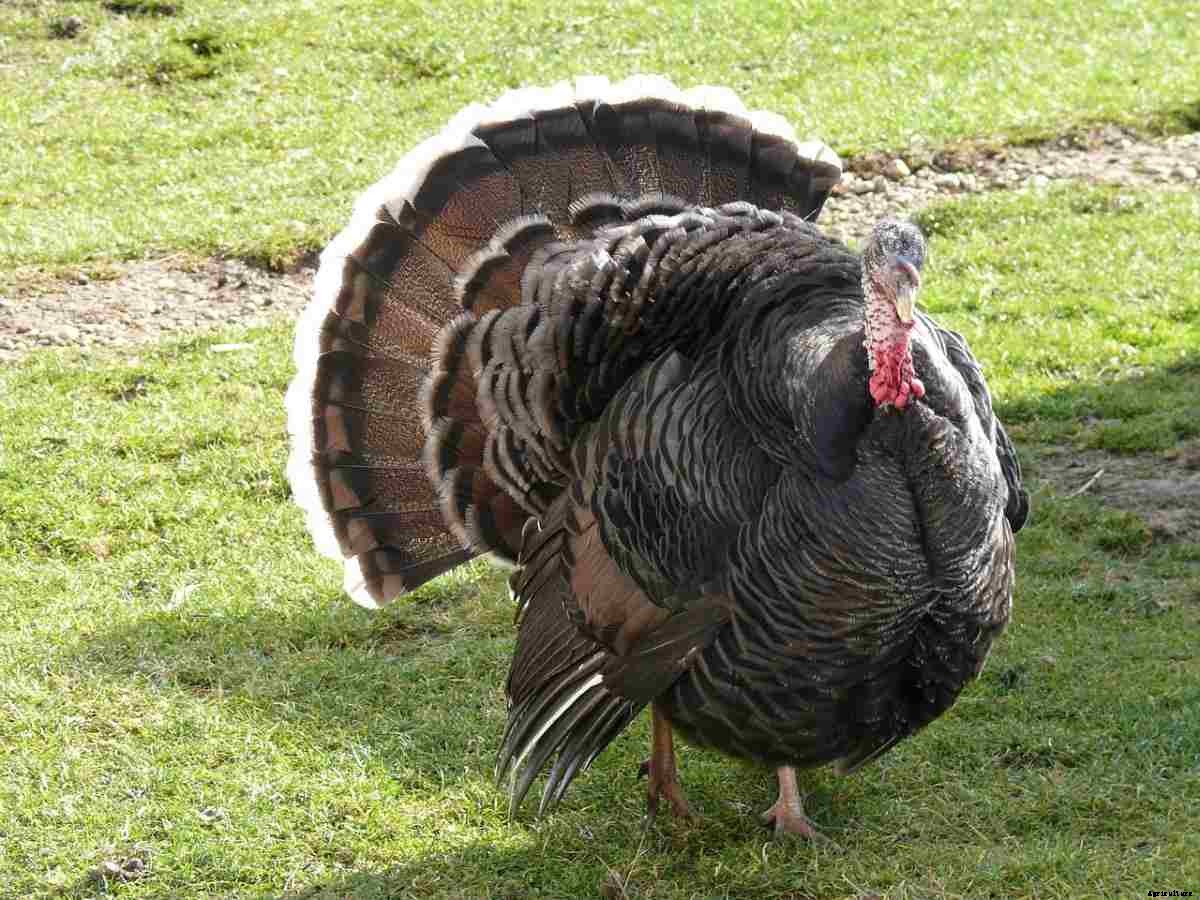
Turkey farming has the below benefits;
For raising Turkeys in the backyard, it is very important to choose a breed variety that meets your particular needs. There are some Turkey breeds, but some breeds are easy to raise. About 6 to 12 birds must be sufficient for families who want to start raising backyard Turkeys.
Identifying the correct breed will be important for a successful business. Each one is different, so it is very important to research the different types and what they are like, and what that will mean for you as an owner. Also, you will want to see what is available from breeders in your local area.
The most common breeds of Turkey that are raised in backyards can be given below;
Bourbon Red Turkey
Bourbon Red Turkey breed originally bred in Bourbon County, Kentucky. The average adult male will reach about 15 kilograms (33 pounds) in weight whereas the average adult female (a hen) will reach 8.2 kilograms (18 pounds) in weight. Usually, the breed’s feathers are a dark brown color, with white found in the tail and across their bodies. Usually, the tail and wings have chestnut coverts.
Bourbon Red is great backyard Turkeys. It is a rich, chestnut red Turkey that has pure white wingtips and tail feathers.
Bronze Turkey
The Bronze Turkey bird is the most common and standard breed. This refers to its plumage, which consists of a bronze-colored finish. Though, the average adult male will reach about 11 kilograms (25 pounds) in weight whereas the average adult female (a hen) will reach 7.2 kilograms (16 pounds) in weight.
Broad-Breasted Whites
Broad-Breasted Whites cannot breed without artificial insemination because of shorter breast bones and larger breasts. These Turkey birds will weigh on average about 16 to 18 kilograms (30-40 pounds). If you are looking to own this breed, consider that they will not be able to reproduce without assistance. This can be good or not for you, depending on if you want to control or keep the flock size down. This Broad-Breasted White breed is more susceptible to joint issues and disease; due to how they have been bred and the size that they have since reached (mostly for the meat industry). This breed is not considered the most ideal to raise, but they are found and usually cheaper than the other breeds.
For raising Turkey in the backyard, good housing is required for proper growth and management. Turkeys can be raised in free-range and intensive systems. Design and construction of Turkey housing can be the same as poultry shed design for chickens. A deep litter system is preferred as Turkey birds are big-sized poultry birds. For 1 acre of fenced/yarded land, about 200 to 300 Turkeys can be accommodated. Turkey requires spaces of about 3 to 4 sqft per bird during night times. Make sure there is enough clean water, space, and ventilation inside the housing and must be protected from all types of predators.
The necessary equipment for raising Turkeys includes brooders, feeders, and waterers. Breeder birds need additional items, such as laying nests and egg-handling equipment. Though, feeding and watering equipment must be designed to adequately service the birds with a minimum of spillage or waste. The amount of equipment required varies with the age and size of the Turkey birds. Sufficient feeder and water space should be provided to allow each bird equal access.
Because of their size, Turkeys will need more space than other poultry counterparts. Coop space recommendations per Turkey mainly depend on age;
Also, for raising a free-range Turkey flock you will need a considerable amount of outdoor space. For every 12 adult Turkey birds, it is recommended to have a one-half acre.
How About This: How To Start Dairy Farming In The USA.
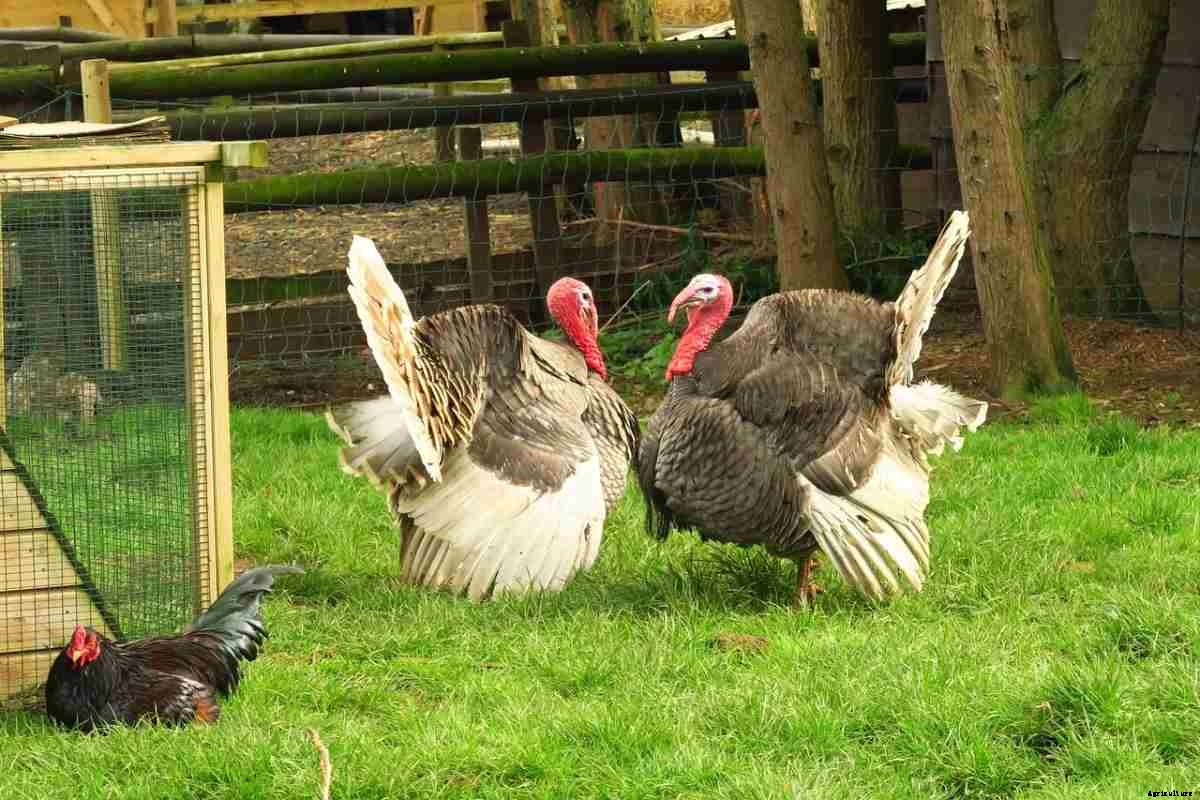
Once Turkey birds are old enough to live outside, you will need to provide them with a roosting area with a roof, protection from predators, and access to fresh pasture or range. The requirements for raising Turkeys include;
Above all recommendations for roosting structures work well that will be harvested Turkey birds for meat at around 28 weeks of age.
Incubation
A fertile Turkey egg has an incubation period of about 28 days. The eggs can be incubated in 2 different ways which are;
Natural Incubation – Normally, Turkeys can brood on their eggs and they can hatch between 10-15 fertile eggs. To achieve a higher hatchability rate, only clean, well-formed eggs must be set for incubation.
Artificial Incubation – Under this process of incubation, an incubator is used in hatching the eggs. The temperature level and relative humidity in setter and hatcher can be given below;
The eggs must be turned hourly every day and their collection should be done frequently to avoid breakage and soiling and to improve hatchability.
The process of starting your backyard Turkey farming is really simple. The step by step process of backyard Turkey farming can be given below;
Learn how to run a Turkey farm
By knowing exactly how to manage the Turkey birds you can start a Turkey farming business. You don’t go to the market and buy any quantity of Turkey for breeding. Therefore, to become successful, you must learn from an expert. You want to glean from their experience so that you will not make the mistakes they made. Growers can charge you for the training and you can apply to work on their Turkey farm as an intern. By doing this, you will have the requisite knowledge to build your own Turkey farm business.
Proper market research for Turkey demand
The next thing is to do a market survey to know where to raise your Turkey farm business. Market research is important because it will give your insight into whether there is demand for Turkey products in that area. Also, it will help you to ascertain the cost of delivery and how much you must price your Turkey products. You can sell either the eggs or raise Turkeys to maturity and then sell them as meat.
Buy some Turkey farming equipment
If you set up Turkey housing, it’s time to furnish it with all the necessary equipment for Turkey farming. Feeders, waterers, nests, and waste disposal systems are the equipment for the Turkey farming business. All this equipment is essential for the smooth running of your Turkey farming business.
Brooding equipment for raising backyard Turkeys
Brooding young Turkey poults is the enjoyable and important phase of raising Turkey birds. The young poults grow rapidly beneath a warm brooder in a confined area during this period. A brooder is a heating unit that provides the warmth necessary to help the birds maintain its body temperature until it is old enough. Brooders can be gas or electric.
Several types can be purchased from commercial companies, agriculture supply companies, or feed- or farm stores. One of the important factors in brooding is to start with good-quality poults. Turkey birds have been improved through careful breeding. If you start with good-quality poults and then provide adequate housing, feed, and water. Though, to be successful you should adopt a sound management philosophy that takes into account the necessity of providing necessary nutrition and using disease-control programs. Careful, vigilant management is key.
For raising backyard Turkeys, brooding equipment is much the same as that used for chickens. Though, if you use any chicken equipment for your Turkeys, be sure to disinfect it by cleaning it thoroughly with hot, soapy water and a stiff brush. In such cases, brooding facilities in a battery must be provided for about 10 days. If no battery is available, a box about 20 inches by 24 inches by 15 inches high with a 100-watt light bulb inside will work.
It is important how to raise Turkey poults is teaching them to eat. One method to get the Turkey poults to eat is to sprinkle chick scratch on top of the ground turkey starter mash. When raising backyard Turkeys, the secret is to keep the Turkey birds in cages raised off the ground, on sunporches.
Provide Shelter and Necessities
Turkeys are ideal targets for predatory animals like foxes, coyotes, and other large birds of prey. Also, the eggs in which they lay are targeted by other smaller predators including the likes of raccoons and sometimes snakes.
Ensuring that you have sufficient, guarded shelter is going to be important. It is important to consider the weather conditions for raising Turkeys. Providing shelter is very important for these reasons too. Turkey bird owners provide a sealed building that is with no open windows or areas of access. The floor is easily cleaned which makes clearing out muck much easier.
Providing a concealed shelter for Turkey birds will help you to manage the environment more effectively. Keeping Turkeys warm in the winter season and preventing heatstroke in the summer season.
Proper care and disease control is required in the Turkey farming business for better growth and production. Turkey birds are like other domestic birds and can suffer from diseases sometimes. The most common parasites found in Turkey birds are fowl mites and roundworms. De-worming and dipping the birds must be carried out to keep them healthy. Turkey birds get affected by various types of bacterial, fungal, bacterial, or viral infections. Some of the main diseases in backyard Turkey farming are coccidiosis, blue comb disease, erysipelas, fowl cholera, erysipelas, new castle disease, chronic respiratory disease, Turkey coryza, paratyphoid, and Turkey venereal disease.
Turkey birds affected with Blackhead will be droopy and the droppings will be yellow. One of the important remedies used by commercial growers is a phenothiazine. Make sure to follow some disease-preventing tips when you’re raising backyard Turkeys, such as having a raised sunporch, which is a more acceptable control measure for organic homesteaders.
Proper care can ensure better Turkey’s growth. Turkey birds are like other domestic birds. Also, they suffer from various types of diseases and parasites. The most common parasites of Turkey birds are roundworms and fowl mites. Turkey birds get affected by various types of fungal, bacterial, or viral diseases. For raising Turkey birds, fowl cholera, erysipelas, new castle disease, chronic respiratory disease, paratyphoid, Turkey coryza, and Turkey venereal disease, etc., are harmful diseases. Timely vaccination and proper care are important to keep the Turkey birds healthy and diseases free.


