
Welcome to Modern Agriculture!

Introduction to layer chicken farming project report for 500 birds
Layer farming means raising egg-laying chickens for commercial egg production business. Though, layer chickens are such a special species of hens, which need to be raised from when they are one day old. Commercial layer strains are now obtainable with traits of high egg production and high feed conversion efficiency. Based on the farm-size, layer (for eggs) farming can be the main source of family income and gainful employment to farmers throughout the year. They start laying eggs commercially from 18 to 19 weeks of age. They remain to lay eggs continuously till their 72 to 78 weeks of age. They can produce one kg of eggs by consuming about 2.25 kg of food during their egg-laying period.
Farmers categorize their poultry birds into different stages such as brooding, growing, pullet, and layering. Though, layering starts when the birds are of 20 weeks of age. Once the birds reach the egg-laying age they are given layer feed and they are transferred to the egg-laying quarters at the age of 18 weeks. Unproductive, sick birds should be removed from the flock. Such birds are normally culled. The layering period lasts up to 120 weeks. It is necessary to replace the old flocks in an existing poultry farm while maintaining the old flock is a costly affair. Also, egg production should be steady to meet market requirements.
Today, poultry is one of the fastest-growing segments of the agricultural sector in India. In poultry production, value-added products utilizing poultry eggs, culled birds for human consumption have been developed. Though, only 6% of the eggs produced in the country are converted into processed egg products mainly for export. Poultry layer farming is gaining popularity in India due to its lower cost production and growing demand for eggs. India ranks third in the world by producing about 3.8 billion kilograms in the shell. The leading egg-producing states in India are Andhra Pradesh, Tamil Nadu, Haryana, Maharashtra, and Punjab. There is a rise in egg production in India owing to the growth in human consumption costs and lower production costs. High-quality chicks, equipment, vaccines, and medicines are now obtainable through both public and private players. Technically and professionally competent guidance is obtainable to the farmers. The managerial practices have improved and disease and also mortality incidences are reduced to a great extent.
According to the nature and color of the egg, layer hens are of mainly two types. Short descriptions of these two types are listed below;
White Egg Laying Hens – This egg-laying type of hens are comparatively smaller in size. These hens relatively eat less food, and the color of the eggshell is white. Isa White, Lehman White, Nikchik, Bab Cock BV-300, Havard White, Sever White, Hi-line White, Bovanch White, etc. are some popular white egg-laying chickens.
Brown Egg Laying Hens – Brown egg-laying hens are relatively larger and they eat more foods, compared to white egg layers. Lay bigger eggs than other laying breeds. The eggshell is brown colored. There are many types of brown layer obtainable. Among those Isa Brown, Sever 579, Lehman Brown, Hi Line Brown, Bab Cock BV-380, Gold Line, Bablona Tetro, Bablona Harko, Havard Brown, etc. are suitable for commercial layer poultry farming.
Egg production from layer farming depends on care and farm management. If you take good care of birds and manage them properly, then the production and profit will be high. Egg production from a Layer Poultry Farming depends on care and management.
Within the first 20 weeks of age, 5% of hens start laying eggs. About 10% of birds start laying at their 21 weeks of age and when they reach about 26 to 30 weeks of age, they produce highly. Although, it can be different depending on their strain. After laying a maximum number of eggs, they generally stop laying for a few days. After this period, egg production might reduce slowly Egg laying rate, and the size of eggs increases gradually. Then, the hens grow until their 40 weeks of age. Also, the weight and size of eggs increase until their 50 weeks of age.
Eggs should be collected regularly from the nests. In the deep litter system, it is collected 5 times a day and twice a day in a cage system. Farmers attach an egg roll-out to the nest. Then, this facilitates egg collection outside the pen. Bloodstains and manure on the shell of the eggs could be washed with water. The cleaned eggs should be refrigerated immediately else they may develop bacterial contamination.
A loan from banks with a refinance facility from NABARD is obtainable for starting poultry farming. The technical officers attached to the bank manager can help or give guidance to the farmers in preparing the project report to obtain a bank loan. For poultry farming schemes with large outlays, detailed project reports will have to be prepared. Banks provide financial assistance for the below purposes;
A scheme can be prepared by the beneficiary after consulting local technical persons of State Animal Husbandry, private commercial hatcheries. If possible, they visit the progressive layer farms in the area and also discuss the profitability of farming. Good practical training on a layer farm will be highly desirable, before starting a farm. The scheme contains information on land, water and electricity facility, the experience of entrepreneurs and the type of assistance obtainable from State government, and local hatcheries. It should include data on the proposed capacity of the farm, the total cost of the project margin money to be provided by the beneficiary, requirement of bank loan, estimated annual expenditure, income and profit, and the period for repayment of loan and interest.
After ensuring technical feasibility and financial viability the scheme is sanctioned by the bank. The loan is allocated in kind in 2 or 3 stages against the creation of specific assets such as the construction of sheds, purchase of equipment and machinery, the recurring cost during the growing period on the purchase of the first batch of chicks, feed, medicines and vaccines, electricity and water, labor expenses, etc.
Good quality, balanced feed should be given at the right age. Layer feed which is given at 17 weeks must be started gradually by the age of 16 weeks. Avoid excess consumption and similarly, the feeder should be cleaned regularly to prevent rat infestation on the leftover feed.
In the layer poultry industry, feed quality and feed intake directly impact the outcome of the product. With Suguna layers and Lohmann layers, feed intake capacity is genetically well established. Though, due care must be taken while monitoring feed to the birds throughout its lifecycle.
The chicken’s energy requirements through the feed are mainly determined by factors such as body weight, production rate, egg size, temperature, air movement, and feathering. Essential nutrient and mineral supply through feed management define the overall productivity of the bird. Feed types change at different stages of the bird’s lifecycle. Suguna’s experts will guide you throughout and also help you administer the right feed types throughout the process.
In case if you miss this: 1000 Broiler Chicken Farming Project Model Report.
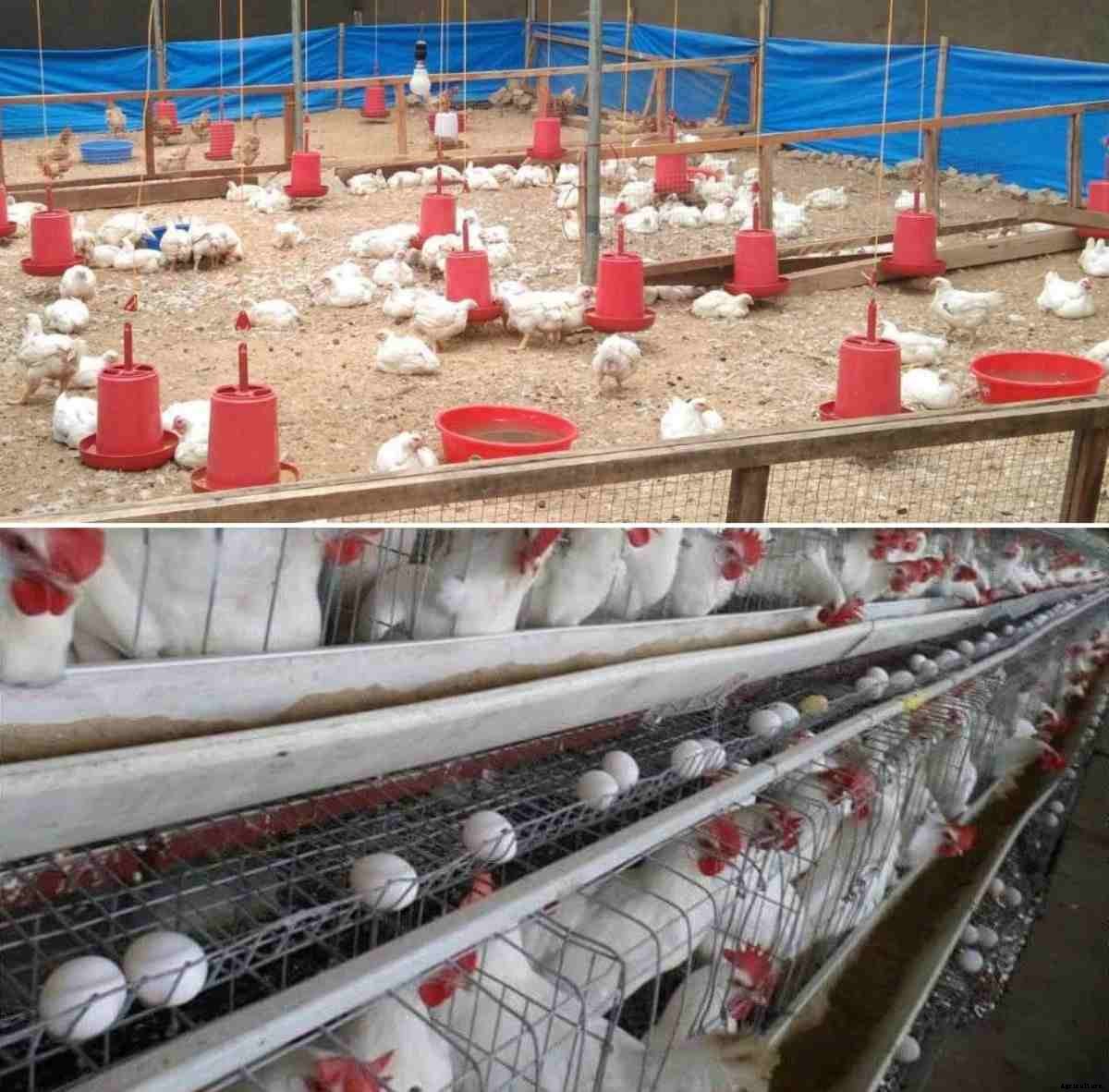
Layer farming with a unit size of 500 birds is explained below. This is Indicative and applicable input and output costs and the parameters observed at the field level can be incorporated. Costs and profits depend upon Layer poultry farm management, quantity, and quality of the feed provided. It mainly depends on disease management, vaccinations, and other factors. This information is intended to provide the interested producer an idea of the overall financial activity involved in a 500 layer operation.
Total 88,750/-
Layer mash ( 21-72 week)40kg = 20,000 kg
=23500kg
Rs15/Kg Rs15/Kg Rs14/Kg 15,000/-37,500/-
2,80,000/-
4 Cost of Poultry Medicines, Vaccines, Litter and insurance coverage Rs 4.50/bird 2,250/- Project cost 3,57,250/- Capital Expenditure 88,750/- (+) Recurring Exp. 3,57,250/-4,46,000/-
Term loan 75% = 3,34,500/- Income Generated Mortality 6% = 30 no’s
3 20% broken eggs collected= 21,620
out of which:
70% Sold= 15,134
30% Discarded 6,486
Average broken eggs/ day 21 nos.
( 10 months)
15,134
6,486
Rs.2/each
–
30,268/-
–
4 Sale of culled bird 470 nos. at the age of 72 week age, average weight 2 kg 500 gm= 1175kg – 70kg 82,250/- 5 Gunny bag= 335 nos – Rs.20/each 6700/- 6 Poultry manure from 470 birds – Rs.1.50/each 705/- 5,52,323/- (-) Capital Expenditure A III &IV 4,250/- 5,47,823/-
You may also like this: Chicken Manure Composting Process, Benefits.
( Recurring Expenditure) 3,57,250/- GROSS PROFIT (Rs 5,47,823- Rs 3,57,250) 1,90,573/- Net Profit Less Depreciation on 9,057/- Poultry Shed 10 % 7182.00 Poultry equipment 15% 1875.00 Net profit/bird is Rs.363.03 1,81,516/- (For 500 birds)
Layer birds suffer from different diseases such as Newcastle disease, fowl pox, parasites, etc. that affect egg production. The common symptoms are sneezing, rattling, uncoordinated movements, paralysis, twisting head and neck, etc. And sometimes in case of diarrhea, the discharge is whitish or bloody. The veterinarian should be contacted immediately if any of the abnormal disease developing symptoms are noticed. Also, the birds should be vaccinated at the correct time to prevent developing diseases.
As soon as they are hatched the chicks are administered with Marek’s vaccine and also fowl pox vaccine. Below is the vaccination schedule;
Age of the Birds Disease Application 3-4 days Newcastle Disease Intraocular or Intranasal 4 weeks Fowl Pox Wing Web 6 weeks Internal parasites Mixed with the water and feed
Clean surroundings, adequate ventilation, regular checking of birds, and also following the vaccination schedule religiously are the best ways to arrest diseases. Dead birds should be checked for the cause and visceral organs must be examined.
Vaccination is a must for layers for keeping them free from all types of diseases. The main advantage of poultry vaccination is listed below;
Eggs are stored in a cool room at 13°C and transported in an insulated truck. Unfortunately, shops selling eggs do not store them under ideal conditions. In the home and shop situation, it is best to store them at normal refrigerator temperatures (4-6°C). Marketing involves a range of prices, depending on the sizes of egg, different brands, or differences which attract particular buyers. Free-range and fat modified eggs are among the varieties obtainable. You may apply the same information for calculating cost and profits in 1000, 5,000, and 10,000 layer farming project report. You may like How to Make Money from an Egg Hatchery Business.


