
Welcome to Modern Agriculture!

Today, we discuss the topic of laying birds care, ideas and tips.
The female poultry bird which is reared for an egg laying is called as layers. Layers are the variety of birds that produce eggs. There are mainly two classifications of poultry birds, namely
Egg production is a lucrative agribusiness; it is a short-term investment with quick turnover. Laying birds are of different breeds, the white and brown color leghorns are the best egg producer; the brown leghorn is very common in Africa. Now we get into details of laying birds care and management.
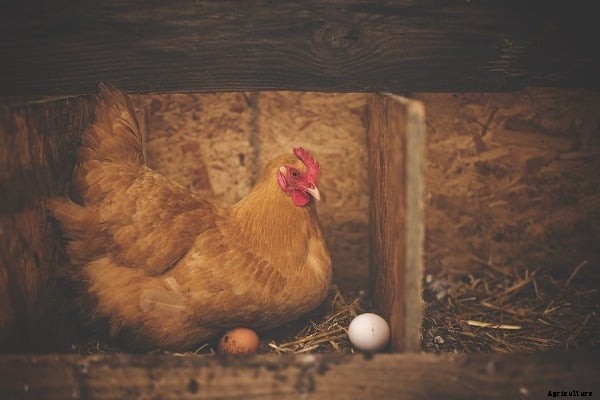
The birds produce their eggs between 20 to 72/75 weeks of age. Means laying starts at 20 weeks of age and will lay the eggs up to 72 to 75 weeks of age after that the egg production will decrease and the bird will be culled. This laying period is also called a laying cycle or biological year when the bird reaches 5% egg production. The birds which completed their whole 75 weeks laying phase is termed as “spent Hen”. The grower birds transferred to a layer house at 17 to 18 weeks of age.
Layers, unlike the meat producers, are vulnerable birds that want proper management practice for them to reach and maintain the peak of their production potential. It is necessary a poultry farmer knows how to take care of egg-laying chicken; the care is the only success factor in the poultry business, a poorly managed farm record loss, and low productivity always. All farmers accord their losses to the genetic make-up of the birds; however, lack of appropriate management crumbles an egg-producing venture.
Management of laying birds is a dicey task that needs hackneyed attention; it starts right from the brooding stage until when the birds cease production. Layers are brooded for about 3 to 8 weeks and fed with chick mash; after 8 weeks, they must be fed with grower till about 18 weeks before introducing the diet layer. Normally, egg production commences at about 17 weeks; the birds must be evacuated to the laying pen at about 16 weeks to get them acclimatized to the environment before the commencement of egg production. At 20 weeks, debeak your birds to check egg pecking.
The following points to be considered during layer management are,
Read: Record Keeping of Your Farm.
This light source enters into eyes of birds induces a reaction in the hypothalamus, which affects the secretion of gonad tropic hormones and these hormone changes the activity of gonads and will responsible for reproductive behavior of birds.
Mostly in grower period, the light must not be increased but in layer phase 22nd week onwards the light should increase at 15 to 30 minutes per week and it reaches 16 hrs of total light that means Natural light + Artificial light at 33 weeks of age. During the laying period, light must not decrease but increase 17 hrs a light/day when birds lay for about 6 months of laying phase, light must not increase more than 17 hrs because there is not any type of advantage over 17 hrs of light.
Mercury vapor light, Fluorescent and incandescent light can be used. The distance between the two bulbs is 10 feet. The height of bulb 7 to 8 feet from the floor wall and if we are using a tube light instead of the bulb than between two tube light the distance must be 15 feet.
After feeding, another parameter that must be managed optimally is the length of light per day. Lightening stimulates egg production; the daylight length must be increased gradually as the pullets come into egg production. Artificial light in the form of the fluorescent bulb must be used to lengthen the daylight. Daylight of 16 hours per day must be activated at the beginning of egg production to ensure optimum production. After six months of production, the daylight should be increased to 17 hours per day.
The issue of pest and diseases want serious attention; adequate preventive measures have to be positioned in place to mitigate these threats. The main pests of layers are lice and worm; they make the birds uncomfortable, thus, reducing productivity. Layers must be dewormed once every three months. Antibiotics and vitamins should be given through drinking water at least every 3 days to boost the birds’ immunity. The feeders and drinkers should be cleaned every two weeks to prevent the emergence of pathogens.
There are two housing systems for layers, they are:
In this system, the birds are placed inside the house all the time. Arrangement for feed, water, and nest are ready inside the house. The birds are kept on proper litter material of about 3” to 5” depth. The word litter is used for clean litter material spread on the floor. Generally, paddy husk, sawdust, ground nut hulls, chopped paddy straw or wood shavings are used as litter materials. This arrangement saves labor involved in regular cleaning of fecal matter (droppings), however, it needs periodical stirring. The litter is extended on the floor in layers of two-inch height all fortnightly till the required is achieved.
The advantages of the deep litter system are;
The disadvantages of the deep litter system are;
The battery cage system is a common process used in commercial egg production. In this method, laying birds are confined in cages. Each cage accommodates 2 to 4 birds depending on the size of the cage. This cage system saves labor and space as the battery cages are set up in tiers. It controls cannibalism and egg pecking as eggs stray away instantly after dropping; also, it controls infection of parasitic diseases and the rapid increase of disease. However, it is expensive and birds get bored, hence, inducing cage fatigue. This cage system requires effective management as the layers nutrient requirements have to be met, especially calcium, to ensure optimum production.
The first thing is, the layer feed nutritional requirements, and these have to be met. Feed layers in the right quality and quantity to make sure adequate production. Feeds are fed during the feeding trough; either in the linear feeding trough or hanging feeding trough. The linear feeder must not be filled more than one-third of the trough to avoid feed wastage; a hanging feeder of about 50cm diameter can accommodate about 20 to 25kg of feed for 100 layers. Layers diet is fed at about 20 weeks, they are generally high in calcium (3%); the feeds should be of larger particles. Feeding must be done during the cool hours of the day.
Water must be provided at all times, it is essential for egg production. Starving the birds with water is detrimental as it can decrease the productivity of laying birds greatly. Adding vitamins, probiotics, and electrolyte in drinking water helps to mitigate the menace of heat stress. Coconut water is a very natural electrolyte.
Read: Plant Disease Management in Agriculture.
The quality and quantity of feed with the process of feeding has got major contributions in the environmental component, controlling the productive performance. This feed accounts for 65 to 70% expenditure in the production of poultry. Hence, due care should be taken for correct feeding. Feed must be balanced, devoid of toxic principles, free from bacterial contamination and anti-nutritional factor. Both under and overfeeding which leads to depletion of body reserves and excessive fat deposition respectively is harmful in the appearance of the drop in egg production and stunted growth.
Adult birds must be feed at least twice in a day. Feed in the poultry shed must not stock more than a one day’s requirement to avoid spoilage by rates. Feeders should not fill more than ½ to 1/3 levels to minimize feed wastage. The finished feed must not stock more than 1 to 1½ months because it may develop rancidity/fungus. The feed-in feeders should be stirred at 4 to 5 times a day to minimize the formation of cakes.
Biosecurity is an effective way to prevent the incidence of pest and diseases.
Lastly, heat stress is another great threat to poultry production; to make sure successful farming experience, serious measures have to be adopted to curb the effects of heat stress. These are precautions you can adapt to decrease the effects of heat stress on your birds:
That’s all folks about laying birds care and management.
Read: Benefits and Ideas of Botanical Gardening.


